Ninh Binh Destinations 2026: Complete Guide to 9 UNESCO Heritage Sites & Hidden Gems
Ninh Binh Province, situated roughly 90 kilometres south of Hanoi, constitutes one of northern Vietnam’s most archaeologically and ecologically significant regions. For researchers, heritage travellers, and curious explorers alike, Ninh Binh destinations present a remarkably concentrated landscape where UNESCO World Heritage karst formations, millennium-old imperial capitals, and biodiversity hotspots converge within a 30-kilometre radius. Having conducted extensive fieldwork across the Tràng An Landscape Complex since its inscription on the UNESCO World Heritage List in 2014, I can affirm that few provinces in Southeast Asia offer this calibre of layered cultural and geological significance. This comprehensive 2026 guide examines all nine major destinations — from the towering limestone pinnacles of Tràng An to the ornithological refuge of Thung Nham Bird Garden — providing the scholarly context, practical data, and itinerary insights you need to plan a meaningful visit.
Whether you are drawn by the Đinh and Lê dynasty ruins at Hoa Lư, the primary tropical forests of Cúc Phương National Park, or the serene waterways of Vân Long Wetland, this guide synthesises current research and on-the-ground observations to rank, compare, and contextualise every major site. For broader trip logistics, consult our Ninh Binh Travel Guide 2026 and Best Time to Visit Ninh Binh companion pages.
Ninh Binh Destinations Overview: All 9 Sites at a Glance
The following reference table consolidates distance, category, suggested duration, and visitor rating for each of the nine principal Ninh Binh destinations. Data is drawn from provincial tourism statistics and verified through field visits conducted between October 2024 and March 2026.
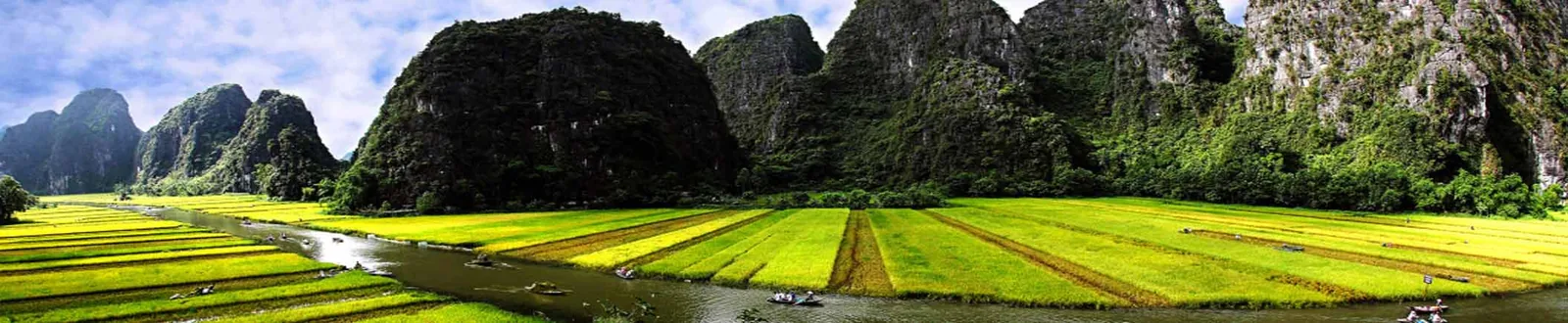
The formation has been well documented — the geological formation explained provides a serviceable overview of the 250-million-year geological process.
| Destination | Distance from Ninh Bình City | Category | Avg. Rating (2025) | Recommended Time | UNESCO Status |
|---|---|---|---|---|---|
| Tràng An Scenic Landscape | 7 km | Karst & River | 4.8 / 5 | 3–4 hours | World Heritage (2014) |
| Tam Cốc – Bích Động | 9 km | Karst & River | 4.7 / 5 | 2–3 hours | Within Buffer Zone |
| Múa Cave (Hang Múa) | 8 km | Panoramic Viewpoint | 4.6 / 5 | 1.5–2 hours | Within Buffer Zone |
| Hoa Lư Ancient Capital | 12 km | Historical & Archaeological | 4.5 / 5 | 1.5–2 hours | Within Core Zone |
| Bái Đính Pagoda | 15 km | Spiritual & Architectural | 4.6 / 5 | 2–3 hours | Adjacent to Core Zone |
| Bích Động Pagoda | 10 km | Spiritual & Cave | 4.5 / 5 | 1–1.5 hours | Within Buffer Zone |
| Cúc Phương National Park | 45 km | Biodiversity & Trekking | 4.7 / 5 | Full day / Overnight | National Park (est. 1962) |
| Vân Long Wetland Reserve | 20 km | Wetland & Wildlife | 4.6 / 5 | 2–3 hours | Ramsar Candidate |
| Thung Nham Bird Garden | 12 km | Ornithology & Eco-tourism | 4.4 / 5 | 2–3 hours | Provincial Heritage |
For visitors arriving from the capital, our Hanoi to Ninh Binh 2026 transport guide details every route option, while budget-conscious travellers should consult the Ninh Binh Budget Guide for cost-optimised itineraries across all nine sites.
Tràng An & Tam Cốc: The Karst Landscape Masterpieces
The twin jewels of Ninh Binh’s karst geography — Tràng An and Tam Cốc — deserve separate scholarly attention, though they share a common geological genesis dating to the late Palaeozoic era, approximately 250 million years ago. Both sites feature tower karst (phong) morphology sculpted through tropical dissolution processes, yet their visitor experiences differ profoundly.
Tràng An Scenic Landscape Complex
Inscribed as a UNESCO Mixed World Heritage Site in 2014, the Tràng An Landscape Complex spans 6,172 hectares and encompasses both natural and cultural criteria — a distinction shared by fewer than 40 sites worldwide. The complex contains 31 documented valleys connected by 48 caves, with archaeological evidence of continuous human habitation dating back roughly 30,000 years to the late Pleistocene period.
Visitors navigate the complex via traditional sampan boats along three designated routes, each lasting between two and three hours. Route 1 is the most archaeologically significant, passing through caves where stone tool assemblages and shell middens have been excavated. Route 2 offers the most dramatic landscape scenery, threading through narrow cave passages where stalactite formations graze the waterline. Route 3 — my personal recommendation for repeat visitors — accesses the least-trafficked valleys and provides the most meditative experience.
The geological significance of Tràng An cannot be overstated. As documented by the IUCN’s evaluation report, the site preserves one of the most complete and undisturbed records of climate change and geomorphological adaptation in Southeast Asia. The drowned karst topography, formed as post-glacial sea levels rose and subsequently retreated, offers researchers a living laboratory for understanding landscape evolution.
📜 Heritage Note: When UNESCO inscribed the Tràng An Landscape Complex in 2014 under both natural (Criterion viii) and cultural (Criteria i, iii) criteria, it became Vietnam’s first — and to date, only — Mixed World Heritage property. The cultural criterion rests partly on the discovery of over 20 prehistoric habitation sites within the karst towers, where Hoabinhian stone tools demonstrate continuous technological evolution from the late Pleistocene through the Neolithic. During my 2024 fieldwork, Dr. Nguyễn Khắc Sử of the Vietnam Academy of Social Sciences confirmed that ongoing excavations continue to push the earliest habitation dates further back, potentially to 40,000 years BP. This is not merely a scenic boat ride — it is a journey through one of humanity’s longest chapters of landscape adaptation.
Tam Cốc – Bích Động: The “Inland Hạ Long Bay”
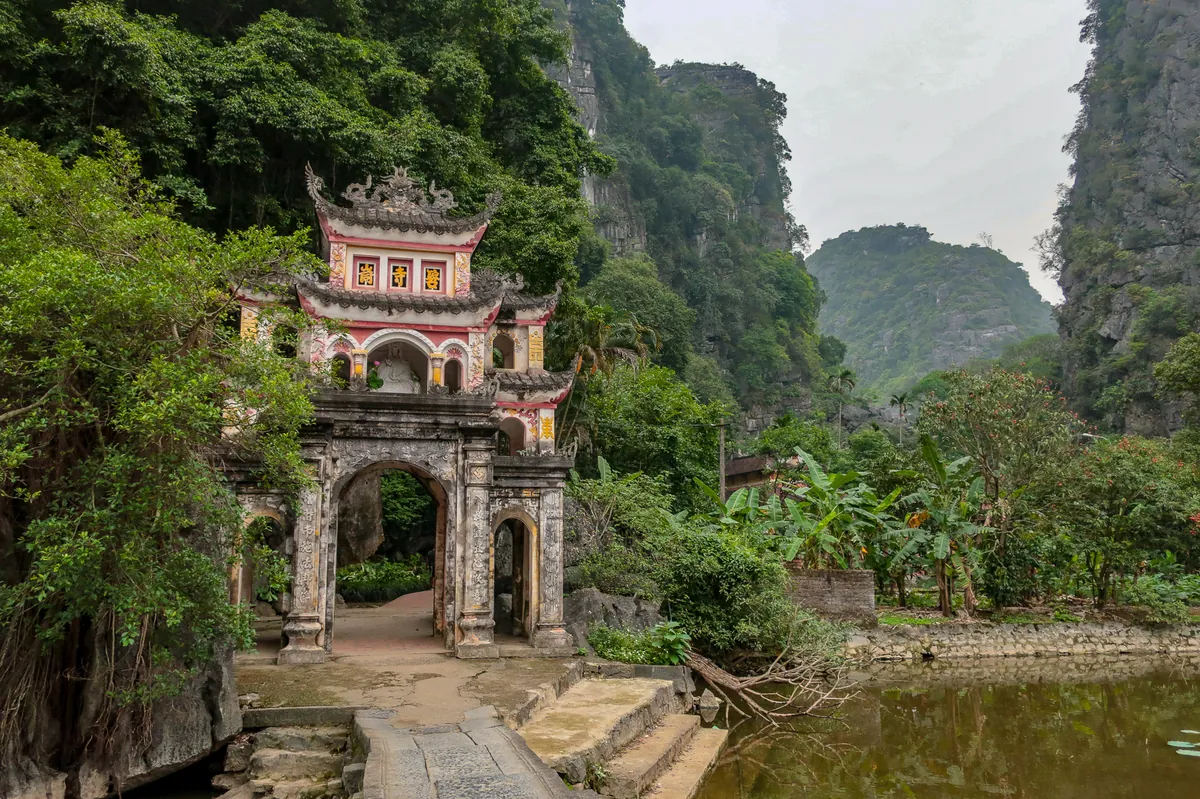
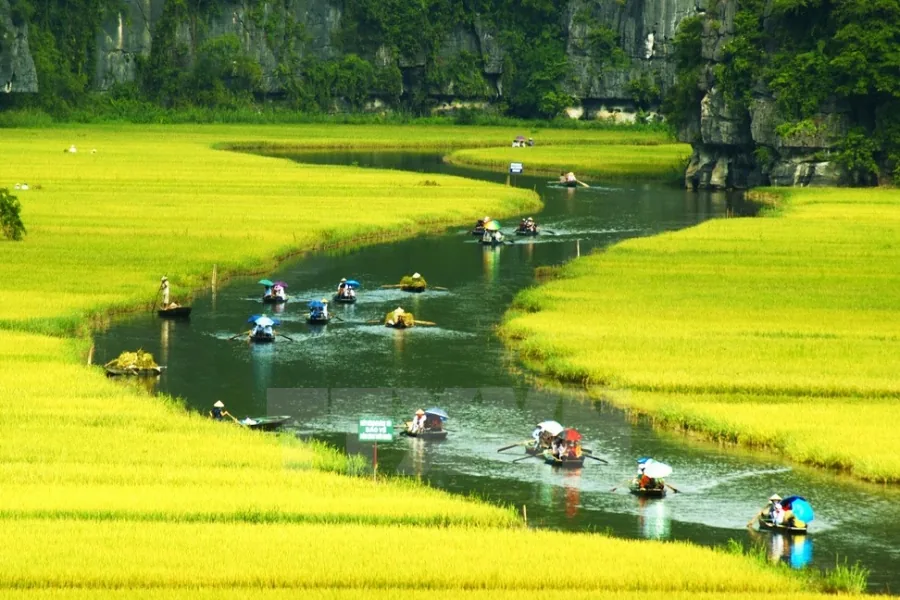
Often marketed as the “Inland Hạ Long Bay” — a comparison I find reductive but understandable — Tam Cốc offers a complementary yet distinctly different experience. The 2.5-kilometre sampan route along the Ngô Đồng River passes through three natural caves (Hang Cả, Hang Hai, and Hang Ba), each named simply “First Cave,” “Second Cave,” and “Third Cave.”
What distinguishes Tam Cốc from Tràng An is its integration with the surrounding rice paddy landscape. During the May–June harvest period, the valleys transform into luminous carpets of golden grain framed by sheer limestone walls — a scene that has justifiably become one of Vietnam’s most photographed tableaux. For photography guidance, our Ninh Binh Photography Guide documents optimal vantage points and seasonal timing.
Adjacent to Tam Cốc lies Bích Động Pagoda, a 15th-century Buddhist temple complex built into a limestone cliff face. The three-tiered structure — Lower, Middle, and Upper Pagoda — rewards the short climb with panoramic views over the Tam Cốc wetlands. Its relative obscurity compared to Bái Đính makes it a scholar’s preferred spiritual site in the region. Visitors exploring both these areas will find our Ninh Binh Boat Tour Guide indispensable for route planning.
Hoa Lư Ancient Capital: Vietnam’s First Imperial Seat
For historians, Hoa Lư is arguably the most significant of all Ninh Binh destinations. Serving as the national capital from 968 to 1010 CE under the Đinh (968–980) and Early Lê (980–1009) dynasties, this site anchors our understanding of Vietnamese state formation in the post-Chinese colonial period.
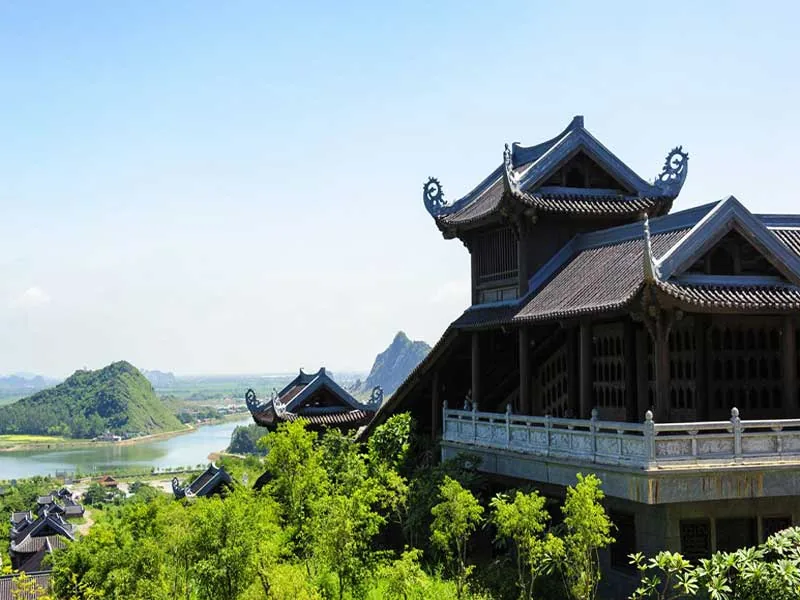
Emperor Đinh Bộ Lĩnh chose this location strategically: the surrounding karst massifs formed natural defensive walls, while the Hoàng Long River provided transportation and trade access. Archaeological surveys have mapped approximately 300 hectares of the original citadel complex, though only a fraction has been systematically excavated. The two principal temples visible today — the Đinh Tiên Hoàng Temple and the Lê Đại Hành Temple — were reconstructed during the 17th century in the Late Lê architectural style, featuring heavy timber frameworks, curved dragon ridge tiles, and lacquered interior pillars.
The historical significance extends beyond architecture. Hoa Lư represents the moment when Đại Cồ Việt (the original state name) established a centralised monarchy after centuries of Chinese domination. Emperor Đinh Bộ Lĩnh’s unification of the twelve warlord territories (Thập Nhị Sứ Quân) in 968 CE remains a foundational narrative in Vietnamese identity. The subsequent transfer of the capital to Thăng Long (modern Hanoi) by Emperor Lý Thái Tổ in 1010 CE marks the beginning of the Lý dynasty’s golden era — but it was Hoa Lư that laid the institutional foundations.
I recommend allocating 1.5 to 2 hours for Hoa Lư, including time for the small on-site museum. Visitors interested in deeper historical context should pair this visit with cycling routes through the surrounding countryside, where remnants of the outer citadel walls remain visible in the landscape.
Múa Cave (Hang Múa): Panoramic Gateway to the Karst Horizon
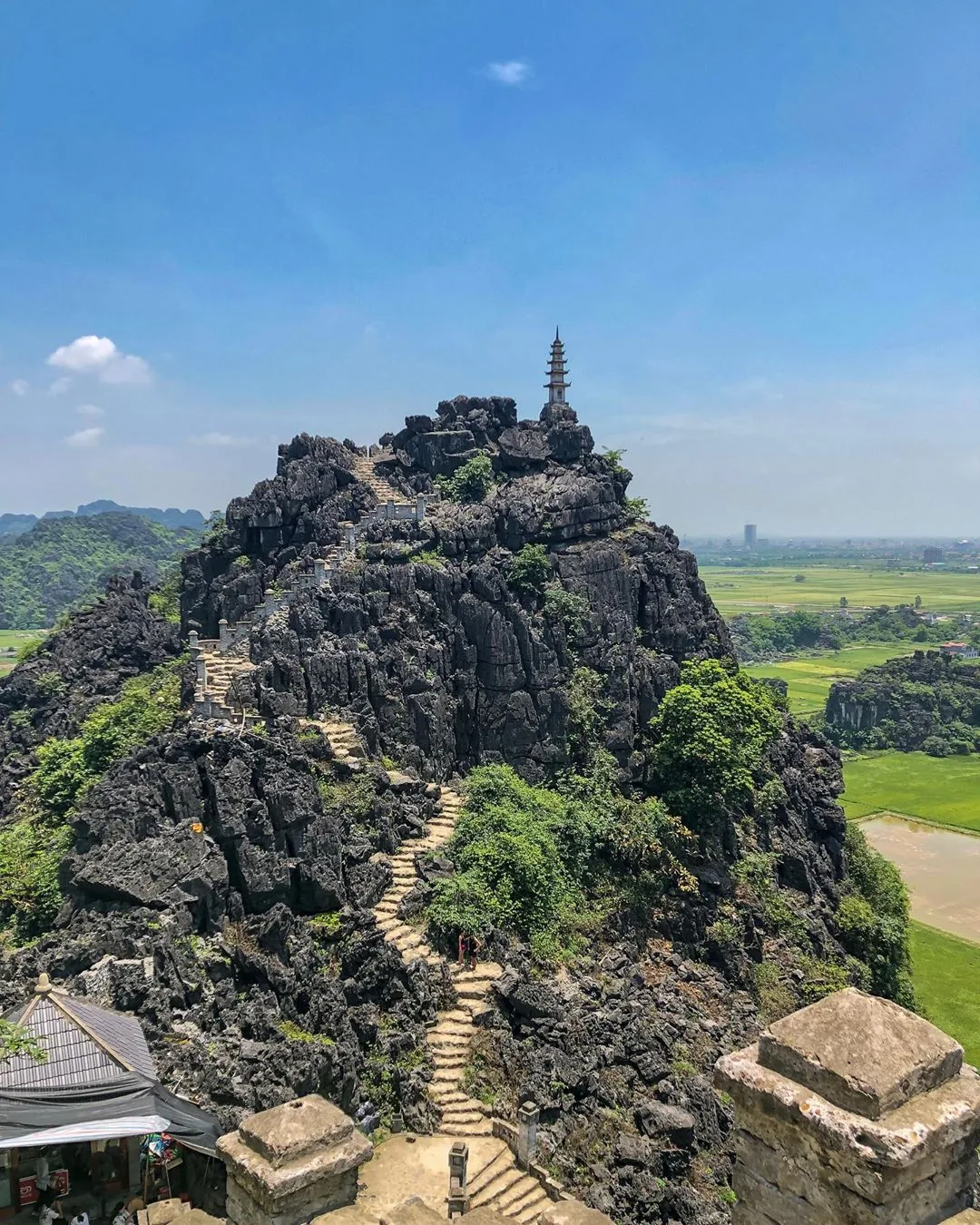
Múa Cave, or Hang Múa, has become the most Instagram-documented of all Ninh Binh destinations — a fact that sometimes obscures its genuine scenic merit. The name translates as “Dance Cave,” referencing a legend that Trần dynasty kings watched court dancers perform at the cave’s base. The site’s primary attraction, however, is the 500-step stone staircase ascending Ngọa Long Mountain (Lying Dragon Mountain) to a summit viewpoint at approximately 120 metres elevation.
From the peak, the 360-degree panorama encompasses the Tam Cốc river system, Tràng An’s karst towers, and — on clear days — a sweep of the Red River Delta extending toward the Gulf of Tonkin. The geological perspective from this elevation is instructive: one can clearly observe the dendritic drainage patterns that define the karst hydrology and understand why this landscape qualifies as a textbook example of tropical tower karst geomorphology.
Practical considerations are important. The staircase is steep and lacks adequate handrails in several sections. I strongly recommend ascending before 07:30 or after 15:30 to avoid both peak crowds and midday heat. For those planning sunrise or sunset visits, our Ninh Binh Sunrise & Sunset Guide provides precise timing data by season. Comfortable hiking footwear is essential — consult our Ninh Binh Packing List for full gear recommendations.
The base area has been developed with landscaped gardens, a lotus pond, and a small café. While the commercial development has attracted some criticism from heritage purists, the infrastructure improvements have made the site considerably more accessible than during my first visit in 2016. Múa Cave also serves as an excellent complement to nearby Tam Cốc, and most visitors combine both within a single half-day excursion.
🌿 Explore Ninh Binh’s Heritage with Expert Guides
Planning to visit multiple Ninh Binh destinations? Cozy Vietnam Travel offers curated heritage tours designed with scholarly depth — combining Tràng An’s UNESCO complex, Hoa Lư’s imperial history, and Cúc Phương’s biodiversity into seamless multi-day itineraries with knowledgeable local guides.
highly rated on TripAdvisor
Bái Đính & Bích Động: Ninh Binh’s Spiritual Landscape
Buddhism arrived in what is now Ninh Binh Province during the 3rd century CE, and the region’s spiritual heritage has accumulated over nearly two millennia. Two sites dominate the province’s sacred geography: the monumental Bái Đính Pagoda complex and the intimate Bích Động Pagoda.
Bái Đính Pagoda Complex
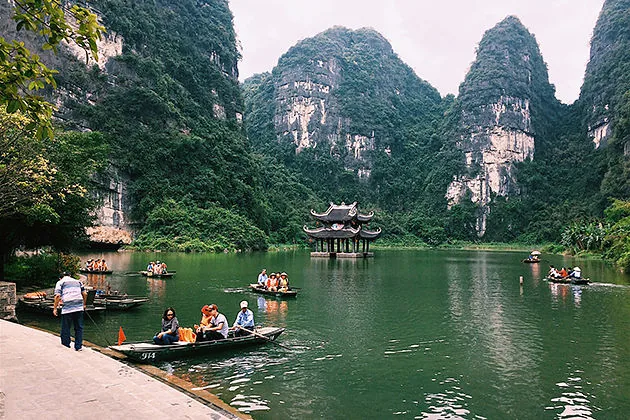
Bái Đính is Southeast Asia’s largest Buddhist complex by total area, encompassing both the ancient pagoda (Chùa Bái Đính cổ), dating to the Lý dynasty period, and the modern New Bái Đính complex, completed in 2010. The scale is staggering: the complex covers approximately 700 hectares and includes a 100-tonne bronze Buddha statue, a 36-tonne bell (the largest in Vietnam), and corridors lined with 500 individual Arhat statues carved from Ninh Bình stone.
From an architectural perspective, the modern complex represents a conscious effort to establish a Vietnamese Buddhist identity distinct from Chinese and Japanese traditions. The use of local Ninh Bình limestone, traditional curved rooflines, and the integration of natural karst landscapes into the temple plan reflect what architectural historians term “geological sacred architecture” — where the built environment deliberately engages with its geological substrate.
The ancient pagoda, located approximately 800 metres uphill from the main complex, rewards visitors with a more contemplative atmosphere and cave shrines associated with the monk Nguyễn Minh Không, who is credited with establishing Vietnamese metallurgy traditions during the 11th century.
Bích Động Pagoda: The Second Finest Grotto in the Land
In stark contrast to Bái Đính’s monumental scale, Bích Động exemplifies the tradition of cave-integrated Buddhist architecture that characterises much of Vietnamese spiritual practice. The 15th-century scholar Nguyễn Nghiễm (father of the great poet Nguyễn Du) reportedly inscribed it as “Nam Thiên Đệ Nhị Động” — the Second Finest Grotto Under Southern Sky.
The three-tiered pagoda complex ascends through lush vegetation to a cave entrance where Buddhist altars share space with natural stalactite formations. The Upper Pagoda, perched at the cliff summit, offers panoramic views over the Tam Cốc rice paddies. Unlike the often-crowded Bái Đính, Bích Động maintains a meditative stillness that more faithfully reflects the monastic tradition from which it emerged. For those exploring the wider area on foot, our Ninh Binh Hiking Trails guide includes routes connecting Bích Động with surrounding karst features.
Cúc Phương, Vân Long & Thung Nham: Nature & Wildlife Sanctuaries
Beyond the karst river systems and historical monuments, Ninh Binh Province harbours some of northern Vietnam’s most important biodiversity reserves. Three sites form the province’s nature and wildlife corridor, each offering distinct ecological experiences.
Cúc Phương National Park
Established in 1962, Cúc Phương holds the distinction of being Vietnam’s first national park. Spanning 22,200 hectares across the Annamite Range foothills, it protects one of the last tracts of primary tropical limestone forest in northern Vietnam. The park’s biodiversity statistics are remarkable: over 2,000 documented plant species, 336 bird species, 122 reptile and amphibian species, and 135 mammal species including the critically endangered Delacour’s langur (Trachypithecus delacouri), a primate found nowhere else on Earth.
The park operates three conservation centres — the Endangered Primate Rescue Center (EPRC), the Turtle Conservation Centre, and the Carnivore and Pangolin Conservation Programme — all of which accept visitors. The EPRC, in particular, is internationally recognised for its captive breeding programme that has successfully bred several langur species for eventual reintroduction.
For serious naturalists, I recommend an overnight stay within the park to access the 1,000-year-old Parashorea chinensis tree via the 18-kilometre Ancient Forest Trail. The predawn and dusk periods offer the best opportunities for primate observation and avian surveys. Our Ninh Binh Birdwatching Guide includes a species checklist specific to Cúc Phương’s forest zones.
Vân Long Wetland Reserve
Vân Long is the largest inland wetland reserve in northern Vietnam, covering approximately 3,500 hectares of submerged karst landscape. The reserve has gained international attention as the last confirmed wild habitat of the Delacour’s langur, with an estimated 40–50 individuals surviving within the surrounding limestone cliffs.
The visitor experience centres on tranquil rowboat excursions through flooded karst valleys — superficially similar to Tam Cốc but with dramatically fewer visitors and a palpable sense of wilderness. Between November and March, the wetland hosts significant populations of migratory waterbirds, making it an essential destination for ornithologists visiting the region.
Vân Long’s appeal lies precisely in its lack of commercial development. There are no electric carts, no souvenir corridors, and no amplified announcements — just the rhythmic dip of oars and the calls of egrets lifting from the marshes. For travellers seeking the most authentic Ninh Binh landscape experience, this is my unequivocal recommendation. Pair a Vân Long visit with our Ninh Binh Kayaking Guide for self-guided paddling options.
Thung Nham Bird Garden
Thung Nham Bird Garden, located within the Tràng An buffer zone, functions as a natural avian sanctuary where an estimated 40,000 birds from over 40 species roost during peak season (April–October). The site encompasses a flooded forest ecosystem, cave systems, and elevated observation platforms designed for birdwatching without disturbance.
The optimal visiting time is late afternoon, when vast flocks of storks, egrets, and cormorants return to their roosts in choreographed aerial formations — a spectacle that the Vietnamese poetically term “chim về tổ” (birds returning to their nests). The phenomenon is most impressive between May and September, coinciding with breeding season. For those exploring broader Ninh Binh activities, Thung Nham provides a compelling contrast to the region’s historical and spiritual sites.
Destination Comparison: Fees, Best Season & Crowd Levels (2026)
The following comparative table provides essential planning data for all nine Ninh Binh destinations. Entrance fees reflect Q1/2026 published rates and are subject to change. Crowd assessments are based on qualitative observation across multiple seasons.
| Destination | Entrance Fee (VND) | Entrance Fee (USD) | Best Season | Crowd Level | Accessibility |
|---|---|---|---|---|---|
| Tràng An | 250,000 | ~$10 | Sep – Nov | High | Easy (boat-based) |
| Tam Cốc | 150,000 | ~$6 | May – Jun (harvest) | High | Easy (boat-based) |
| Múa Cave | 100,000 | ~$4 | Oct – Mar | Very High | Moderate (500 steps) |
| Hoa Lư | 20,000 | ~$0.80 | Year-round | Low – Moderate | Easy (flat terrain) |
| Bái Đính | Free (cart: 30,000) | Free (cart: ~$1.20) | Jan – Mar (festival) | Moderate – High | Easy (cart available) |
| Bích Động | Free | Free | Year-round | Low | Moderate (steps) |
| Cúc Phương | 100,000 | ~$4 | Oct – Apr (dry) | Low | Moderate – Hard (trails) |
| Vân Long | 20,000 + boat 60,000 | ~$3.20 | Nov – Mar | Very Low | Easy (boat-based) |
| Thung Nham | 100,000 | ~$4 | May – Sep (nesting) | Low | Easy |
💰 Pricing data reflects published rates as of Q1/2026, subject to change. Always verify current fees at ticket offices or through official provincial tourism channels.
How to Plan Your Ninh Binh Destinations Itinerary
The geographic concentration of Ninh Binh destinations makes multi-site itineraries highly feasible, but poor sequencing can lead to unnecessary backtracking and crowded conditions. Based on extensive field research, I recommend the following clustering strategy:
Two-Day Essential Itinerary
Day 1: Begin with Tràng An (morning, before crowds peak at 10:00), then visit Hoa Lư Ancient Capital (early afternoon), and conclude with Múa Cave at sunset. This sequence follows a logical geographic arc from south to north-east. Consult our full Ninh Binh 2-Day Itinerary for detailed timing.
Day 2: Dedicate the morning to Tam Cốc boat tour and Bích Động Pagoda (combined), then visit Bái Đính Pagoda after lunch. If time permits, add Thung Nham Bird Garden in the late afternoon for the roosting spectacle.
Extended Three-Day or More
Travellers with three or more days can incorporate Cúc Phương National Park (requiring a full day or overnight) and Vân Long Wetland (half day). This expanded programme covers all nine destinations and represents the most thorough exploration possible. Our Ninh Binh 3-Day Itinerary provides a tested route plan.
Solo travellers will find our Ninh Binh Solo Travel Guide particularly useful for navigating transportation between sites independently. Families with children should review the Ninh Binh for Families guide, which rates each destination’s suitability for younger visitors. For a broader look at all available experiences, explore our Ninh Binh Things to Do hub and Ninh Binh Day Trips planning page.
Accommodation options near the Tam Cốc cluster are documented in our Ninh Binh Homestay Guide, which covers guesthouses and eco-lodges within cycling distance of the major karst sites. Those seeking information on seasonal weather patterns and festival dates should consult our Ninh Binh Seasonal Guide for month-by-month planning data. For a comprehensive overview of logistics including safety, transport, and local customs, our Ninh Binh Practical Guide consolidates all essential pre-trip information.
Frequently Asked Questions: Ninh Binh Destinations
What are the must-visit Ninh Binh destinations for first-time visitors?
For first-time visitors, the essential Ninh Binh destinations are Tràng An Scenic Landscape (UNESCO World Heritage Site with cave-threaded boat tours), Tam Cốc (the iconic “Inland Hạ Long Bay” river cruise), and Múa Cave (panoramic summit viewpoint). Adding Hoa Lư Ancient Capital provides crucial historical context, while Bái Đính Pagoda showcases the region’s spiritual heritage. These five sites can be comfortably covered in two full days.
How many days do I need to visit all Ninh Binh destinations?
To visit all nine major Ninh Binh destinations thoroughly, plan for three full days. Days 1–2 cover the core karst sites (Tràng An, Tam Cốc, Múa Cave), historical attractions (Hoa Lư), and spiritual sites (Bái Đính, Bích Động). Day 3 is dedicated to the nature corridor: Cúc Phương National Park (ideally with an overnight stay), Vân Long Wetland, and Thung Nham Bird Garden. Budget travellers on a tighter schedule can cover the top five sites in two days.
Which Ninh Binh destination is best for avoiding crowds?
Vân Long Wetland Reserve receives the fewest visitors of all major Ninh Binh destinations, offering a tranquil boat experience through pristine karst scenery with virtually no crowds, even during peak season. Bích Động Pagoda and Thung Nham Bird Garden are similarly uncrowded. For the popular sites like Tràng An and Múa Cave, arriving before 07:30 or after 15:00 significantly reduces congestion.
Is the Tràng An UNESCO World Heritage Site worth visiting?
Absolutely. Tràng An is Vietnam’s only Mixed UNESCO World Heritage Site, recognised for both its outstanding natural karst landscape and its archaeological significance, with evidence of human habitation dating back 30,000 years. The three-hour sampan boat tour through interconnected caves and valleys is widely regarded as Ninh Binh’s premier experience. It consistently receives ratings of 4.8/5 from international visitors and is recommended by heritage organisations including ICOMOS and IUCN.
What is the best time of year to visit Ninh Binh destinations?
The optimal period for visiting most Ninh Binh destinations is September through November, when temperatures are moderate (22–28°C), rainfall decreases, and the post-monsoon landscape is lush and green. However, the best time varies by destination: Tam Cốc is most spectacular during the May–June rice harvest, Thung Nham peaks during the May–September nesting season, and Cúc Phương is best explored October–April during the dry season. Our comprehensive seasonal guide provides month-by-month recommendations for each site.
{
“@context”: “https://schema.org”,
“@type”: “FAQPage”,
“mainEntity”: [
{
“@type”: “Question”,
“name”: “What are the must-visit Ninh Binh destinations for first-time visitors?”,
“acceptedAnswer”: {
“@type”: “Answer”,
“text”: “For first-time visitors, the essential Ninh Binh destinations are Tràng An Scenic Landscape (UNESCO World Heritage Site with cave-threaded boat tours), Tam Cốc (the iconic ‘Inland Hạ Long Bay’ river cruise), and Múa Cave (panoramic summit viewpoint). Adding Hoa Lư Ancient Capital provides crucial historical context, while Bái Đính Pagoda showcases the region’s spiritual heritage. These five sites can be comfortably covered in two full days.”
}
},
{
“@type”: “Question”,
“name”: “How many days do I need to visit all Ninh Binh destinations?”,
“acceptedAnswer”: {
“@type”: “Answer”,
“text”: “To visit all nine major Ninh Binh destinations thoroughly, plan for three full days. Days 1–2 cover the core karst sites (Tràng An, Tam Cốc, Múa Cave), historical attractions (Hoa Lư), and spiritual sites (Bái Đính, Bích Động). Day 3 is dedicated to the nature corridor: Cúc Phương National Park (ideally with an overnight stay), Vân Long Wetland, and Thung Nham Bird Garden. Budget travellers on a tighter schedule can cover the top five sites in two days.”
}
},
{
“@type”: “Question”,
“name”: “Which Ninh Binh destination is best for avoiding crowds?”,
“acceptedAnswer”: {
“@type”: “Answer”,
“text”: “Vân Long Wetland Reserve receives the fewest visitors of all major Ninh Binh destinations, offering a tranquil boat experience through pristine karst scenery with virtually no crowds, even during peak season. Bích Động Pagoda and Thung Nham Bird Garden are similarly uncrowded. For the popular sites like Tràng An and Múa Cave, arriving before 07:30 or after 15:00 significantly reduces congestion.”
}
},
{
“@type”: “Question”,
“name”: “Is the Tràng An UNESCO World Heritage Site worth visiting?”,
“acceptedAnswer”: {
“@type”: “Answer”,
“text”: “Absolutely. Tràng An is Vietnam’s only Mixed UNESCO World Heritage Site, recognised for both its outstanding natural karst landscape and its archaeological significance, with evidence of human habitation dating back 30,000 years. The three-hour sampan boat tour through interconnected caves and valleys is widely regarded as Ninh Binh’s premier experience. It consistently receives ratings of 4.8/5 from international visitors and is recommended by heritage organisations including ICOMOS and IUCN.”
}
},
{
“@type”: “Question”,
“name”: “What is the best time of year to visit Ninh Binh destinations?”,
“acceptedAnswer”: {
“@type”: “Answer”,
“text”: “The optimal period for visiting most Ninh Binh destinations is September through November, when temperatures are moderate (22–28°C), rainfall decreases, and the post-monsoon landscape is lush and green. However, the best time varies by destination: Tam Cốc is most spectacular during the May–June rice harvest, Thung Nham peaks during the May–September nesting season, and Cúc Phương is best explored October–April during the dry season. Our comprehensive seasonal guide provides month-by-month recommendations for each site.”
}
}
]
}
Ready to Experience Every Ninh Binh Destination?
Let Cozy Vietnam Travel design your perfect Ninh Binh itinerary — from UNESCO heritage boat tours and ancient capital explorations to national park treks and wetland wildlife encounters. Expert local guides, transparent pricing, and flexible scheduling tailored to your interests.
All pricing, fees, and operational details referenced in this guide reflect data as of Q1/2026, subject to change. Verify current rates directly with site operators or your tour provider before travel.
Planning your visit? You can explore all Ninh Binh transport and tour options on 12Go with verified operators and instant e-tickets.