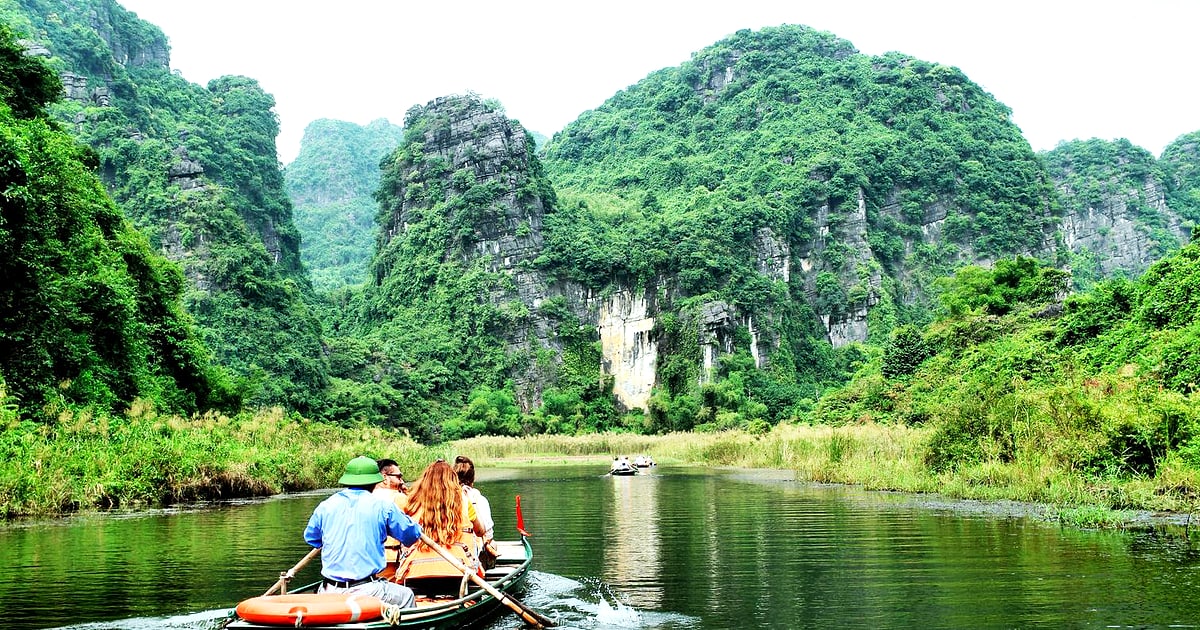
From the Desk of Dr. James Whitford:
Cúc Phương is the reason I changed my research focus from European archaeology to Southeast Asian conservation ecology. On my first visit in 2010, a primatologist at the rescue centre placed a Delacour’s langur on my arm — a species with fewer than 250 individuals remaining on Earth — and said, quite matter-of-factly, “this is what extinction looks like when it’s still possible to stop.” I have returned eight times since. The langur population has not increased. This is particularly relevant when considering cuc phuong national park options for your visit.
Related Guides
- Ninh Binh Budget Guide 2026: Complete Cost Breakdown & Money Tips
- Ninh Binh vs Halong Bay 2026: Which Karst Landscape Should You Choose?
For more information, see Ninh Bình province. Understanding cuc phuong national park in this context helps with trip planning.
Cúc Phương National Park — Vietnam’s first national park (established 1962), spanning 25,000 hectares of primary rainforest 45km northwest of Tam Cốc — protects some of the most endangered primates on Earth, a 1,000-year-old tree, prehistoric caves with 7,500-year-old artefacts, and trekking routes through old-growth forest that has never been commercially logged. For visitors researching cuc phuong national park, this information proves especially useful.
At a glance:
- Established: 1962 — Vietnam’s oldest national park
- Area: 25,000 hectares of primary rainforest
- Entry fee: 40,000 VND ($1.60) adults; Primate Centre 70,000 VND additional
- Distance from Tam Cốc: 45km (75 minutes by motorbike)
- Key attractions: Endangered Primate Rescue Center, Prehistoric Cave, 1,000-year-old tree
- Best months: April–May (butterflies), October–November (cool, dry trekking)
What Is the Endangered Primate Rescue Center at Cuc Phuong?
The Endangered Primate Rescue Center at Cúc Phương — established in 1993 by Frankfurt Zoological Society — houses 15 primate species including the Delacour’s langur (fewer than 250 individuals globally), the Hatinh langur, and the Cat Ba langur (fewer than 70 remaining) — making it the most significant primate conservation facility in mainland Southeast Asia. This directly impacts the cuc phuong national park experience for most travellers.

The centre operates as a rescue, rehabilitation, and semi-wild release programme. Primates confiscated from the illegal wildlife trade — Vietnam remains a major transit route for endangered species — are brought here for veterinary care, socialisation, and eventual release into protected forest sections. The feeding times (09:00 and 15:00) offer the closest viewing opportunities; the langurs move through purpose-built enclosures that replicate their natural canopy habitat.
The Delacour’s langur (Trachypithecus delacouri) is the species that warrants your attention. Endemic to the limestone karsts of northern Vietnam — the very landscape you have been photographing at Tam Cốc and Tràng An — it is among the 25 most endangered primates on Earth. Its black-and-white coat is improbably elegant, its movements through the canopy impossibly graceful. Seeing one at arm’s length, which the centre permits during guided feeding sessions, recalibrates your understanding of what “endangered” means in practice: not an abstract statistic, but an animal you can see breathing.
Cuc Phuong Trekking: Routes and Difficulty Levels
Cúc Phương offers three primary trekking routes — the Botanical Garden Loop (2km, 1 hour, flat, suitable for all fitness levels), the Ancient Tree Trail (6km, 2.5 hours, moderate, leading to the 1,000-year-old Parashorea chinensis), and the Cross-Park Trek to Khanh commune (18km, 6–8 hours, strenuous, requiring a guide) — all through primary rainforest.
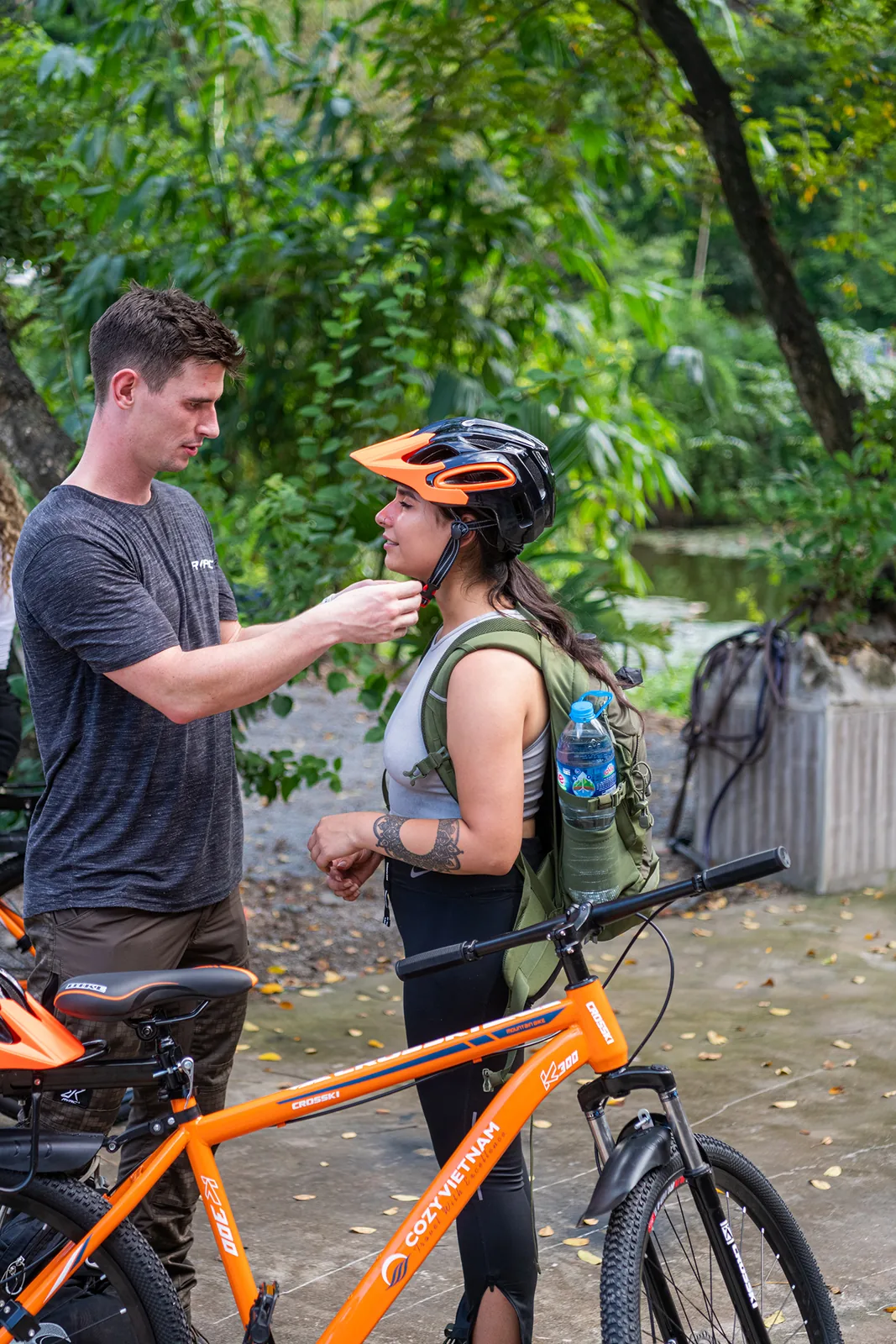
The Ancient Tree Trail is the route I recommend for most visitors. The 6km path threads through old-growth canopy so dense that the forest floor exists in permanent twilight — a green, humid cathedral of buttress roots, lianas, and emergent trees competing for the narrow columns of sunlight that penetrate the upper canopy. The air is thick with moisture, the temperature 3–5°C cooler than outside the forest, and the silence is populated by sounds you learn to identify: the hammering of a great barbet, the rustle of a civet in undergrowth, the distant crash of a branch surrendering to gravity after decades of growth.
The 1,000-year-old Parashorea chinensis at the trail’s midpoint stands 45m tall with buttress roots spreading 5m from the trunk. Standing at its base — craning upward to a canopy you cannot see through — provides a visceral sense of geological time that no museum exhibit can replicate.
Cuc Phuong Prehistoric Cave: 7,500 Years of Human History
The Prehistoric Cave (Động Người Xưa) in Cúc Phương contains stone tools, mollusc shells, and human burial sites dating to 7,500 years ago — evidence of Mesolithic-era habitation in Ninh Bình’s limestone systems that predates the Hoa Lư dynasties by over 6,000 years and connects to the same karst landscape visitors explore at Tràng An.

The cave is a 15-minute walk from the park entrance, accessible without a guide. The archaeological evidence — displayed in situ with interpretive panels — includes stone axes, shell ornaments, and the remains of meals (predominantly freshwater molluscs and deer) that reveal a population adapted to the specific ecology of this limestone environment. The excavation, conducted by Vietnamese and international archaeologists since the 1960s, has produced one of the most complete Mesolithic records in mainland Southeast Asia.
Best Time to Visit Cuc Phuong National Park
The two optimal windows for Cúc Phương are April–May (butterfly season, with millions of specimens creating clouds of colour along forest trails) and October–November (cool temperatures of 20–25°C, dry conditions, optimal trekking) — while the rainy season (July–September) brings lush forest but leech-heavy trail conditions.
The butterfly phenomenon in April deserves specific mention. During a 3–4 week window (typically late April to mid-May), millions of butterflies emerge simultaneously from pupae across the forest floor. The effect is surreal — walking a forest trail through swirling clouds of white, yellow, and pale blue wings that settle on your arms, camera, and hat. I have seen it twice. It remains among the most extraordinary natural spectacles I have witnessed in Vietnam, and I say this as someone who has watched 200,000 birds roost at Thung Nham.
Frequently Asked Questions
How much does Cuc Phuong National Park cost?
Entry: 40,000 VND ($1.60). Primate Rescue Center: additional 70,000 VND. Guide (optional): 200,000–500,000 VND depending on route length. Total for a half-day visit: approximately 150,000–300,000 VND.
Can I visit Cuc Phuong as a day trip from Tam Coc?
Yes — the 45km journey takes 75 minutes by motorbike. Leave Tam Cốc by 07:00, arrive by 08:15, visit the Primate Centre (09:00 feeding), trek to the ancient tree, and return by 16:00. A full but manageable day.
Are there overnight options in Cuc Phuong?
Yes. The park has basic guesthouses (300,000–500,000 VND/night) and a homestay programme in Khanh commune on the park’s western edge. Overnight stays allow dawn birdwatching and the cross-park trek.
🏛️ Explore Ninh Binh with Expert Guides — Book a private Ninh Binh tour with knowledgeable local guides who bring the UNESCO heritage to life. All-inclusive day trips from Hanoi starting at $45/person.
Agoda
📚 Dr. Whitford’s Note: Cuc Phuong’s thousand-year-old trees are not metaphorical. Dendrochronological studies have confirmed specimens exceeding 1,000 years. Walking among them provides a temporal context that few Vietnamese experiences can match.
Further Reading
— Dr. James Whitford, Heritage Studies | University of Melbourne
— J. Whitford, PhD.
Cambridge, UK / Ninh Bình, VN
Disclosure: Some links in this guide may be affiliate links. I only recommend services I have personally verified.
📌 Book this experience:
the Cuc Phuong National Park 1-Day Small Group Tour on Klook | book Hanoi to Ninh Binh transport on 12Go |
Some links are affiliate links. We earn a small commission at no extra cost to you.
📍 Explore more: all Ninh Binh destinations →