From the Desk of Dr. James Whitford:
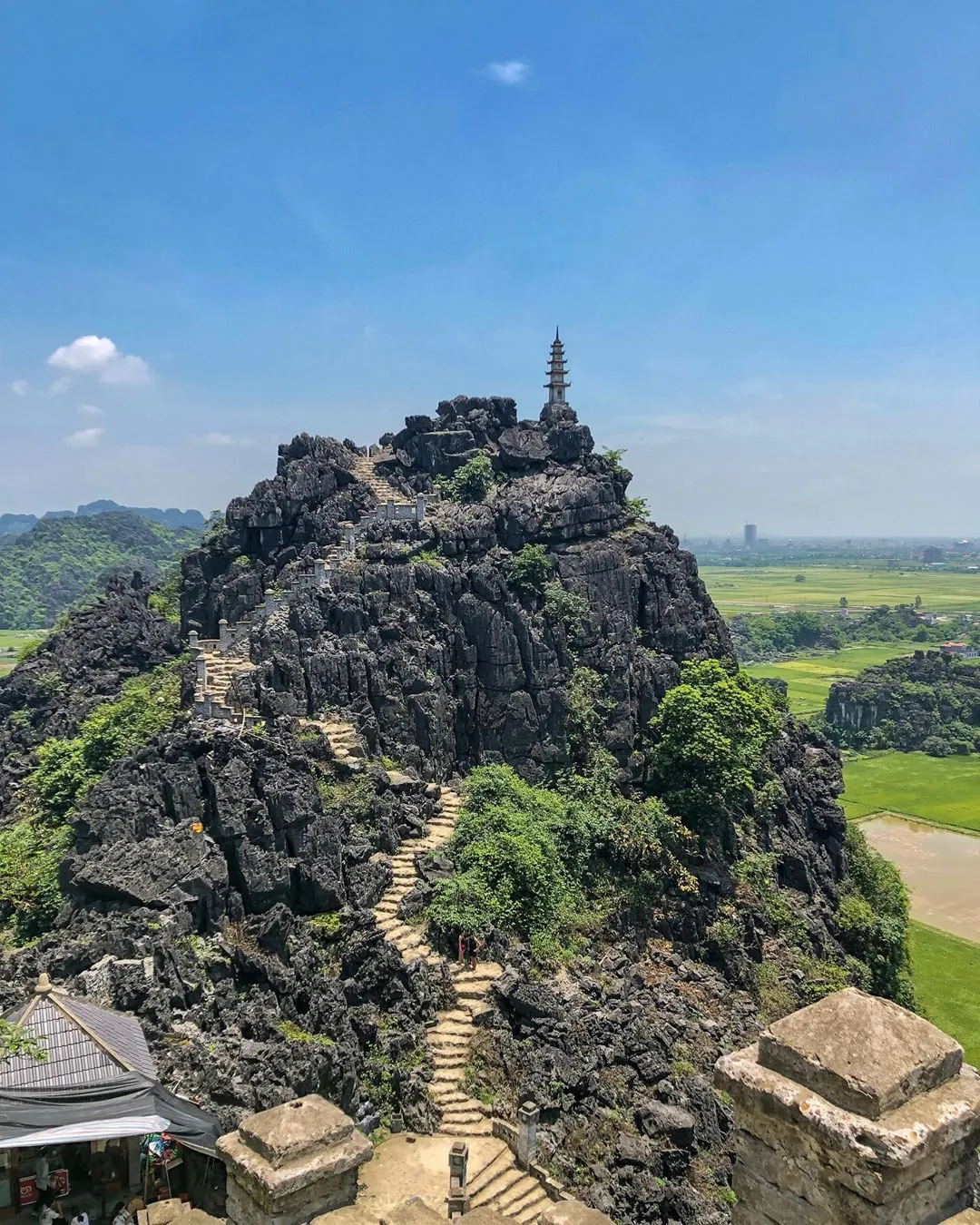
I will not pretend the climb is easy. Five hundred stone steps, carved into a limestone peak that rises 120 metres above the valley floor, with no shade to speak of and a gradient that would give a mountain goat pause. I have made the ascent six times now – at dawn, midday, and dusk – and I can say without qualification that the view from the summit is the single finest panorama in Ninh Binh Province. Perhaps in all of northern Vietnam.
Why Mua Cave Matters
Mua Cave (Hang Mua, literally “Dance Cave”) takes its name from a cave at the base of the mountain where, according to local tradition, royal dancers once performed for the Tran Dynasty kings. The cave itself is modest. The viewpoint above it is not.
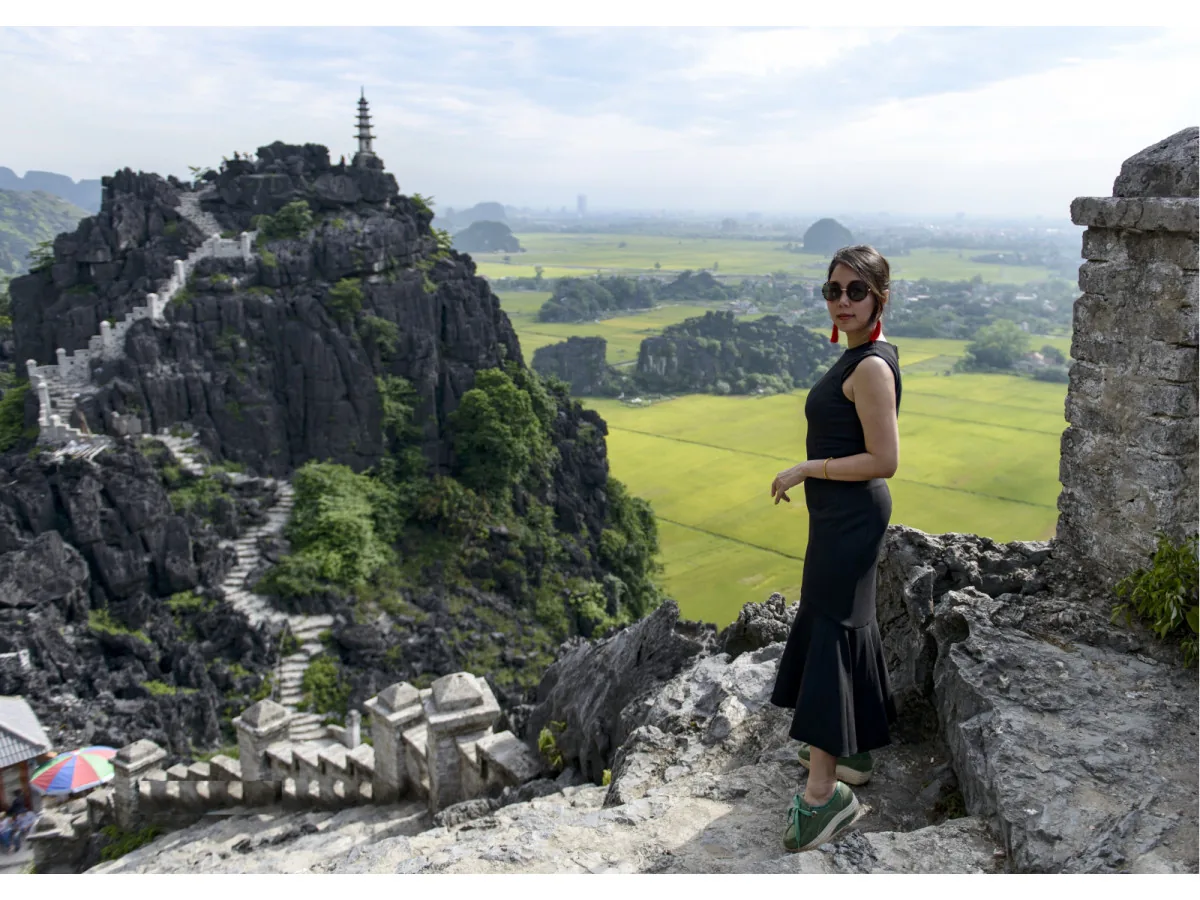
From the summit, the Tam Coc valley spreads out in every direction: the Ngo Dong River threading between karst towers, rice paddies in geometric patterns, and the silhouettes of limestone peaks extending to the horizon. On clear days, you can trace the entire boat route of Tam Coc from above.
The Climb
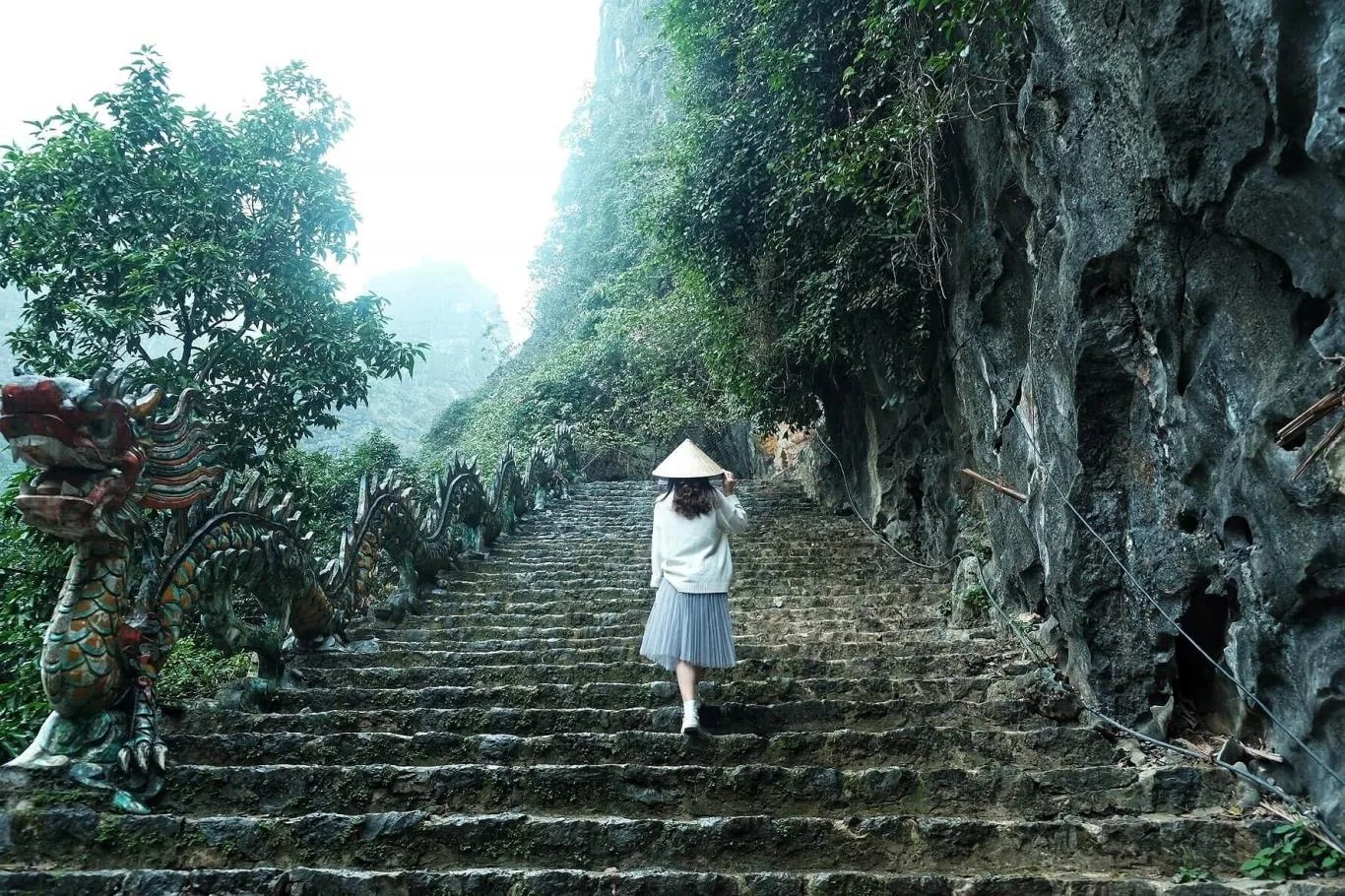
The path from the ticket office to the summit consists of approximately 500 hand-carved stone steps. The climb takes 20-30 minutes at a moderate pace, depending on fitness level and how often you stop for photographs (frequently, in my experience).
The steps are well-maintained and include metal handrails on the steepest sections. At the summit, a stone dragon statue wraps around the peak, its head facing the valley – this is the most photographed structure in Ninh Binh.
Ticket price: 100,000 VND per person.
Best Times to Visit
Sunrise (5:00 – 6:30 AM)
The optimal time for photography. The light is golden, the mist sits in the valleys, and you will likely have the summit to yourself. The ticket office opens at 5:00 AM. Bring a headlamp for the early sections of the climb. See our Mua Cave sunrise photography guide for detailed timing.

Late Afternoon (4:00 – 6:00 PM)
The second-best window. Warm light, fewer crowds than midday, and the possibility of a sunset over the karst landscape. Allow time for the descent before dark.
Midday (Avoid If Possible)
The climb is fully exposed to the sun. Temperatures on the stone steps can exceed 40C in summer. If you must visit at midday, bring at minimum 1 litre of water and a hat.
The Rice Paddy View
The summit view changes character with the seasons:
- Late May – June: Golden rice at harvest. The valley becomes a patchwork of amber, gold, and green. This is peak season for the view.
- March – April: Bright green young rice. The most vivid colour contrast against the grey karst.
- January – February: Flooded fields reflect the sky and mountains. Ethereal in morning mist.
- October – December: Post-harvest brown fields. Clearest visibility.
Practical Information
- Location: 3 km north of Tam Coc wharf, in Khe Dau Ha village
- Opening hours: 5:00 AM to 7:00 PM daily
- Duration: Allow 1.5 to 2 hours total (climb, summit time, descent)
- Difficulty: Moderate. The steps are uneven in places. Sturdy footwear recommended.
- Facilities: Toilets and a small cafe at the base. A garden area with lotus ponds surrounds the entrance.
- Accommodation: Several homestays and hotels are within walking distance. See our accommodation guide.
Combining with Tam Coc
The ideal itinerary: climb Mua Cave at sunrise, descend, then take the Tam Coc boat tour starting at 7:30 or 8:00 AM. This sequences the aerial view before the river-level experience and avoids the midday heat for both activities.
Related Reads
- Mua Cave Sunrise Photography Guide
- Accommodation Near Mua Cave
- Tam Coc and Bich Dong Guide
- Ninh Binh Photography Guide
Quick Facts: Mua Cave Viewpoint
| Location | Khe Ha Village, Ninh Xuan Commune, Hoa Lu District |
| Number of Steps | Approximately 500 stone steps to the summit |
| Entry Fee | 100,000 VND per person |
| Elevation | Approximately 120 meters above the valley floor |
| Climb Duration | 20-30 minutes ascending, 15-20 minutes descending |
| Best Time to Climb | Early morning (6:00-7:30 AM) or late afternoon (4:00-5:30 PM) |
| Distance from Tam Coc | 3.5 km (8-minute drive from boat wharf) |
| Opening Hours | 6:00 AM – 6:30 PM daily |
Most visitors combine the Mua Cave viewpoint with a Tam Coc boat tour on the same morning or afternoon, as the two sites are separated by only 3.5 km. For a complete day plan incorporating all major sights, refer to our Ninh Binh travel guide 2026.
The Trang An Landscape Complex, which encompasses the broader karst ecosystem surrounding Mua Cave, received UNESCO World Heritage status in 2014 as a mixed cultural and natural property.
To arrange your visit with reliable transport, I recommend that you check Mua Cave tour packages on 12Go for verified schedules and e-ticket booking.
Frequently Asked Questions
How difficult is the Mua Cave climb?
The 500-step ascent gains approximately 120 meters of elevation over a well-maintained stone staircase carved into the limestone karst. Most visitors with average fitness complete the climb in 20-30 minutes. The steps are uneven in places, so proper footwear is essential — avoid sandals or flip-flops, particularly during the wet season when surfaces become slippery.
When is the best time of day to visit Mua Cave viewpoint?
Late afternoon between 4:00 and 5:30 PM offers the optimal combination of softer light, cooler temperatures, and the possibility of a sunset panorama over the Tam Coc valley. Morning visits before 7:30 AM provide the fewest crowds. Midday climbs during summer months expose visitors to intense heat with no shade along the exposed staircase.
What can you see from the top of Mua Cave?
The summit provides a 360-degree panorama encompassing the entire Tam Coc rice valley, the Ngo Dong River winding between karst towers, and on clear days, the distant limestone formations extending toward Trang An. A dragon sculpture marks the highest point, and the vista is widely regarded as the single finest viewpoint in Ninh Binh Province.