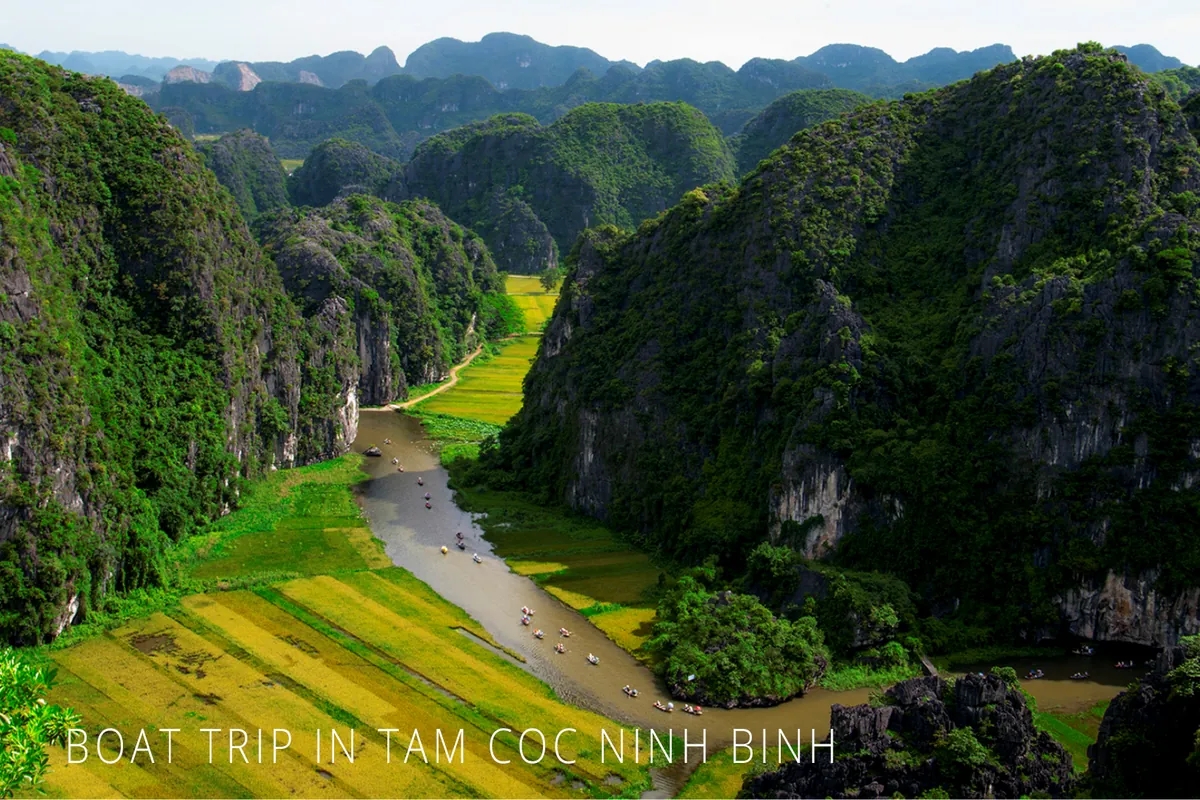
Tam Coc and Trang An are the two boat tours every visitor to Ninh Binh is told to take, and after several years of taking both on a fairly regular basis, I can confirm the confusion is legitimate — they are 7 kilometres apart, both use foot-rowed sampans, both cost roughly the price of a coffee back home, and both photograph like a movie set. The differences that matter are narrower than the marketing suggests: Trang An is the UNESCO-inscribed cave system (9 caves, 250,000 VND / $10 per person), Tam Coc is the rice-paddy river ride (3 caves, 150,000 VND / $6 per boat). This guide sets the two side by side with real 2026 pricing, so you can decide which one earns your morning — or whether, as I generally recommend, you have time for both.
At a Glance
| Factor | Tam Coc | Trang An |
|---|---|---|
| Price | 150,000 VND ($6) per boat, max 2 passengers | 250,000 VND ($10) per person |
| Duration | 90–120 minutes | 2–2.5 hours (Heritage Route) |
| Caves | 3 (Hang Ca 127m, Hang Hai 60m, Hang Ba 50m) | 9 on the Heritage Route |
| River / Setting | Ngo Dong River, through rice paddies | Enclosed karst valleys, no open paddies |
| UNESCO Status | Within the buffer zone | Core zone — inscribed 2014 |
| Crowd Level | Higher at the pier, especially 10 AM–2 PM | More dispersed across 3 routes |
| Best For | Photography, rice-field seasons, budget | Cave exploration, heritage, first day in Ninh Binh |
| Location | Van Lam village, 7 km south of Ninh Binh city | 7 km west of Ninh Binh city |
The Real Difference Is Geological, Not Just Scenic
Most comparisons stop at “one has more caves.” The more useful distinction is how those caves were formed, because it explains everything else — the shape of the passages, the width of the valleys, even why Trang An takes an hour longer.
Tam Coc’s three caves are river-cut — carved by the Ngo Dong River eroding limestone at water level over roughly 2 million years, which is why they run wide and comparatively shallow (Hang Ca, the longest, is 127 metres). Trang An’s nine caves on the Heritage Route are phreatic — carved by water flowing under pressure through fully submerged passages before the water table dropped — which is why they run deeper and more numerous, including Hang Toi (Dark Cave) at roughly 320 metres, the longest navigable passage in the complex. Same limestone massif, two different carving mechanisms, two different boat rides.
Price and What You Actually Get
Tam Coc is priced per boat (150,000 VND / $6, maximum 2 passengers), so two people split the cost. Trang An is priced per person (250,000 VND / $10), which makes the headline gap look larger than it is in practice — for two travellers, Tam Coc runs 150,000 VND total versus Trang An’s 500,000 VND, a real difference, but both include the boat, rower, life jacket, and any temple entry along the route. Neither ticket includes the customary tip (50,000–100,000 VND per boat is standard at both), and Trang An’s price is identical across all three of its routes.
Which Should You Choose — By Traveller Type
| You Are… | Choose | Why |
|---|---|---|
| Visiting Ninh Binh for one day only | Trang An | Longer route, more caves, UNESCO core zone — the fuller experience if you can only pick one |
| Chasing golden rice-field photos | Tam Coc | Runs directly through the Ngo Dong River paddies; Trang An’s valleys are enclosed karst, not open fields |
| Travelling on a tight budget | Tam Coc | 150,000 VND per boat vs 250,000 VND per person — meaningfully cheaper for two or more |
| Interested in cave geology or UNESCO sites | Trang An | 9 caves vs 3, phreatic passages up to 320m, mixed World Heritage inscription (2014) |
| Avoiding crowds | Trang An, Route 3 | Draws roughly 30% fewer visitors than Trang An’s own Route 1, and the site’s three-route system disperses crowds better than Tam Coc’s single pier |
| Staying 2 or more days | Both | They are 7 km apart and complement rather than duplicate each other — see my verdict below |
Getting Between the Two
Tam Coc and Trang An are close enough that visiting both in the same trip — even the same day, if you start early — is entirely practical. A taxi or motorbike between the two piers runs roughly 20 minutes. Most travellers based in the Tam Coc area (which has the denser range of guesthouses and homestays) simply ride out to Trang An for the morning slot and return for lunch, or reverse the order. I generally recommend against attempting both in a single Hanoi day trip, however — between the 2-hour drive each way and the boat times themselves, stacking both rides leaves no real margin for delays.
If you’re basing yourself near one pier, the other attractions cluster conveniently around Tam Coc: Bich Dong Pagoda is 2 km south, and the Mua Cave viewpoint is 3 km northeast — both easy add-ons to a Tam Coc morning. Near Trang An, Hoa Lu Ancient Capital and Bai Dinh Pagoda are the natural pairings.
My Verdict
If you have time for only one boat ride in Ninh Binh, I recommend Trang An — the extra hour and six caves make it the fuller experience, and the UNESCO core-zone status is not marketing, it reflects a genuinely different scale of site. But this is a closer call than most guides admit, and Tam Coc has one advantage Trang An cannot match: if you are visiting during the golden rice harvest (late May–early June, with a smaller second window in September–October), the paddy scenery along the Ngo Dong River is, in my view, the single most photogenic stretch of water in the province. With two or more days in Ninh Binh, do both — they are 7 km apart, differently priced, and geologically distinct enough that neither feels redundant after the other.
For day trips that bundle both boat rides with Hoa Lu and Mua Cave, I generally book through Klook’s Ninh Binh day tour from Hanoi, which covers this exact combination with flexible vehicle and meal options.
Frequently Asked Questions
Is Tam Coc or Trang An better?
Trang An has more caves (9 vs 3), UNESCO core-zone heritage status, and a longer route (2–2.5 hours vs 90–120 minutes). Tam Coc is better for rice-field photography and costs less (150,000 VND per boat vs 250,000 VND per person). With one day, choose Trang An for the fuller experience. With 2 or more days, visit both — they are 7 km apart.
What is the difference between Tam Coc and Trang An caves?
Tam Coc’s 3 caves (Hang Ca, Hang Hai, Hang Ba) are river-cut by the Ngo Dong River over roughly 2 million years, making them wider and shallower — the longest, Hang Ca, is 127 metres. Trang An’s 9 Heritage Route caves are phreatic, carved by pressurised water through submerged passages, making them deeper and more numerous — the longest, Hang Toi, runs approximately 320 metres.
Can I visit both Tam Coc and Trang An in one day?
Yes, if you are already based in Ninh Binh — the two piers are roughly 20 minutes apart by taxi or motorbike, and a morning-plus-afternoon schedule works well. I do not recommend combining both with a same-day Hanoi round trip, since the 2-hour drive each way leaves little margin.
Which is cheaper, Tam Coc or Trang An?
Tam Coc is cheaper: 150,000 VND ($6) per boat, shared by up to 2 passengers, versus Trang An’s 250,000 VND ($10) charged per person. For two travellers, that is 150,000 VND total for Tam Coc against 500,000 VND for Trang An.
Which has better rice field scenery, Tam Coc or Trang An?
Tam Coc. Its route follows the Ngo Dong River directly through open rice paddies, with the golden harvest peaking late May to early June. Trang An’s Heritage Route passes through enclosed karst valleys rather than open farmland, so it is the better choice for caves and heritage, not rice-field photography.
Prices are approximate as of Q2/2026 and subject to change. Verify current rates at each boat station before visiting.
Some links in this article are affiliate links. We may earn a small commission at no extra cost to you. This helps support our independent research and content.