From the Desk of Dr. James Whitford:
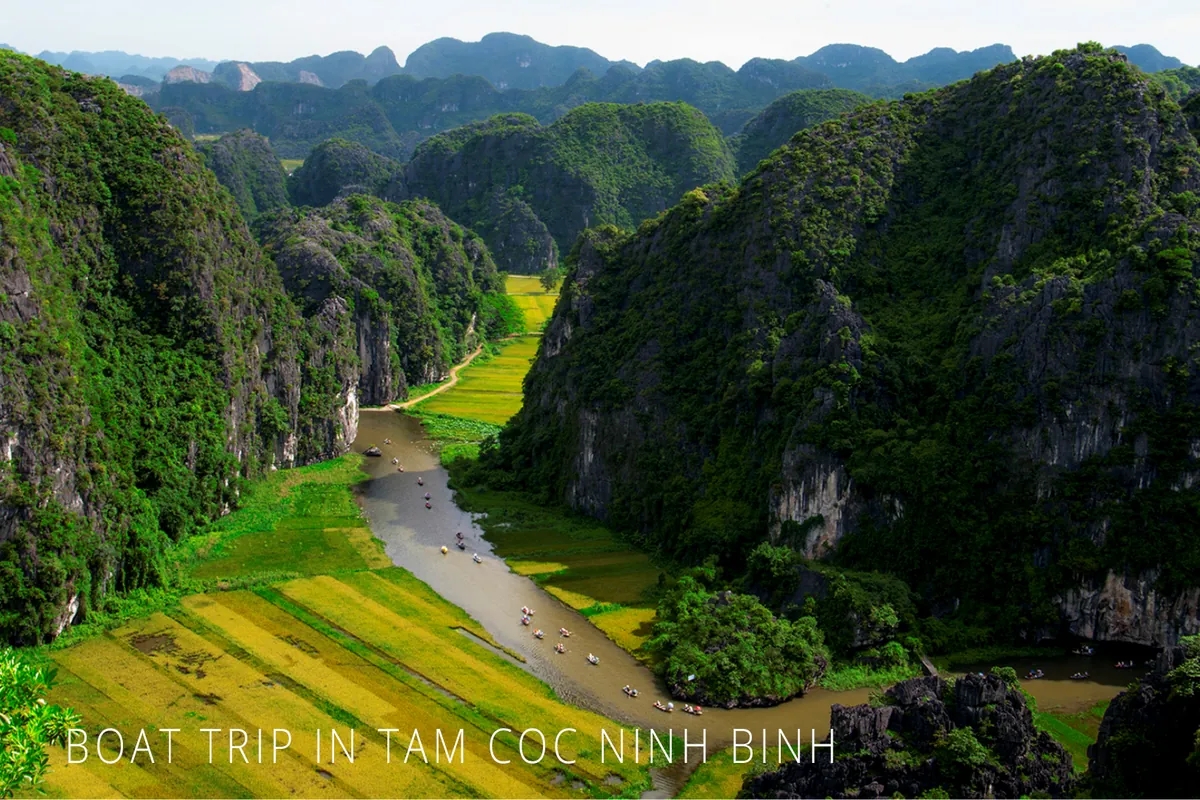
The comparison to Ha Long Bay is not mine – Vietnamese travellers coined the phrase “Ha Long Bay on land” decades before international tourism discovered Ninh Binh. Having spent considerable time in both locations, I find the comparison both accurate and insufficient. Tam Coc Bich Dong has something Ha Long Bay does not: rice paddies that change colour with the seasons, narrow enough to touch the karst walls from your boat, and a silence that the cruise ships of Ha Long have long since banished.
Understanding Tam Coc
Tam Coc translates to “three caves” – Hang Ca, Hang Hai, and Hang Ba – which the Ngo Dong River passes through as it winds between limestone karst towers. The boat journey covers approximately 3 kilometres each way, threading through rice paddies and under cave ceilings that occasionally brush the top of your head.
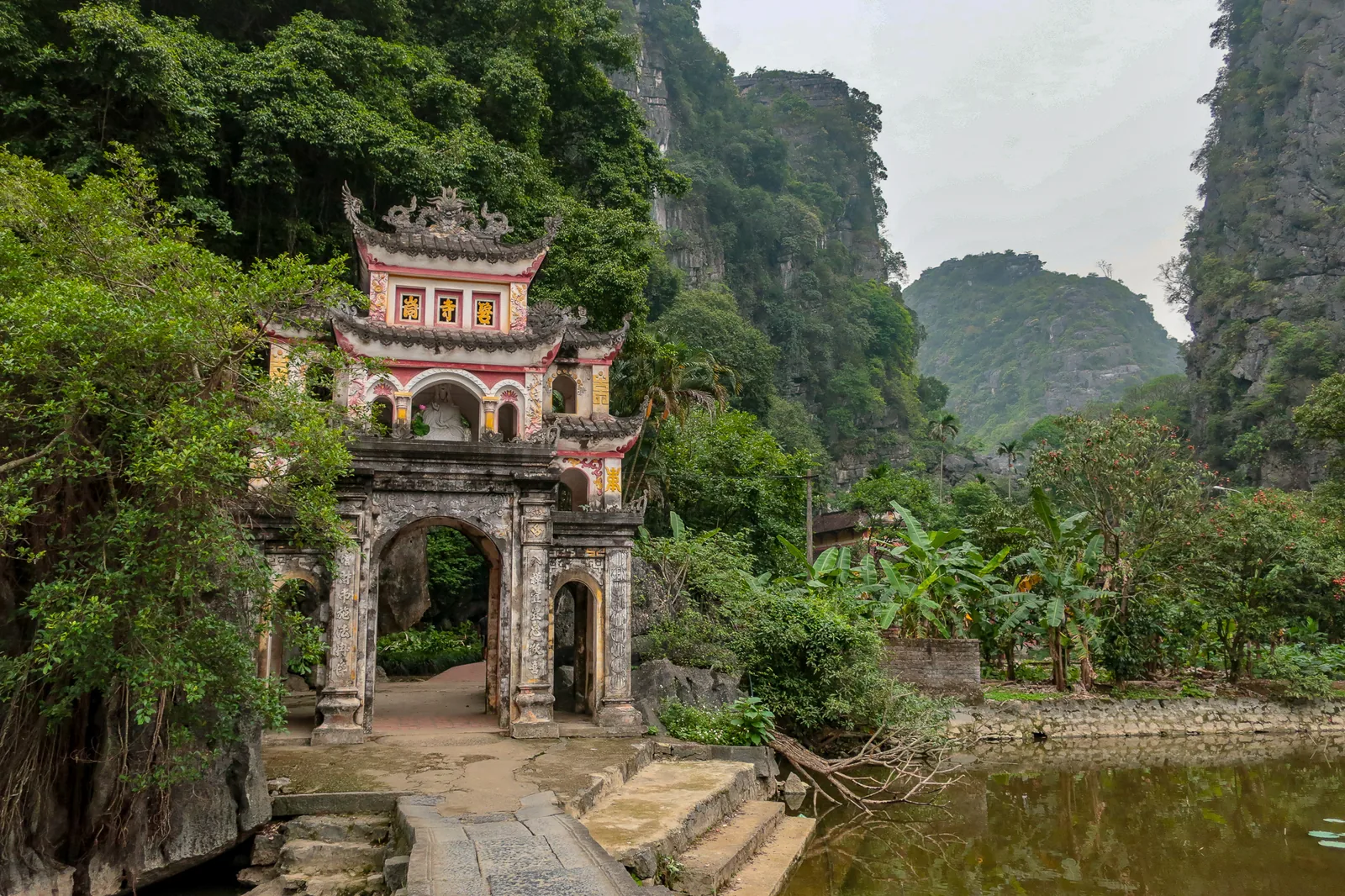
Bich Dong, meaning “jade grotto,” is a pagoda complex built into the face of a limestone cliff, located 2 kilometres from the Tam Coc boat dock. The pagoda dates to 1428 and consists of three levels carved into the rock: the lower pagoda, middle pagoda, and upper pagoda, each requiring a progressively steeper climb.
The Boat Tour
Boats depart from the Tam Coc wharf in Van Lam village. Each sampan carries two passengers and is rowed by a local boatwoman – often using her feet, a technique unique to this region that has become iconic in travel photography.
Ticket price: 150,000 VND per person for the boat ride. The journey takes approximately 90 minutes to 2 hours return.
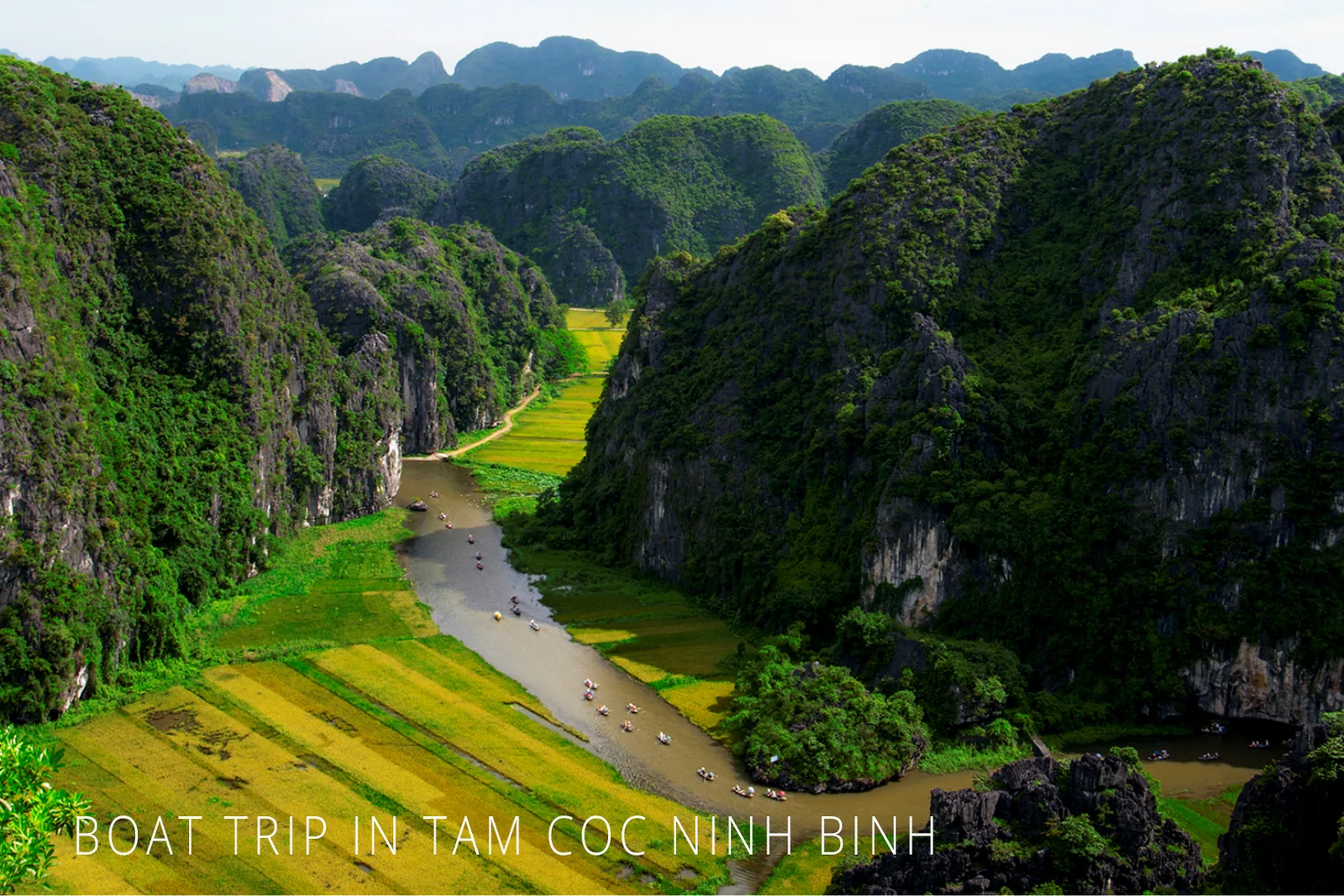
Unlike Trang An’s enclosed waterway, Tam Coc’s route is open to the sky for most of its length, with the three caves providing dramatic passages through the karst. The rice paddies flanking the river create the landscape that has made Tam Coc famous: sheets of green in spring, gold in harvest season, and water-mirror reflections in winter.
The Rice Seasons
The visual character of Tam Coc changes dramatically through the year:
- January – February: Flooded paddies create mirror-like reflections of the karst towers
- March – April: Young rice shoots turn the valleys vivid green
- Late May – June: The golden harvest – the most photographed period. Rice turns amber and yellow before being cut.
- July – September: Second planting cycle, lush green returns. Rain is frequent but brief.
- October – December: Dry season, harvested fields, clearest weather
Bich Dong Pagoda
The three-level pagoda at Bich Dong is easily combined with the Tam Coc boat ride. The lower pagoda sits at ground level beneath an overhanging cliff. A stone staircase leads to the middle pagoda, which is built inside a cave – dark, cool, and atmospherically lit by candles. The upper pagoda requires a short but steep climb and rewards with a panoramic view over the Tam Coc valley.
Entry is free. The full visit takes 30-45 minutes. Modest clothing is expected (shoulders and knees covered).
Photography Guide
The definitive viewpoint is from Mua Cave, 3 kilometres north of the Tam Coc wharf. The 500-step climb to the summit provides an aerial perspective of the Tam Coc valley that no boat-level photograph can replicate. See our Mua Cave photography guide for timing and technique recommendations.

Getting There
Tam Coc is located 9 kilometres south of Ninh Binh city. By bicycle, the ride takes 30-40 minutes along flat rural roads – one of the most pleasant cycling routes in the province. See our cycling guide for recommended routes.
Related Reads
- Tam Coc Sunrise Guide
- Tam Coc Hotels and Homestays
- Ninh Binh Rice Fields Guide
- Ninh Binh Boat Tour Comparison
Quick Facts: Tam Coc Bich Dong
| Location | Ninh Hai Commune, Hoa Lu District, Ninh Binh Province |
| Boat Tour Duration | Approximately 1.5 to 2 hours (round trip) |
| Boat Ticket Price | 150,000 VND per boat (seats 2 passengers) |
| Tam Coc Meaning | Three Caves (Hang Ca, Hang Hai, Hang Ba) |
| Bich Dong Pagoda | 15th-century pagoda complex built into limestone cliff |
| Best Season | May-June (golden rice season) or September-October |
| Distance from Ninh Binh City | 7 km southwest (15-minute drive) |
| Recommended Duration | Half day (3-4 hours for both Tam Coc and Bich Dong) |
Tam Coc Bich Dong pairs naturally with a morning visit to the nearby Hoa Lu Ancient Capital, just 3 km away. For golden hour photography tips at this location, see our Ninh Binh photography guide, and plan your seasonal timing with the best time to visit Ninh Binh resource.
The geological and cultural significance of the Tam Coc cave system is documented in the Tam Coc-Bich Dong Wikipedia article, which details the karst dissolution process that formed these river caves over millions of years.
To arrange your visit with reliable transport, I recommend that you book Tam Coc Bich Dong boat tours on 12Go for verified schedules and e-ticket booking.
Frequently Asked Questions
What is the best time of year to visit Tam Coc Bich Dong?
The golden rice harvest season from late May through early June transforms the Tam Coc valley into a photographer’s paradise, with paddies glowing amber against dark karst towers. September through October offers a second rice season with lush green fields. Arrive before 8:00 AM to secure a boat without long queues.
How does Tam Coc differ from Trang An boat tours?
Tam Coc follows a single river route through three natural caves carved by the Ngo Dong River, with rice paddies flanking both banks. Trang An offers multiple route options through a more extensive cave system with fewer crowds. Tam Coc is generally considered more photogenic during rice season, while Trang An holds UNESCO World Heritage status for its combined cultural and natural significance.
Can I visit both Tam Coc and Bich Dong Pagoda in one trip?
Bich Dong Pagoda sits just 2 km from the Tam Coc boat wharf, making a combined visit practical within a half-day itinerary. After the boat tour, cycle or drive to the pagoda complex, where three tiers of temples ascend into a limestone cliff face dating to the 15th century. Allow approximately 45 minutes for the pagoda visit including the climb.