
From the Desk of Dr. Best time visit ninh binh — a topic that deserves proper examination — james Whitford:
The question I am asked most frequently about Ninh Bình is not “what should I see” but “when should I go.” It is a better question than most visitors realise. This province transforms so fundamentally between seasons that visiting in October and visiting in July is, experientially, like visiting two different destinations. Having documented these changes across fourteen years of fieldwork, I can state with some confidence that timing is the single variable with the greatest impact on your experience. Understanding the best time to visit Ninh Binh requires the essential information visitors need for planning. This is particularly relevant when considering best time visit ninh binh options for your visit.
Related Guides
- The Ultimate Ninh Binh Travel Guide 2026
- Ninh Binh Photography Guide 2026: Best Spots, Times & Techniques
For more information, see Ninh Bình province. Understanding best time visit ninh binh in this context helps with trip planning.
The best time to visit Ninh Bình depends on what you prioritise — golden rice harvest photography (September–October), comfortable cycling weather (March–May), or budget savings and solitude (July–August rainy season). This guide provides month-by-month conditions based on climate data and direct observation. For visitors researching best time visit ninh binh, this information proves especially useful.
At a glance:
- Peak season: September–November (harvest, 25–30°C, lowest rainfall)
- Green season: March–May (emerald paddies, 22–28°C, moderate humidity)
- Rainy season: July–September (afternoon storms, 30–35°C, 15–25% price drops)
- Avoid: Tết Nguyên Đán (late Jan–mid Feb) — prices double, homestays close
- Shoulder sweet spot: Early October — harvest gold, fewer crowds than late October
What Is the Best Month to Visit Ninh Binh?
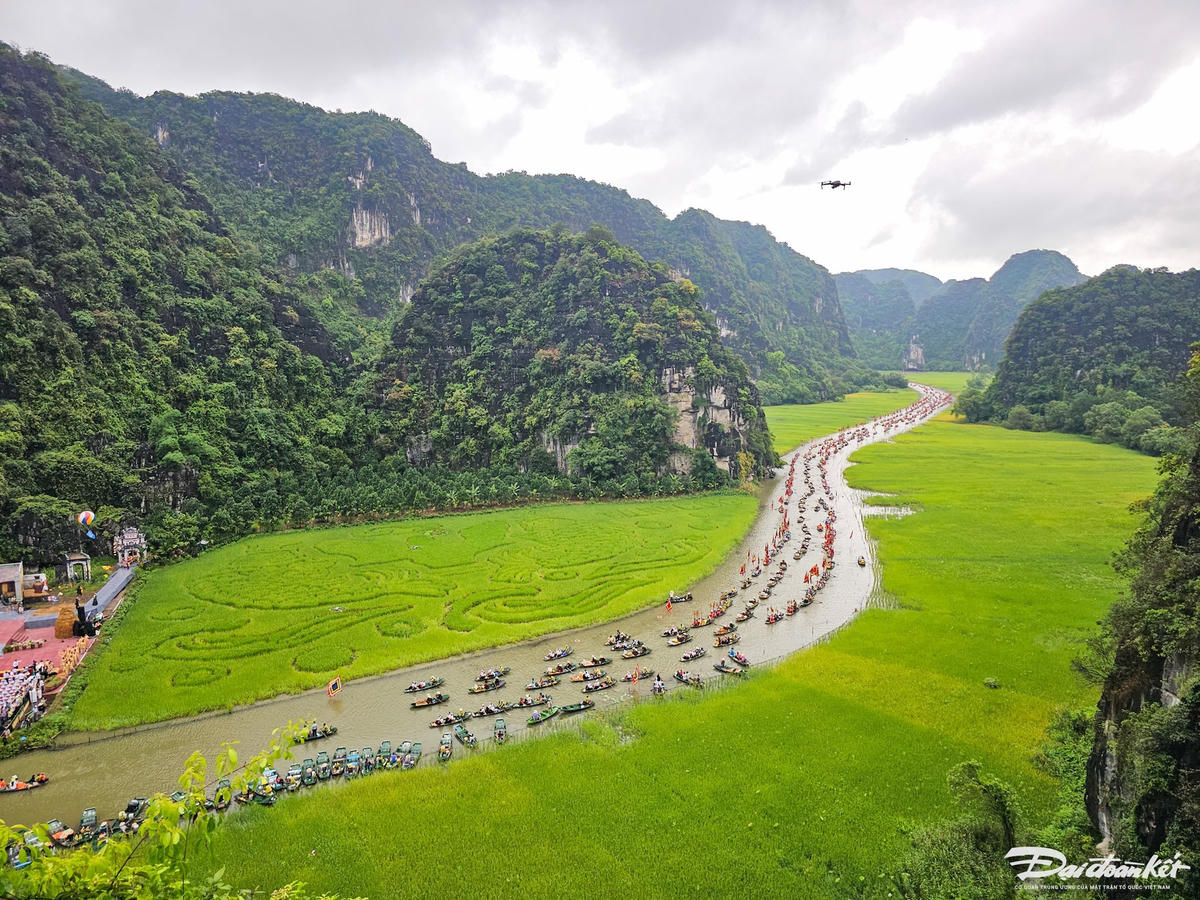
October is the single best month to visit Ninh Bình — the rice harvest turns Tam Cốc valley into a 2km corridor of gold, daytime temperatures average 27°C with minimal rainfall, and tourist density remains 30% below the November peak. This directly impacts the best time visit ninh binh experience for most travellers.

I have visited Ninh Bình in every calendar month. October combines three factors that no other month matches simultaneously: the visual spectacle of the harvest (which begins in late September and peaks in the first two weeks of October), weather stability (averaging 4 rainy days versus July’s 15), and the comfortable gap before the November high-season surge when Chinese Golden Week overflow and European winter travellers converge. The best time visit ninh binh landscape has evolved considerably in this regard.
The harvest itself is worth understanding. Farmers in the Tam Cốc and Tràng An valleys plant a single annual rice crop, timed so that the paddies flood green from June, begin yellowing in September, and reach full golden maturity in early October. The rowers navigate their sampans through corridors of waist-high golden stalks. The scent of ripe rice — warm, faintly sweet, utterly unlike anything in European agriculture — fills the valley. By late October, the harvest is complete, the paddies are stubble, and the visual magic is gone until June. Those exploring best time visit ninh binh will find this particularly relevant.
Ninh Binh Weather: Month-by-Month Breakdown
Ninh Bình’s climate divides into four distinct phases: cool-dry (November–February, 15–22°C), warm-dry (March–May, 22–30°C), hot-wet (June–August, 30–36°C with 12–16 rain days/month), and harvest transition (September–October, 25–30°C, 4–8 rain days). This is particularly relevant when considering best time visit ninh binh options for your visit.
| Month | Temp (°C) | Rain Days | Crowds | Best For |
|---|---|---|---|---|
| January | 15–20 | 6 | Low | Temple visits, cool cycling |
| February | 16–22 | 8 | High (Tết) | Avoid — Tết inflation |
| March | 19–25 | 7 | Medium | Early green paddies |
| April | 22–28 | 8 | Medium | Cycling, photography |
| May | 25–32 | 10 | Medium | Lotus blooms begin |
| June | 28–35 | 12 | Low | Vivid green paddies, lotus peak |
| July | 29–36 | 15 | Low | Budget travel, empty sites |
| August | 28–35 | 14 | Low | Dramatic cloud formations |
| September | 26–32 | 10 | Medium | Rice turning gold |
| October | 24–29 | 4 | Medium-High | ★ Peak harvest, best overall |
| November | 20–26 | 4 | High | Post-harvest, clear skies |
| December | 16–22 | 5 | Medium | Cool, quiet, misty karsts |
Should You Visit Ninh Binh in the Rainy Season?
Yes, with caveats — Ninh Bình’s rainy season (June–August) delivers rainfall in concentrated 30–60 minute afternoon bursts, leaving mornings clear for sightseeing, reducing prices by 15–25%, and producing the most intensely green landscape of the year.
The common advice to “avoid the rainy season” reflects a misunderstanding of how tropical rainfall works in this region. Rain does not fall continuously. It arrives spectacularly — the sky darkens at 14:00, the downpour is violent and theatrical, and by 15:30 the sun is back, the air smells of wet limestone, and the karsts are draped in mist that photographers queue for in October and cannot find. I have shot some of my finest Ninh Bình images in July. The light after a rainstorm has a quality — diffused, golden, almost filmic — that clear-sky conditions simply cannot replicate. Understanding best time visit ninh binh in this context helps with trip planning.
The practical trade-offs: expect muddy cycling paths (stick to paved roads), higher humidity (85–95%), and occasional boat delays if the Ngô Đồng River level rises above the cave ceilings at Tam Cốc. Pack a lightweight rain poncho, available at every Tam Cốc shop for 20,000 VND. Waterproof your camera bag. And enjoy the solitude — Tam Cốc in July feels like it belongs to you. For visitors researching best time visit ninh binh, this information proves especially useful.
Best Time to Visit Ninh Binh for Photography
The three premium photography windows in Ninh Bình are: early October sunrise at Múa Cave (05:45–06:30, golden paddies), June lotus season at Thung Nham (06:00–07:30, pink blooms on still water), and December misty mornings from the Tràng An cliffs (06:30–08:00, fog threading through karsts).
Each window rewards a different aesthetic. October offers the postcard — warm gold, clean lines, saturated colour. June delivers the ethereal — lotus ponds reflecting limestone towers at dawn, when the water is so still that the reflection is indistinguishable from reality. December provides the moody — low cloud, muted tones, the kind of images that work in black and white because the landscape is already doing the work.
Ninh Binh Seasonal Events and Festivals
Ninh Bình’s three major annual events — the Tràng An Festival (March, first weekend after Tết), the Hoa Lư Festival (April, 10th day of the 3rd lunar month), and the Bái Đính Pagoda Spring Pilgrimage (February–March) — draw 50,000–200,000 domestic visitors each and significantly impact accommodation availability.

The Hoa Lư Festival deserves particular attention from cultural travellers. Held to honour Kings Đinh Tiên Hoàng and Lê Đại Hành, it features boat processions through the ancient capital valley, traditional wrestling (đấu vật), and a ceremonial re-enactment of the 968 AD unification. The atmosphere is authentically Vietnamese — loud, colourful, densely crowded, and completely unlike anything in the tourist brochures. I find it magnificent, though I recommend booking accommodation three weeks in advance.
How Crowded Is Ninh Binh by Season?
Ninh Bình’s tourist density peaks in November (est. 45,000 visitors/week) and drops to its lowest in July (est. 12,000 visitors/week) — a nearly 4:1 ratio that transforms the experience from queuing at boat docks to having attractions functionally to yourself.
The crowd variable that most surprises first-time visitors is the domestic-international split. During Tết and the spring festivals, 85% of visitors are Vietnamese families. During October–November, the ratio inverts to roughly 60% international. The practical implication: Vietnamese holiday periods produce noise, energy, and accommodation pressure, while international high season produces boat dock queues and photography competition. Neither ruins the experience. Both reward early mornings.
Frequently Asked Questions
What is the worst month to visit Ninh Binh?
February during Tết — prices double, many homestays close for family celebrations, and attraction queues are longest. If you must visit in February, arrive after the Tết holiday week ends (check lunar calendar, typically late January to mid-February).
Can I see the rice harvest and lotus flowers in the same trip?
No. Lotus season peaks in June; rice harvest peaks in October. These events are separated by 3–4 months. Choose one or plan two trips.
Is Ninh Binh worth visiting in winter (December–January)?
Yes, particularly for travellers who prefer cool weather (15–20°C), misty karst photography, and minimal crowds. The landscape lacks the golden harvest colour but gains atmospheric mist and very comfortable cycling conditions.
🏛️ Explore Ninh Binh with Expert Guides — Book a private Ninh Binh tour with knowledgeable local guides who bring the UNESCO heritage to life. All-inclusive day trips from Hanoi starting at $45/person.
compare options on Klook
📚 Dr. Whitford’s Note: The distinction between “good weather” and “good timing” is worth making. October offers pleasant temperatures but harvested paddies. Late May offers golden rice but considerable heat. Both are correct answers to different questions.
Further Reading
— Dr. James Whitford, Heritage Studies | University of Melbourne
This article contains affiliate links. When you book through our partner links, we may earn a small commission at no additional cost to you. This supports our continued research across Ninh Bình province.
— J. Whitford, PhD.
Cambridge, UK / Ninh Bình, VN
Disclosure: Some links in this guide may be affiliate links. I only recommend services I have personally verified during my fieldwork in Ninh Bình province.
📌 Book this experience:
currently on Agoda |
Some links are affiliate links. We earn a small commission at no extra cost to you.
📍 Explore more: best time to visit Ninh Binh →
For those planning ahead, I have found that you can check seasonal tour availability on 12Go with confirmed availability and transparent pricing.