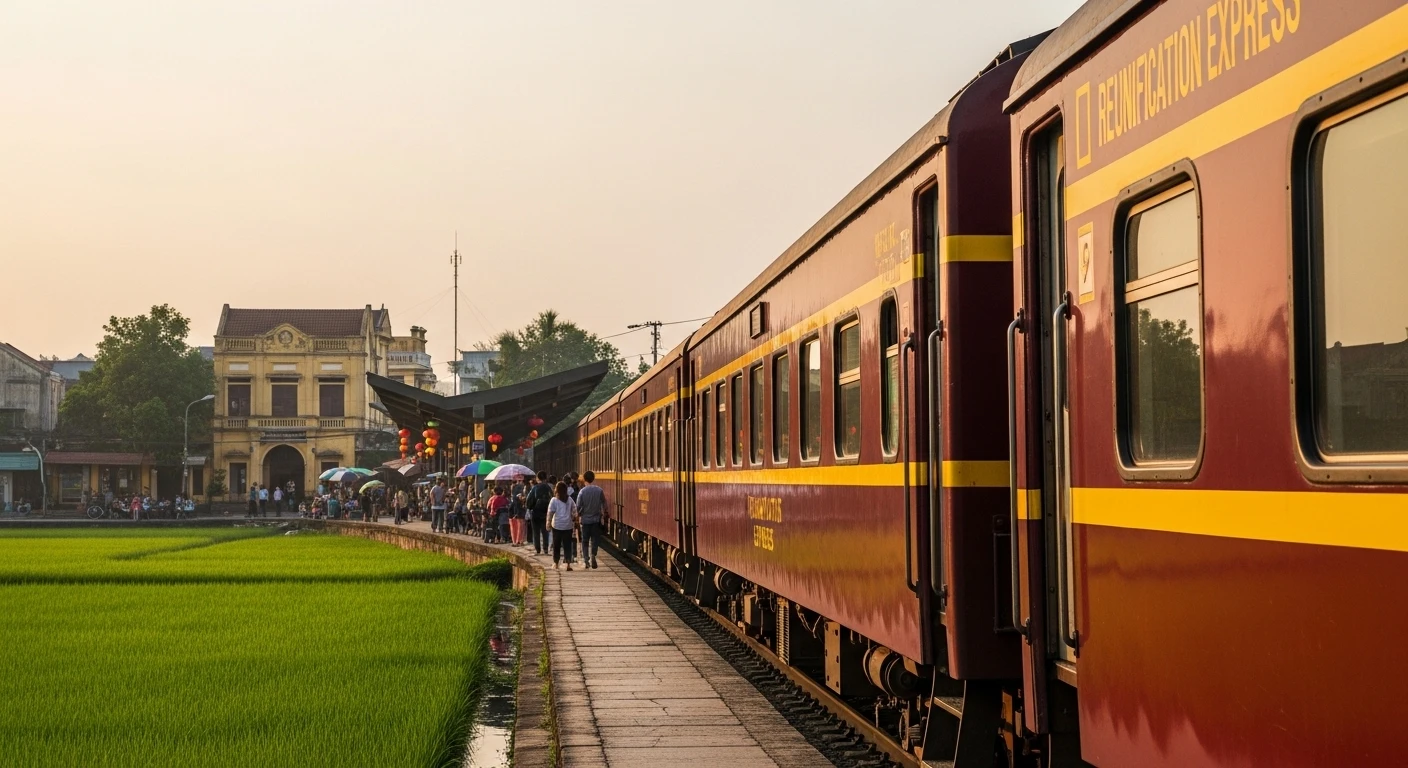
The Complete Guide to the Ninh Binh to Hue Train Journey
I have spent many years tracing the historical corridors of Vietnam, and the overland route connecting the northern limestone karsts to the old imperial capital is one of my frequent journeys. Taking the Ninh Binh to Hue train offers a practical and scenic way to bridge these two historically significant regions. The journey takes between 10 and 12 hours depending on the specific service, carrying passengers over 570 kilometers down the coastline of central Vietnam.
Rather than flying from Hanoi, many travelers choose this direct rail link to continue their southward progression. The Reunification Express operates multiple daily departures on this route. This provides flexibility for either daytime travel to observe the changing landscape or overnight transit to save on hotel costs. I have found the night trains particularly efficient for maximizing time, though daytime trains reveal the coastal geography quite clearly.
Quick Answer: Ninh Binh to Hue Route
- Travel Time: 10 to 12.5 hours
- Price Range: $18 to $50 USD (449,000 to 1,200,000 VND)
- Departure Point: Ninh Binh Railway Station
- Arrival Point: Hue Railway Station
- Best Option: The SE19 or SE1 overnight train in a 4-berth soft sleeper cabin.
Comparing Train Classes and Fares
The state operator, Vietnam Railways, provides four distinct classes of travel on the SE express trains. Each class caters to different comfort requirements and budgets. I must note that price variations depend heavily on the time of booking and the specific train number, with faster trains charging a slight premium. The baseline cost for a soft seat is approximately $18 USD, while the highest tier soft sleeper berth will run close to $50 USD during peak season.

The hard seat class is the most basic option. It consists of wooden benches and is rarely chosen for journeys exceeding three hours. The soft seat class features reclining padded chairs in air-conditioned carriages, much like a domestic airplane cabin. For a 10-hour daytime trip, this is a viable and economical choice.
The sleeper options are divided into hard sleepers and soft sleepers. The hard sleeper carriages contain compartments with six thin mattresses stacked in three tiers. The soft sleeper compartments, which I consistently select for overnight travel, feature four thicker mattresses in a two-tier arrangement. The extra headroom and improved bedding justify the higher price point.
| Ticket Class | Description | Average Price (USD) | Best For |
|---|---|---|---|
| Soft Seat | Reclining padded seat in open carriage | $18 – $25 | Daytime travel, budget travelers |
| Hard Sleeper | 6-berth cabin (3 tiers), thin mattress | $28 – $35 | Groups on a budget |
| Soft Sleeper | 4-berth cabin (2 tiers), thick mattress | $40 – $50 | Overnight comfort, solo travelers |
| VIP Sleeper | 2-berth private cabin (on select trains) | $80 – $95 | Couples seeking privacy |
Current Train Schedules and Timings
The Reunification Express runs between six and seven daily services from Ninh Binh to Hue. The timetable is structured to offer both daytime and nighttime transit. Train SE7, for instance, departs Ninh Binh around 08:30 AM and arrives in Hue near 20:00 PM. This 11.5-hour journey allows passengers to view the countryside, including the Hai Van Pass approach, in full daylight.
For overnight travel, the SE19 and SE1 are the most popular choices. The SE19 departs Ninh Binh at 22:15 PM and arrives in Hue at 09:30 AM the next morning. The SE1 leaves at 23:55 PM and arrives at 10:45 AM. These timings are quite ideal, as they allow passengers to board, sleep through the bulk of the journey, and arrive refreshed in the morning. I have found the SE19 to be generally punctual, rarely delayed by more than 30 minutes upon arrival.
It is important to understand that Vietnamese trains operate on a single-track system for much of the national network. Because northbound and southbound trains must share the same track and pass each other at designated sidings, minor delays are a normal part of the operational reality. You should build a small buffer into your itinerary when planning connecting transport in Hue.
Step-by-Step Booking Process
Securing a ticket for the Ninh Binh to Hue train requires some advance planning, especially if you intend to travel during national holidays like Tet in January or February. During these peak periods, soft sleeper berths can sell out three weeks in advance. For standard travel dates, purchasing a ticket three to five days prior to departure is usually sufficient. There are two primary methods for securing a fare.
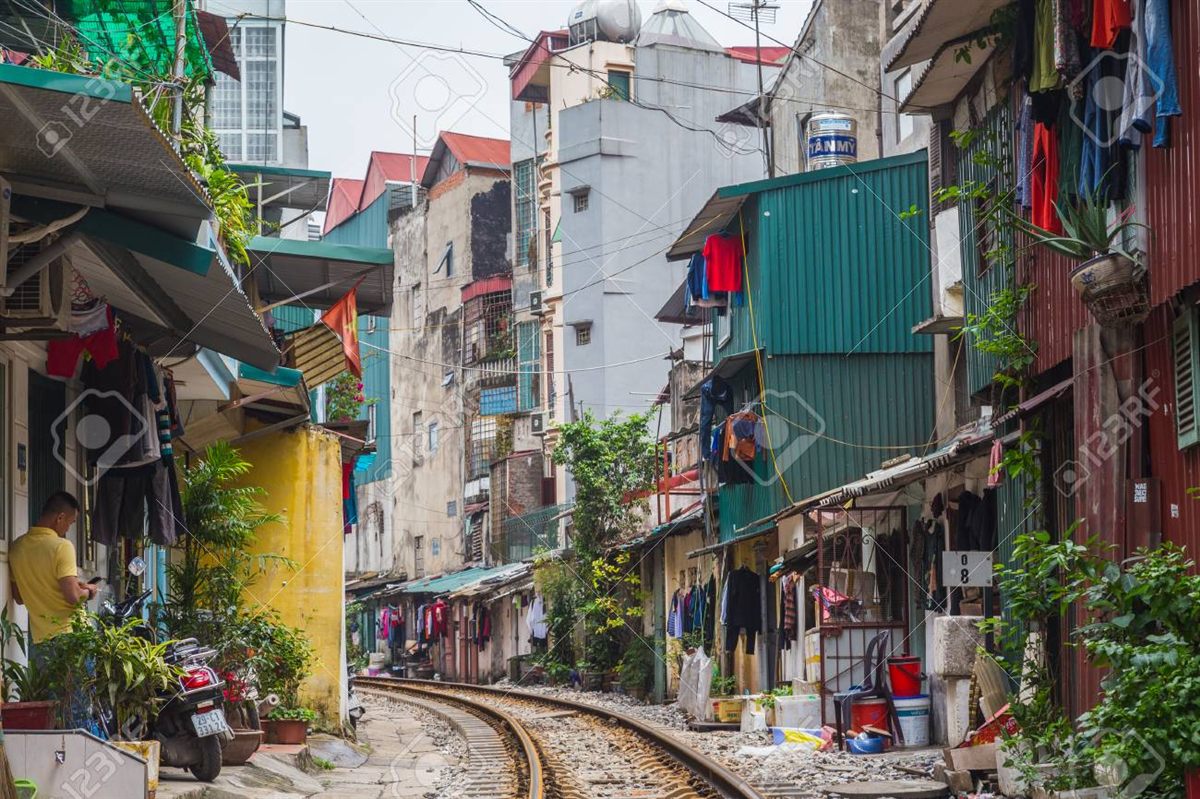
The first method is purchasing directly at the Ninh Binh Railway Station ticket counter. The staff will require your passport to issue the ticket. While this avoids any online processing fees, it requires a physical trip to the station and risks the desired class being sold out. The station is located approximately 6 kilometers from the main tourist area of Tam Coc.
The second and more efficient method is using an online platform. This allows you to view the real-time seat map and select your exact berth. When you reserve train tickets on 12Go, the system issues a digital boarding pass with a QR code. You simply show this code on your mobile device to the conductor when boarding. The convenience of securing the exact berth location, particularly the lower bunk in a 4-berth cabin, is well worth the nominal booking fee.
For a live fare comparison from wherever you’re actually starting:
Essential Booking Tips
- Always select the lower berth (Bed 1 or Bed 2) in a sleeper cabin if available, as it provides under-bed luggage storage and eliminates the need to climb the small ladder.
- Avoid the hard seat class entirely for this route, as the wooden benches become exceedingly uncomfortable after the second hour.
- Print your e-ticket or save it offline, as mobile data reception can be intermittent inside the station building.
- Check the train number carefully. SE trains with lower numbers (like SE1 or SE3) generally make fewer stops and complete the route faster than higher-numbered trains.
The Station Experience and Boarding
Ninh Binh Railway Station is a relatively small and straightforward facility. It is located at 1 Hoang Hoa Tham street in the city center. A taxi from Tam Coc to the station takes about 15 minutes and costs approximately 100,000 VND. You should plan to arrive at the station 45 minutes before your scheduled departure. This provides ample time to locate the correct platform and purchase any necessary supplies.
The station has a small waiting area with seating and basic restroom facilities. Directly outside the main entrance, several small vendors sell bottled water, instant noodles, and packaged snacks. I strongly advise purchasing your water and snacks here. While there is a dining cart on the train and staff occasionally push food trolleys through the aisles, the selection is limited and prices are elevated.
When the train arrives, boarding happens quickly. The stop in Ninh Binh is typically only 5 to 7 minutes long. The train cars are clearly numbered on the exterior near the doors. Your ticket will indicate both your car number (Toa) and your seat or berth number (Cho). The conductors stand by the doors to check tickets and guide passengers to the correct carriage.
Onboard Facilities and Journey Expectations
The conditions aboard the Reunification Express have improved notably over the past decade. The SE trains are air-conditioned throughout, and the temperature is often kept quite low. If you are traveling in a soft seat, bringing a light jacket or sweater is necessary. In the sleeper cabins, a pillow, sheet, and blanket are provided for each passenger.

Luggage storage is handled at your seat or berth. There are no separate luggage cars for standard baggage. In the sleeper cabins, large suitcases can be stored under the bottom bunk or in the large alcove above the door. In the seating carriages, overhead racks accommodate medium-sized bags. Keeping your valuables in a small daypack on your person is a standard safety precaution.
Restrooms are located at the end of each carriage. Most carriages now feature a western-style toilet at one end and a squat toilet at the other, along with a small sink area. The cleanliness of these facilities degrades as the journey progresses, so utilizing them earlier in the trip is advisable. It is also wise to carry your own toilet paper and hand sanitizer, as supplies often run out.
The scenery during daylight hours is quite varied. The train passes through expansive agricultural plains, dense coastal foliage, and several provincial towns. Approaching Hue from the north, the track runs near the coastline, offering glimpses of the East Sea and the central Vietnamese topography.
Arrival at Hue Railway Station
Hue Railway Station is located at the western end of Le Loi street, situated on the south bank of the Perfume River. It is a historic building that is easy to navigate. Upon disembarking, you will exit through the main hall where numerous taxi drivers will approach you. The station is very close to the city center.
A standard taxi ride from the station to the popular tourist hotels in the center of Hue should take less than 10 minutes and cost between 40,000 and 60,000 VND. Metered taxis from reputable companies like Mai Linh are readily available. Alternatively, you can book a Grab car via the mobile application, which provides a fixed price and eliminates any need for negotiation.
Arriving in the morning after a night train allows you to drop your luggage at your accommodation and begin exploring immediately. The Imperial City and the various royal tombs are easily accessible. The train journey from the northern karsts to this central cultural hub is a transition I find consistently fascinating, shifting from raw natural landscapes to structured historical architecture.
Frequently Asked Questions
Is there Wi-Fi on the train from Ninh Binh to Hue?
No, there is no reliable Wi-Fi provided on the Reunification Express trains. Passengers should purchase a local Vietnamese SIM card with a data plan prior to the journey. Cellular reception is generally good along the route, though it may briefly drop out when passing through tunnels or remote mountainous sections.
Can I buy food and drinks on the train?
Yes, there is a basic dining car on the train that serves simple Vietnamese meals like pho, rice dishes, and coffee. Additionally, staff regularly push trolleys through the carriages selling snacks, boiled eggs, instant noodles, and beverages. However, it is highly recommended to bring your own snacks and bottled water for better variety and value.
How far is the Ninh Binh train station from Tam Coc?
The Ninh Binh train station is located approximately 6 kilometers from the Tam Coc tourist area. A taxi or Grab car ride between the two locations takes about 15 minutes and typically costs around 100,000 VND ($4 USD).
Are the sleeper cabins private?
The standard soft sleeper cabins have 4 berths, and the hard sleeper cabins have 6 berths. Unless your group purchases all the tickets for a single cabin, you will be sharing the space with other passengers. Private 2-berth VIP cabins are only available on a few specific luxury tourist trains, which operate on limited schedules.
For more information on the region’s historical sites, you can read my detailed observations in the guide to Hoa Lu Ancient Capital. If you are arriving in Ninh Binh by road, note that the Ninh Binh bus station is in a different location than the railway station.
© 2026 bestofninhbinh.com. All rights reserved.
Original research by Dr. James Whitford.
First published on bestofninhbinh.com. Unauthorized reproduction prohibited.