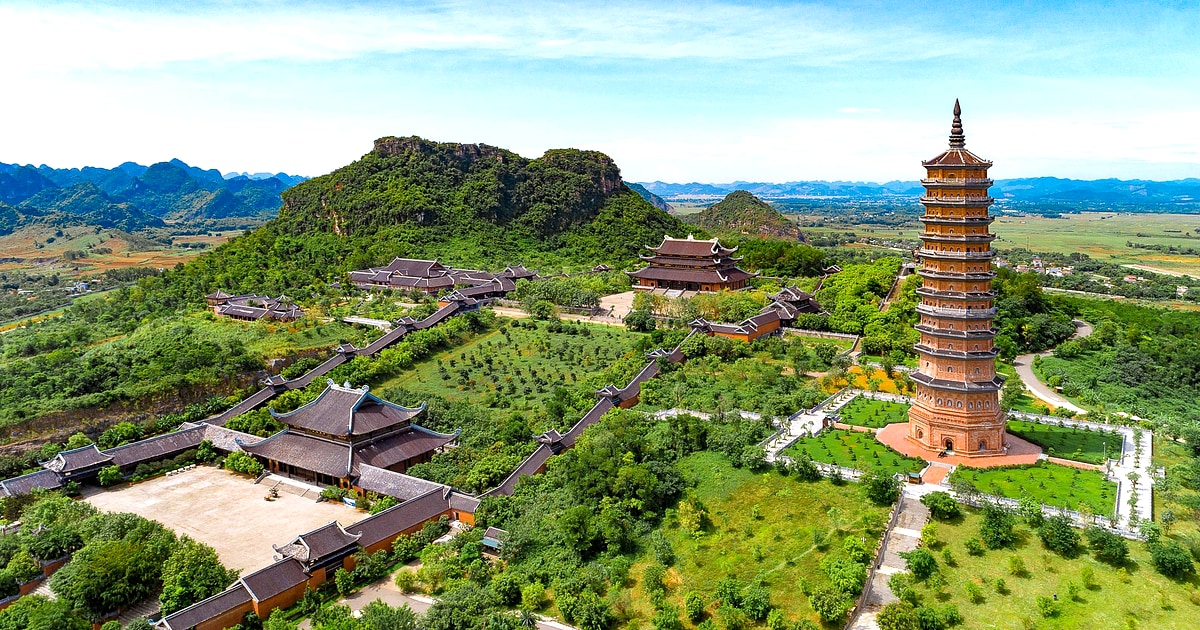
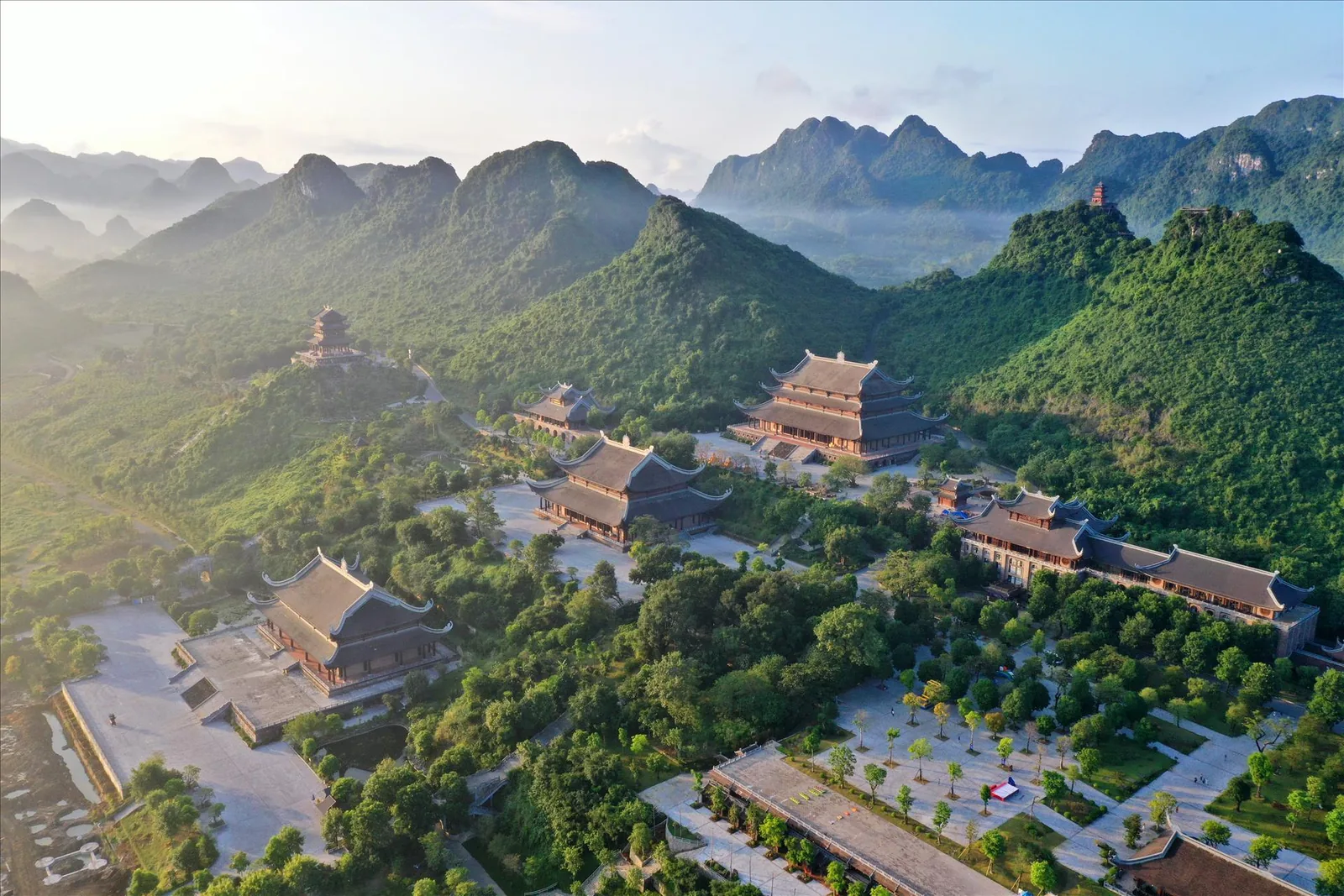
In 2012, the Vietnamese government approved the construction of what would become the largest pagoda complex in Southeast Asia — a decision that, depending on one’s perspective, represents either an extraordinary act of religious devotion or an equally extraordinary act of ambition. Tam Chuc Pagoda, spanning 5,100 hectares across Ha Nam province (bordering Ninh Binh), opened its first phase in 2019 and has been expanding since.
The tam chuc pagoda complex now features prominently in UNESCO’s tentative list for mixed natural-cultural heritage — a nomination that couples the religious architecture with the surrounding karst-wetland ecosystem, including habitat for the Delacour’s langur.
At a glance:
- Area: 5,100 hectares (largest Buddhist complex in Southeast Asia)
- Location: Ha Nam province, 15 km from Ninh Binh border
- UNESCO status: Tentative list (mixed heritage nomination, pending)
- Entry: Free (electric shuttle and boat fees separate)
- Best visit: Weekday mornings; Vesak festival (May) for full ceremonial experience
What Makes Tam Chuc Significant
Tam Chuc occupies a landscape that has been sacred for considerably longer than the current construction suggests. Archaeological surveys conducted between 2008 and 2012 identified Neolithic-era artifacts within the karst caves surrounding the artificial lake — evidence of human habitation dating to approximately 30,000 years ago. The pagoda complex was deliberately sited to incorporate these caves into the religious precinct, creating a rather unusual fusion of prehistoric archaeology and contemporary Buddhist architecture.
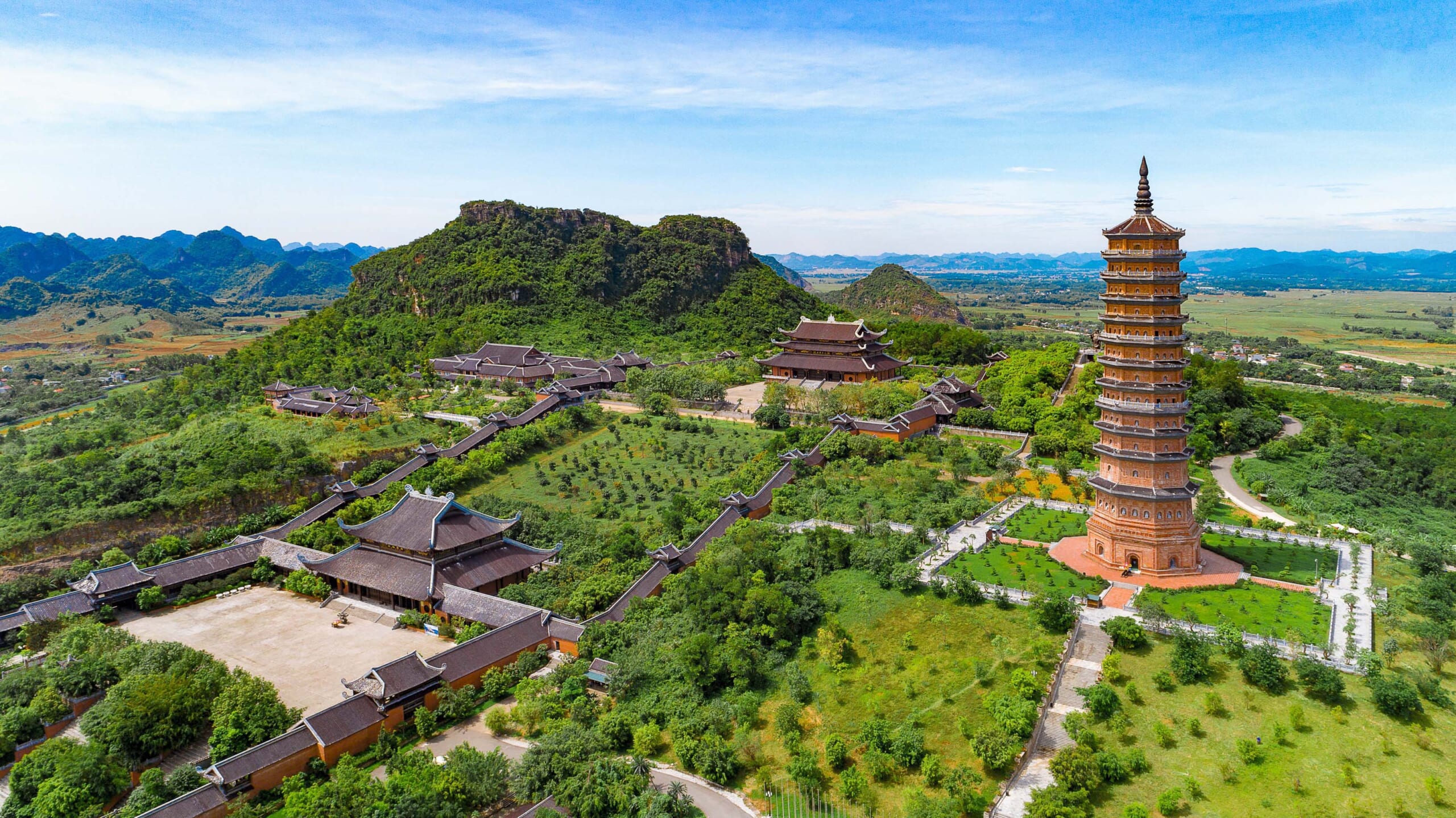
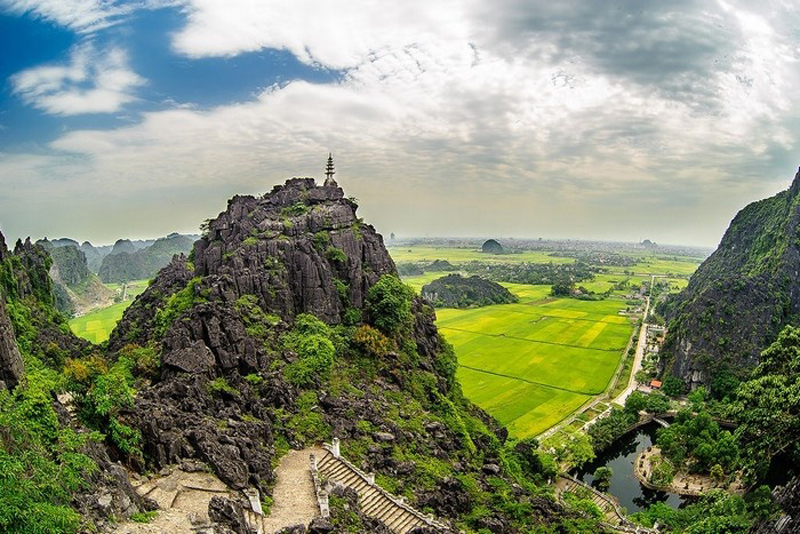
The complex centres on Tam Chuc Lake — a 600-hectare artificial reservoir created by damming a natural karst valley. Visitors access the main pagoda via electric boat across the lake, a 15-minute crossing that provides an approach sequence clearly designed to evoke the journey to Borobudur or Angkor (whether it achieves this is, perhaps, a matter of individual assessment).
📚 Historical Note: The tam chuc pagoda site was originally a limestone quarry. The conversion from industrial extraction to religious complex required relocating an entire village (Tam Chuc commune, ~2,000 residents) — a controversial process that the current promotional materials understandably do not emphasise.
Visitor Experience
Getting There and Around
| Transport | Details | Cost |
|---|---|---|
| Electric shuttle (gate to lake) | 2 km, 10 minutes | 30,000 VND one-way |
| Electric boat (across lake) | 15 minutes | 50,000 VND return |
| From Ninh Binh city | 25 km, 40 minutes by car/bike | Grab: ~150,000 VND |
| From Hanoi | 80 km, 1.5 hours via QL1A | Bus: 80,000 VND |
Key Structures
- Main Pagoda (Điện Tam Thế): Three-storey structure housing bronze Buddha statues. The bas-relief panels depicting the life of Buddha are carved from the same local limestone used in Bai Dinh Pagoda — by, one suspects, many of the same Ninh Van artisans.
- Ngoc Pagoda: Built inside a natural cave at the summit of a karst tower. 400 steps. The cave itself predates the pagoda by several hundred million years, which lends a certain perspective.
- Stone Pillar Forest: 2,000+ carved stone pillars representing Buddhist teachings. Impressive in scale, if somewhat repetitive in execution.
Tam Chuc vs Bai Dinh: Which Pagoda to Visit?
| Criteria | Tam Chuc | Bai Dinh |
|---|---|---|
| Scale | 5,100 ha | 700 ha |
| Age | 2019 (modern) | 2010 (modern), 1000 AD (original) |
| Access | Boat + shuttle | Electric car + walking |
| Crowd level | Lower (weekdays) | Higher year-round |
| Landscape | Lake + karst + cave | Mountain + valley |
| UNESCO | Tentative list | Part of Trang An complex |
| Visit time | 3-4 hours | 2-3 hours |
If choosing only one: Bai Dinh for its integration with the broader Trang An UNESCO site. Tam Chuc for landscape drama and the boat approach. Both for completeness — they complement rather than duplicate each other.
📌 Book this experience:
Check tours on Klook | Browse on Klook
Some links are affiliate links. We earn a small commission at no extra cost to you.
For travelers looking to arrange pagoda visits and temple tours in advance, I have found that you can book Tam Chuc Pagoda day trips on 12Go with verified operators and instant confirmation.
FAQ
Is Tam Chuc Pagoda worth visiting?
Yes, particularly for the landscape setting — a 600-hectare lake surrounded by karst towers, accessed by electric boat. The architecture is modern (2019) but ambitious in scale. Allow 3-4 hours. Best on weekdays to avoid pilgrimage crowds.
How much does Tam Chuc Pagoda cost?
Entry is free. Electric shuttle: 30,000 VND one-way. Boat crossing: 50,000 VND return. Total transport cost: approximately 110,000 VND ($4.40). No additional fees for pagoda access.
Is Tam Chuc a UNESCO World Heritage Site?
Not yet. Tam Chuc is on Vietnam’s UNESCO tentative list for mixed natural-cultural heritage nomination. The application couples the pagoda complex with the surrounding karst-wetland ecosystem. A decision is pending as of 2026.
Disclosure: Some links in this article are affiliate links. If you book through them, we earn a small commission at no extra cost to you.
You might also enjoy: the UNESCO-inscribed Trang An landscape.
For further reading: Vietnam e-visa application portal — the official government site, $25 for a single-entry e-visa. If you would rather have someone double-check the paperwork for you, Vietnam Visa Online handles the application for a service fee.
Frequently Asked Questions
What is the historical significance of Tam Chuc Pagoda?
Tam Chuc Pagoda, situated in Ha Nam Province approximately 70 kilometers from Ninh Binh, has origins dating to the Tran Dynasty (13th-14th century) but underwent a massive expansion completed in 2019, making it one of the world’s largest Buddhist complexes at over 5,000 hectares. The complex incorporates stone carvings sourced from Ninh Binh’s Ninh Van village, connecting it directly to the region’s millennium-old artisan traditions.
How do I visit Tam Chuc Pagoda from Ninh Binh?
The drive from Ninh Binh City to Tam Chuc takes approximately 1.5 hours via National Highway 1A, though the route through Gia Vien district offers more scenic karst views. Electric carts transport visitors within the sprawling complex for 50,000 VND, and boat rides across the lake to reach the main pagoda cost 100,000 VND per person. A thorough visit requires 3-4 hours minimum.
When is the best time to visit Tam Chuc Pagoda?
Weekday mornings between 7:00-9:00 AM provide the most contemplative atmosphere, as the complex sees relatively few visitors outside the Vesak festival period (April-May lunar calendar) when attendance can exceed 50,000 pilgrims daily. The autumn months of September through November offer cool temperatures and clear skies ideal for appreciating the complex’s dramatic lakeside setting against surrounding karst peaks.