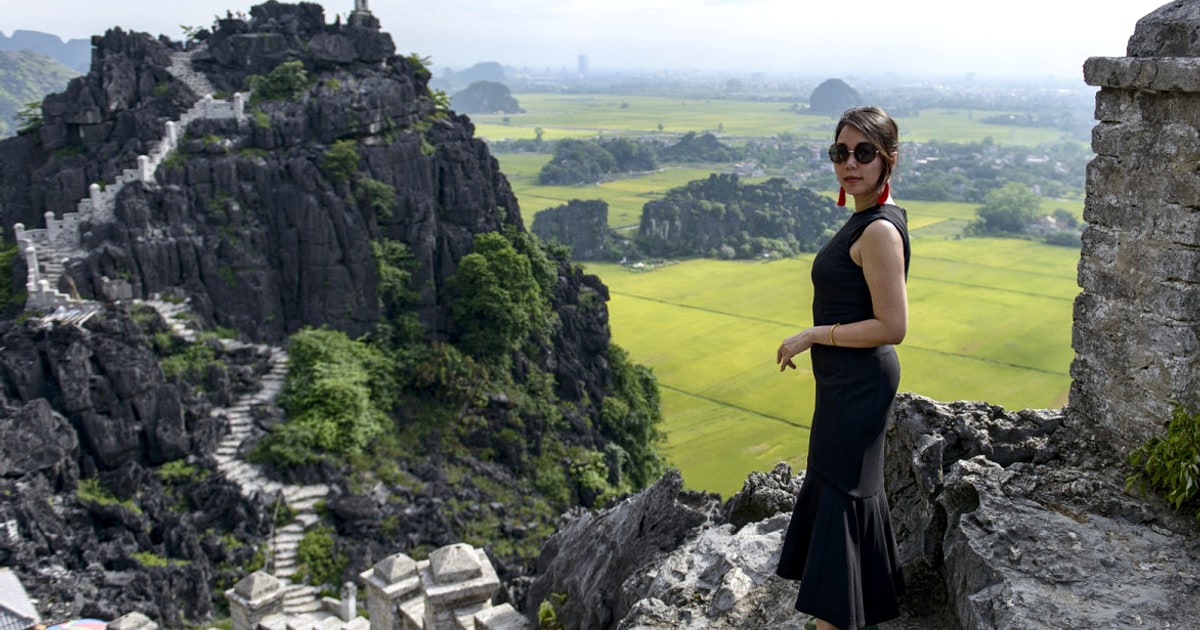
On my third pre-dawn ascent of Mua Cave in September 2024, I arrived at the dragon statue viewpoint at 05:12 to find myself entirely alone — a circumstance that, by 06:30, had changed rather dramatically. The mua cave sunrise photography experience divides neatly into two categories: the transcendent solitude of being above the mist before first light, and the Instagram queue that materialises once the golden hour is confirmed. This guide concerns itself primarily with the former. For broader trip planning, see the Ninh Binh complete guide.
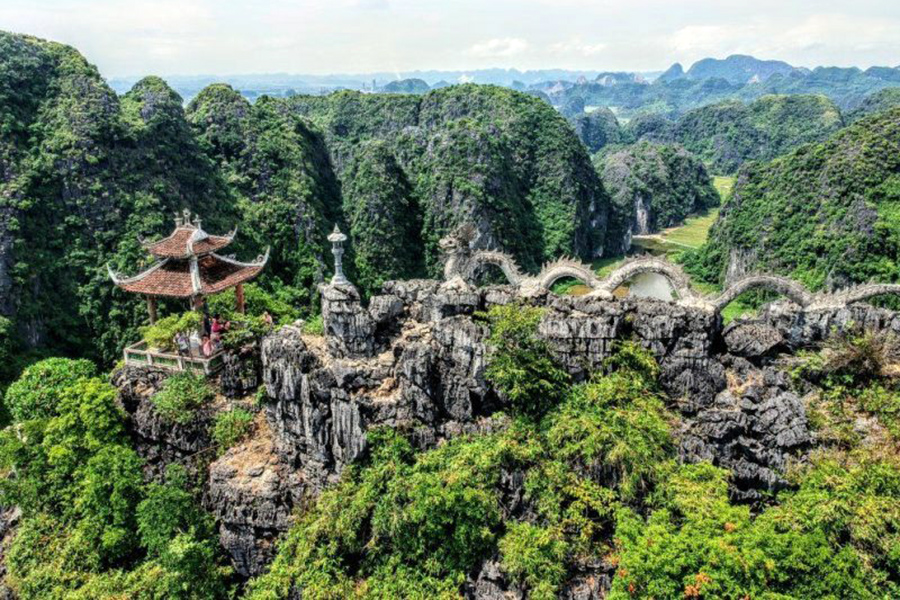
The 486-step climb to Mua Cave’s summit viewpoint at 135 metres provides what is, without qualification, the finest sunrise vantage point in Ninh Binh province — a panorama of limestone karsts, the Ngo Dong River, and the Tam Coc rice fields that shifts from blue-grey pre-dawn to gold within approximately forty minutes.
At a glance:
- Summit elevation: 135m above sea level (486 steps from entrance)
- Climb duration: 20–35 minutes depending on fitness
- Gate opening: 05:00 (officially — staff often arrive by 04:45)
- Entry fee: 100,000 VND ($4) — exact change recommended at dawn
- Best sunrise months: October–December (clearest skies, mist in valley)
Mua Cave Sunrise Times by Month
The mua cave sunrise time varies by approximately 50 minutes across the year. Arriving 30 minutes before sunrise is essential — the pre-dawn blue hour often produces photographs of greater subtlety than the sunrise itself.
| Month | Sunrise | Arrive Gate By | Conditions |
|---|---|---|---|
| January | 06:30 | 05:30 | Cool (12–18°C), occasional fog — dramatic but unpredictable |
| February | 06:20 | 05:20 | Drizzle common, low cloud can obscure valley |
| March | 06:00 | 05:00 | Improving clarity, rice planting begins |
| April | 05:40 | 04:40 | Good visibility, green paddies emerging |
| May | 05:25 | 04:25 | Golden rice period (late May), excellent |
| June | 05:20 | 04:20 | Hot, hazy — sunrise muted by humidity |
| July–August | 05:25–05:35 | 04:30 | Monsoon risk, dramatic clouds when clear |
| September | 05:40 | 04:40 | Golden rice return, mist in valley — peak season |
| October | 05:50 | 04:50 | Clearest skies, best overall conditions |
| November | 06:05 | 05:05 | Cool, dry, low mist — excellent photography |
| December | 06:25 | 05:25 | Coolest (10–16°C), mist pools in valley |
📚 Historical Note: The name “Mua” (Dance) derives from the Tran dynasty tradition (1225–1400) of court dancers performing on the mountain during royal visits to the Hoa Lu capital. Whether the dancers climbed the same route tourists use today is a matter of some scholarly debate — the current concrete steps date to 2018 and replaced a goat track that would have tested the most committed performer.
The Climb: What to Expect Before Dawn
Ascending 486 limestone steps in darkness requires rather more preparation than the daytime experience. The steps are concrete and reasonably uniform, but the handrail coverage is incomplete (approximately 60% of the route), and the final 80 steps to the dragon statue viewpoint are steeper and narrower than the rest.
Essential Gear for the Pre-Dawn Climb
- Headtorch: Non-negotiable. Phone torches work but occupy one hand you will need for the railing. A head-mounted light rated at 100+ lumens is ideal.
- Footwear: Closed-toe shoes with grip. The steps accumulate dew overnight and are genuinely slippery before sunrise. Flip-flops — which I have observed on tourists at 05:30 — constitute an act of misplaced optimism.
- Layer: A light jacket or fleece. The summit is exposed and the pre-dawn temperature can be 5–8°C cooler than the valley floor. October–February mornings routinely dip below 15°C.
- Water: 500ml minimum. The climb generates more perspiration than one expects, even in cool conditions.
- Camera gear: See photography section below. Tripod recommended but adds difficulty to the climb.
Route Description
From the ticket gate, the path crosses a small garden (2 minutes) before the steps begin. The ascent divides into three sections:
- Steps 1–200: Gradual incline, well-lit by the gate area, handrails both sides. Manageable at conversational pace.
- Steps 200–400: Steeper, curves right around the mountain. Handrail intermittent. Rest platforms every 50 steps.
- Steps 400–486: Final push. Fork in path — go RIGHT for the dragon statue and the superior sunrise viewpoint. Left leads to the Lying Dragon (lower, partially obstructed view).
Mua Cave Sunrise Photography Settings
The light conditions during a mua cave sunrise change rapidly. One does not have the luxury of extended experimentation — the golden window is approximately 15 minutes, and fumbling with settings during that period is the photographer’s equivalent of arriving at the restaurant after last orders.
| Phase | Time (relative) | ISO | Aperture | Shutter | Notes |
|---|---|---|---|---|---|
| Blue hour | -30 to -15 min | 800–1600 | f/8 | 2–8 sec | Tripod essential. Long exposure smooths mist. |
| Pre-sunrise glow | -15 to 0 min | 400–800 | f/8–f/11 | 1/4–1 sec | Sky colour shifts rapidly. Bracket exposures. |
| Sunrise moment | 0 to +10 min | 200–400 | f/11 | 1/60–1/250 | Sun crests eastern karsts. GND filter useful. |
| Golden hour | +10 to +40 min | 100–200 | f/8–f/16 | 1/125–1/500 | Warm light on western karsts. Handheld fine. |
Composition Tips from the Summit
- Include the dragon: Position the stone dragon statue in the foreground with the valley behind — this is the signature mua cave sunrise composition, and for good reason.
- Vertical panorama: The valley is deeper than it is wide from this vantage. A 3-frame vertical stitch captures both the river and the distant karsts.
- Look behind you: The western karsts catch sunrise light beautifully. Most photographers face east exclusively and miss the warm glow on the limestone cliffs to the west.
- Mist timing: Valley mist is thickest 15 minutes before sunrise and begins dispersing within 20 minutes after. The moment when mist partially obscures the river but karst peaks emerge above — this lasts perhaps 5 minutes and is the photograph worth climbing for.
Beating the Crowds at Mua Cave Sunrise
The mua cave sunrise experience has grown in popularity to the point where, during October peak season, 30–50 photographers may occupy the summit viewpoint by 06:00. Strategies for securing a position:
- Arrive at gate opening (05:00): Be first in queue. The 20-minute climb means you reach the summit while it is still dark and empty.
- Weekday advantage: Tuesday through Thursday sees 60–70% fewer visitors than weekends. Vietnamese domestic tourists, who constitute the majority of dawn visitors, favour Saturday mornings.
- Lying Dragon alternative: The left fork at step 430 leads to the Lying Dragon viewpoint. The panorama is slightly narrower but receives approximately 20% of the foot traffic — a worthwhile trade-off when the main viewpoint is crowded.
- Stay late: Most visitors descend by 07:00. The light between 07:00 and 08:00, while less dramatic, illuminates the valley floor more evenly and permits photographs that are actually useful for photography guides rather than merely atmospheric.
After the Sunrise: Combining with Other Activities
The considerable advantage of an early mua cave sunrise is that by 07:30, one has completed Ninh Binh’s most physically demanding activity and the remainder of the day stretches ahead unencumbered. Recommended combinations:
- 07:30–09:30: Breakfast at any Tam Coc guesthouse, then Tam Coc boat ride (morning light, fewer boats)
- 10:00–12:00: Cycling through rice paddies (flat 15 km circuit)
- Afternoon: Trang An boat tour or Hoa Lu temples
This sequence, which I have tested on multiple occasions, produces a comprehensive Ninh Binh experience within a single day — and starts with what is, without reservation, the finest moment of all.
📌 Book Mua Cave sunrise tours:
Sunrise tours on Klook | Book on Klook
Some links are affiliate links. We earn a small commission at no extra cost to you.
For those planning ahead, I have found that you can arrange early morning Mua Cave visits on 12Go with confirmed availability and transparent pricing.
FAQ
What time should I arrive at Mua Cave for sunrise?
Arrive at the gate 60 minutes before sunrise. In October (peak season), this means 04:50. The climb takes 20–35 minutes, giving you time to set up before first light. The gate officially opens at 05:00 but staff often arrive by 04:45.
Is Mua Cave safe to climb in the dark?
Yes, with proper preparation. Bring a headtorch (non-negotiable), wear closed-toe shoes with grip, and take the concrete steps at a measured pace. Handrails cover approximately 60% of the route. The steps are uniform but accumulate dew. Over 500 people climb pre-dawn daily during peak season without incident.
What is the best month for Mua Cave sunrise?
October offers the optimal combination: clear skies, valley mist, golden rice fields below, and comfortable temperatures (18–24°C). September is equally scenic but with higher rain risk. November–December provides dramatic cold-weather mist but earlier sunrise means less sleep.
Disclosure: Some links in this article are affiliate links. If you book through them, we earn a small commission at no extra cost to you.
Related Ninh Binh Guides
- best time to visit Ninh Binh
- complete Ninh Binh travel guide
- Ninh Binh food and cuisine guide
- 2-day Ninh Binh itinerary
For further reading: National Geographic on Vietnamese karsts.
Frequently Asked Questions
What time should I arrive at Mua Cave for sunrise photography?
Mua Cave ticket gates open at 6:00 AM, and reaching the summit viewpoint requires 20-30 minutes of climbing the 500 stone steps, so arrival at the gate by 5:40 AM positions you at the top as the first light illuminates the Tam Coc valley. Sunrise times in Ninh Binh range from approximately 5:15 AM in June to 6:25 AM in December, so adjusting your arrival seasonally is essential. The most dramatic light occurs in the 15 minutes immediately after the sun crests the eastern karst ridgeline, casting long shadows across the rice paddies.
What camera settings work best for Mua Cave sunrise shots?
The extreme dynamic range between shadowed karst formations and the bright sky demands either bracketed exposures for HDR processing or graduated neutral density filters, as a single exposure will inevitably sacrifice either shadow or highlight detail. A focal length of 24-35mm captures the full valley panorama including the Ngo Dong River, while 70-200mm isolates individual karst peaks emerging from morning mist. A sturdy tripod is essential for pre-dawn long exposures, though the summit platform becomes crowded after 7 AM, making tripod placement increasingly difficult.
Is the Mua Cave sunrise worth the early wake-up compared to sunset?
Sunrise offers two advantages that sunset cannot match: morning mist that threads through the karst valleys creating depth and atmosphere, and near-empty conditions at the summit that allow unobstructed composition and peaceful contemplation. Sunset at Mua Cave attracts significantly larger crowds, particularly during peak season, and the western-facing valley catches warm light but rarely produces the mist conditions that define the location’s most celebrated images. The practical compromise for less committed early risers is arriving 30 minutes after sunrise, when the light has softened and mist is dissipating but still present.