In 1010 AD, when Emperor Ly Thai To relocated Vietnam’s capital from Hoa Lu to Thang Long, he left behind a valley that would continue doing what it had done for three millennia: growing rice. The ninh binh rice fields that carpet the floor of this karst valley today are not merely photogenic — they are, quite literally, the reason civilisation took root here. The alluvial soil deposited by the Day and Hoang Long rivers, combined with the shelter provided by limestone mountains, created growing conditions that the Dinh dynasty considered worth defending with an empire.
This guide covers the ninh binh rice fields across all major viewing areas — from the celebrated paddies of Tam Coc to the quieter expanses around Hoa Lu and Thung Nham — with a seasonal calendar calibrated to the actual harvest cycles rather than the approximate dates one finds in most guidebooks.
At a glance:
- Main harvest seasons: late May–June (green-gold transition) and September–October (golden harvest)
- Best photography window: 2 weeks before harvest — paddies at peak gold
- Top viewpoints: Mua Cave summit (486 steps), Tam Coc boat ride, Hang Mua Dragon statue
- Cycling distance: 15 km Tam Coc circuit through paddies (flat terrain)
- Rice varieties: Bac Thom (fragrant), Nep Cai Hoa Vang (sticky, ceremonial)
The Rice Calendar: When Ninh Binh Rice Fields Turn Gold
Ninh Binh rice fields follow a dual-crop cycle that has remained fundamentally unchanged since the 11th century, though modern varieties have shortened maturation periods by roughly three weeks compared to traditional cultivars.

| Season | Planting | Green Stage | Golden Stage | Harvest |
|---|---|---|---|---|
| Spring crop (vụ chiêm) | February | March–April | Late May | Early June |
| Autumn crop (vụ mùa) | July | August | Late September | Early October |
| Fallow period | November–January (fields flooded or bare, migratory birds arrive) | |||
📚 Historical Note: The term “vụ chiêm” derives from Cham agricultural terminology — a linguistic remnant of the Champa kingdom’s influence on Vietnamese rice cultivation that persists in everyday farming vocabulary nearly a thousand years after Champa’s decline. One notes this with the quiet satisfaction of a historian who has found his footnote.
Best Locations to See Ninh Binh Rice Fields
Tam Coc Rice Paddies — The Iconic View
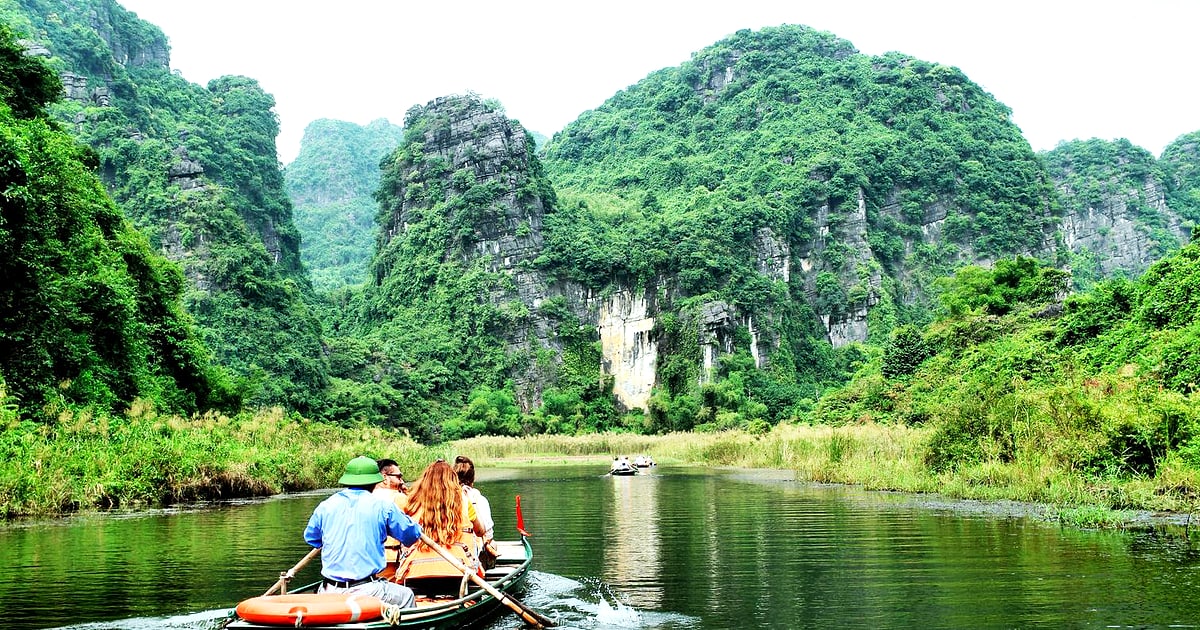
The ninh binh rice fields most visitors photograph lie along the Ngo Dong River in Tam Coc. The 2-hour sampan ride passes directly through the paddies, with limestone karsts rising from the fields like geological sentinels. The visual effect — rice stretching to the base of vertical cliffs — occurs because the paddies occupy a former seabed, and the karsts are the remnants of a 250-million-year-old coral reef.

Timing matters considerably. Arrive before 07:30 to photograph the fields without the heat haze that develops by mid-morning. The golden period (late May or late September, depending on the crop) transforms the scene from pleasant to extraordinary — and lasts approximately 10–14 days before the harvesters arrive.
Mua Cave Summit — The Aerial Perspective
The 486-step climb to Mua Cave’s summit provides what is arguably the finest aerial view of ninh binh rice fields without employing a drone. From the dragon statue at the peak (elevation: 135 metres above sea level), the Tam Coc valley unfolds as a patchwork of green, gold, or water-mirror depending on the season. The climb takes 20–30 minutes and is best attempted before 07:00 or after 16:00 — both for the light and for the temperature, which at midday makes the exposed limestone steps rather less agreeable.
Thung Nham & Thung Chiem — The Quiet Alternative
For those who prefer their rice fields without the accompaniment of 200 other tourists, the paddies around Thung Nham bird garden offer comparable scenery with perhaps 5% of the foot traffic. The fields here are smaller, bounded by closer karst walls, and during the evening hours (16:00–17:30) fill with the sound of returning egrets and cormorants — a combination of agriculture and ornithology that one finds rather more satisfying than the purely visual experience at Tam Coc.
Hoa Lu to Tam Coc Cycling Route
The 15 km cycling route from Hoa Lu Ancient Capital to Tam Coc passes through uninterrupted ninh binh rice fields along narrow concrete paths that local farmers use to access their plots. The terrain is entirely flat (this being a river valley), the traffic is limited to motorcycles and water buffalo, and the route passes through villages where the drying racks and threshing floors visible during harvest season have not changed in design since the Tran dynasty (1225–1400).
Bicycle rental: 50,000–80,000 VND/day from any hotel in Tam Coc area. Electric bicycle: 150,000 VND/day.
Photography Guide for Ninh Binh Rice Fields
| Condition | Best Time | Location | Lens |
|---|---|---|---|
| Golden hour sunrise | 05:15–06:30 | Mua Cave summit | Wide 16–35mm |
| Boat-level paddy shots | 06:30–08:00 | Tam Coc river | Standard 24–70mm |
| Farmer at work | 06:00–07:30 or 16:00–17:30 | Any roadside paddy | Telephoto 70–200mm |
| Aerial/drone | 06:00–07:00 | Tam Coc valley | Drone (permit required) |
| Misty karsts + rice | November–January AM | Thung Nham area | Wide 16–35mm |
One notes that the most frequently shared photograph of ninh binh rice fields — the overhead drone shot showing a sampan threading through golden paddies — requires a Vietnam drone permit (registration with the Civil Aviation Authority, approximately 2 weeks processing). The fine for flying without one is 5–20 million VND ($200–$800). Consult the drone photography guide for current regulations.

Rice Varieties and Cultural Significance
The ninh binh rice fields produce several notable varieties, each with specific culinary and ceremonial roles that reflect the province’s position as Vietnam’s ancient agricultural heartland:

- Bac Thom (Fragrant Northern Rice): The everyday variety, harvested in both cycles. Yields approximately 5.5 tonnes/hectare. The grain is slender, slightly translucent, and produces the subtle jasmine fragrance that distinguishes Northern Vietnamese cuisine from its Southern counterpart.
- Nep Cai Hoa Vang (Golden Flower Sticky Rice): A Ninh Binh speciality used exclusively for banh chung (Tet rice cakes) and ceremonial offerings at Bai Dinh Pagoda. Harvested once annually in October. The grains are shorter, opaque, and command prices 3–4 times higher than Bac Thom.
- ST25 (modern hybrid): Vietnam’s award-winning variety (World’s Best Rice 2019, 2023), now planted in limited quantities around Ninh Binh. Not traditional, but the grain quality is, one must concede, rather impressive.
Experiencing Rice Culture Beyond Photography
Rice Planting and Harvesting Participation
Several homestays in the Tam Coc area offer guests the opportunity to participate in actual rice farming — a phrase that, in the context of tourism, usually means standing in ankle-deep water for 20 minutes whilst someone photographs you looking earnest. The reality at the better operations (Tam Coc Horizon Bungalow, Ninh Binh Farmstay) is rather more substantive: 2–3 hours of guided work including transplanting seedlings, operating the pedal-powered water pump, and — during harvest — cutting and bundling sheaves with a hand sickle.

Cost: 300,000–500,000 VND ($12–$20) per person. Available May–June and September–October only.
Cooking with Local Rice
The cooking classes in Tam Coc that include rice preparation from paddy to plate provide context that makes the fields themselves considerably more interesting. The process — threshing, winnowing, husking by stone mortar — demonstrates why mechanisation was so transformative for Vietnamese agriculture (and why your hotel breakfast rice costs 15,000 VND rather than the 3,000 VND it would cost if still processed by hand).
Practical Information
| Detail | Information |
|---|---|
| Distance from Hanoi | 95 km (2–2.5 hours by bus/car) |
| Best golden paddy months | Late May–early June, late September–early October |
| Worst time (bare fields) | November–January (fallow), July (seedlings too short) |
| Cycling rental | 50,000–80,000 VND/day |
| Tam Coc boat ticket | 150,000 VND/person ($6) |
| Mua Cave entry | 100,000 VND ($4) |
| Drone permit | Required — apply 2 weeks advance |
📌 Book rice field experiences:
Rice field tours on Klook | Countryside tours on Klook
Some links are affiliate links. We earn a small commission at no extra cost to you.
For those planning ahead, I have found that you can book rice field season tours on 12Go with confirmed availability and transparent pricing.
FAQ
When do Ninh Binh rice fields turn golden?
Ninh binh rice fields turn golden twice yearly: late May to early June (spring harvest) and late September to early October (autumn harvest). The golden stage lasts approximately 10–14 days before harvesting begins. September–October is generally considered the more photogenic period due to clearer skies.
Where is the best viewpoint for Ninh Binh rice fields?
Mua Cave summit (486 steps, 135m elevation) provides the best aerial panorama of ninh binh rice fields without a drone. For ground-level immersion, the Tam Coc boat ride passes directly through the paddies. The cycling route from Hoa Lu to Tam Coc (15 km, flat) offers the most intimate experience.
Can you visit Ninh Binh rice fields year-round?
The fields are visually interesting from February through October. November through January is fallow season — fields are flooded or bare, though this period attracts migratory birds to Van Long wetland. July shows only young seedlings. Peak beauty occurs during the 2-week golden window before each harvest.
What rice varieties grow in Ninh Binh?
Primary varieties include Bac Thom (fragrant everyday rice, 5.5 tonnes/hectare), Nep Cai Hoa Vang (premium sticky rice for ceremonies, harvested October only), and limited quantities of ST25, Vietnam’s internationally awarded hybrid variety.
Disclosure: Some links in this article are affiliate links. If you book through them, we earn a small commission at no extra cost to you.
Related Ninh Binh Guides
- complete Ninh Binh travel guide
- best time to visit Ninh Binh
- Ninh Binh cycling routes guide
- Ninh Binh photography spots guide
For further reading: Vietnam Railways schedule.
Frequently Asked Questions
When is the best time to see the golden rice fields in Ninh Binh?
The golden rice harvest occurs twice annually in the Tam Coc valley. The first and most photographed season falls in late May to early June, while the second harvest arrives in late September to early October. Peak golden color typically lasts only 2-3 weeks before harvesting begins, so timing is critical and varies slightly each year based on planting schedules and weather patterns. The view from Mua Cave summit during the golden season is widely considered one of Vietnam’s most spectacular landscape photographs.
Can I walk through the rice fields in Ninh Binh?
Walking through active rice paddies is generally discouraged, as the submerged fields are muddy, uneven, and the narrow earthen levees between plots are the farmers’ maintained pathways rather than tourist trails. The cycling paths that run along the edges of the fields between Tam Coc and Bich Dong Pagoda provide excellent ground-level perspectives without disturbing the agricultural landscape. Several homestays in the Tam Coc area maintain private garden paths with rice field access for guests, offering a respectful way to experience the paddies up close.
Why do the Ninh Binh rice fields look different from other Vietnamese rice regions?
The Tam Coc valley’s distinctive appearance results from its geological setting, where rice paddies are confined to narrow, irregular patches between karst limestone towers, creating an intimate mosaic rather than the expansive horizontal fields found in the Mekong Delta or Red River plains. This karst-paddy landscape is geologically rare worldwide, formed where ancient seabed limestone eroded over 250 million years into towers, leaving fertile alluvial soil in the gaps between formations. The UNESCO designation specifically recognizes this interplay between geology and agriculture as a cultural landscape of outstanding universal value.