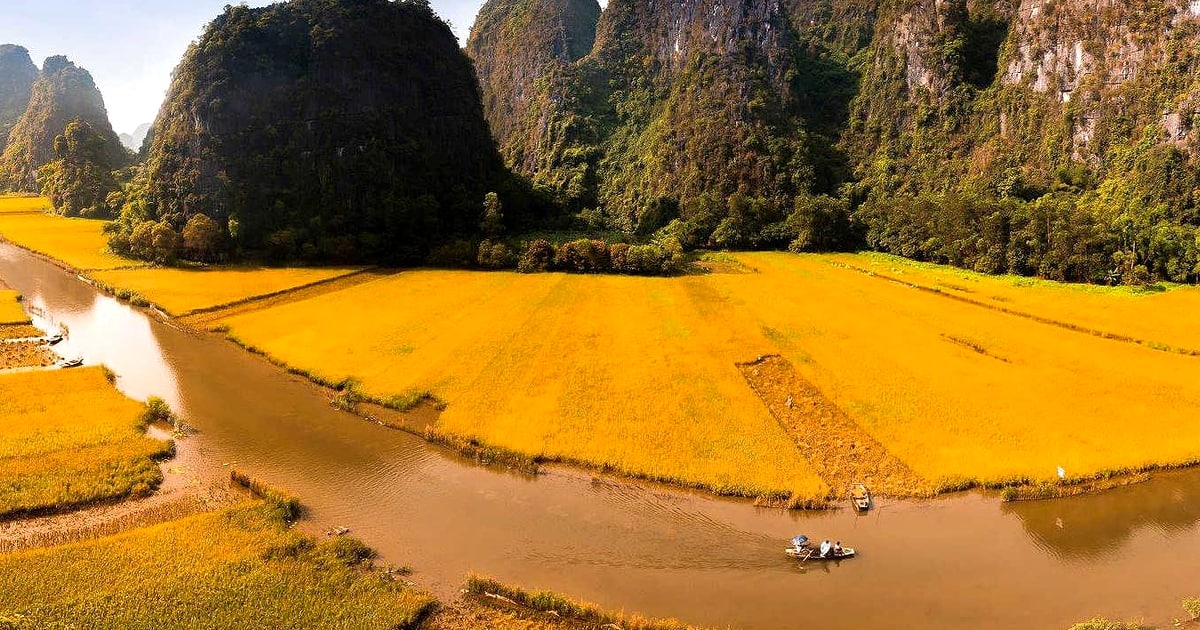
At 05:47 on a September morning — the precise minute when the sun cleared the eastern karst ridge — the limestone towers of Tam Coc turned from grey silhouettes to gold-lit sculptures in approximately ninety seconds. I was sitting in a sampan near the first cave entrance, having persuaded the boat operator to depart 30 minutes before the standard opening time, and the experience was sufficiently arresting that I returned the following morning to verify it was not a one-off atmospheric event. It was not. Tam Coc sunrise is repeatable, predictable, and — if you manage the timing correctly — one of the finest natural light shows in Southeast Asia.
This guide covers the Tam Coc sunrise experience — optimal timing by month, the best viewing positions both on water and on land, and practical logistics for experiencing this before the day-trip crowds arrive.
At a glance:
- Tam Coc sunrise occurs between 05:15 (June) and 06:30 (December)
- Best months: September–November (golden rice + clear skies) and March–May (green paddies + morning mist)
- Two viewing options: boat ride (pre-dawn departure, negotiable) or Mua Cave summit
- Key advantage: 1–2 hours of near-solitude before standard tour groups arrive
Tam Coc Sunrise Timing by Month
| Month | Sunrise Time | Light Quality | Landscape | Rating |
|---|---|---|---|---|
| Jan–Feb | 06:15–06:30 | Soft, often misty | Dormant paddies, fog in valleys | ★★★☆ |
| Mar–Apr | 05:45–06:00 | Clear, warming | Young green rice, wildflowers | ★★★★ |
| May–Jun | 05:15–05:30 | Intense golden | Mature rice approaching harvest | ★★★★★ |
| Jul–Aug | 05:25–05:40 | Humid, hazy | Post-harvest or re-planted | ★★☆☆ |
| Sep–Oct | 05:40–06:00 | Golden, crystal clear | Golden rice harvest season | ★★★★★ |
| Nov–Dec | 06:00–06:25 | Soft, cool tones | Harvested fields, water reflection | ★★★☆ |
Viewing Option 1: Tam Coc Sunrise from the Water
The canonical Tam Coc sunrise experience is from a sampan on the river. The official boat departure time is 07:00, but pre-dawn departures are negotiable — particularly if you are staying at nearby accommodation and have established rapport with the boat operators. An additional 50,000–100,000 VND (above the standard 150,000 VND ticket) typically secures a 05:30–06:00 departure.
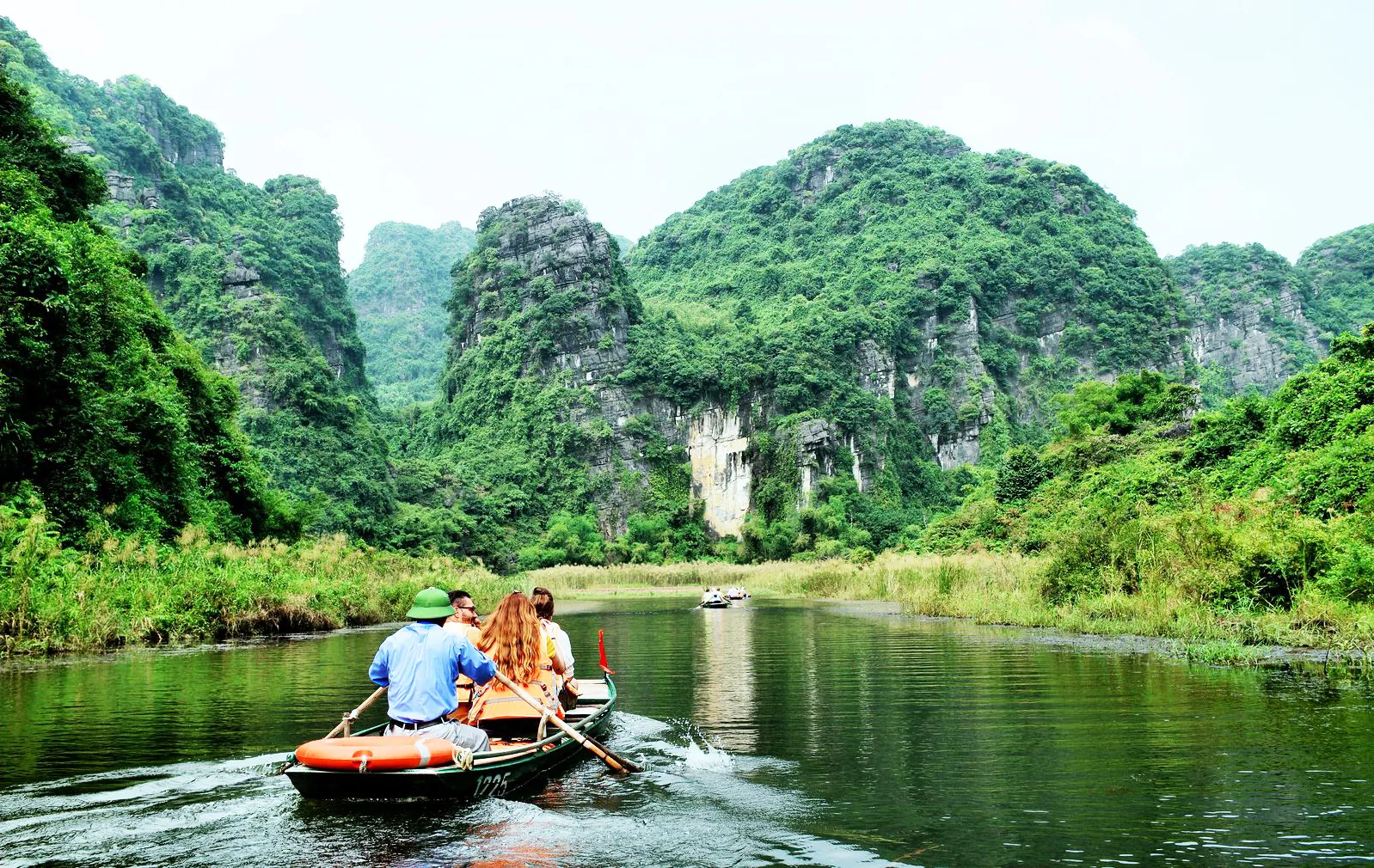
The first 30 minutes on the water before the standard boats launch are transformative. The river is mirror-still, the karst towers emerge from mist, and the only sounds are paddle strokes and birdsong. This is the Tam Coc that existed before tourism — and it is available to anyone willing to set an alarm.
Viewing Option 2: Mua Cave Summit
The 486-step climb to Mua Cave’s summit — manageable in 20–25 minutes at moderate pace — provides a panoramic Tam Coc sunrise view that no boat position can match. The 360-degree vista encompasses the entire Tam Coc valley: the river threading between karst towers, rice paddies extending to the horizon, and — on clear mornings — the first light illuminating the limestone faces in sequence as the sun angle changes. Mua Cave opens at 06:00; arriving at gate opening ensures you summit before the heat and the crowds.
Photography Tips for Tam Coc Sunrise
- Lens: 24–70mm covers both wide landscape and compressed karst compositions
- Boat position: Request the bow seat facing east for unobstructed shooting
- Mua Cave: The dragon staircase railing provides a natural leading line toward the valley
- Golden rice season: Late May and September — the paddies function as natural reflectors
- Mist mornings: December–February mist creates layered karst compositions but requires patience
For detailed technical photography guidance, including drone regulations and golden hour calculations, see the complete Ninh Bình photography guide. For cycling to sunrise positions, the Bích Đông Road route provides the most scenic pre-dawn approach.
Tam Coc sunrise is one of those experiences that photographs well but experiences better — the quality of light, the silence, and the gradual revelation of landscape as darkness retreats from a karst valley are not things that a screen can fully communicate. The only requirement is waking early enough. Everything else the landscape provides.
This article contains affiliate links. When you book through our partner links, we may earn a small commission at no additional cost to you. This supports our continued research across Ninh Bình province.
📌 Book this experience:
Check Ninh Binh tours on Klook | Browse on Klook
Some links are affiliate links. We earn a small commission at no extra cost to you.
Related: Tam Coc | Photography Guide | 2-Day Itinerary
For further reading: CDC travel health advisory for Vietnam.
To arrange your visit with reliable transport, I recommend that you check Tam Coc sunrise boat schedules on 12Go for verified schedules and e-ticket booking.
Frequently Asked Questions
What time should I arrive for sunrise at Tam Coc?
Sunrise at Tam Coc occurs between 5:15 AM (summer months) and 6:15 AM (winter months), but optimal positioning requires arriving 30-40 minutes earlier. The Mua Cave summit and the Tam Coc wharf area both serve as sunrise viewpoints, though the Mua Cave steps are not officially open before 6:00 AM and early access depends on the gate attendant’s discretion.
Where is the best location to photograph sunrise at Tam Coc?
The elevated viewpoint atop Mua Cave (Hang Mua) provides the definitive sunrise panorama, with the Ngo Dong River winding through rice paddies below karst towers. During rice season (May-June for green, late September for golden), these fields create the foreground color that distinguishes Tam Coc sunrise photography from generic mountain dawn shots.
Is it worth combining sunrise viewing with an early morning boat tour?
The first boats at Tam Coc typically launch between 6:00-6:30 AM, and the early morning light filtering through cave passages creates atmospheric conditions unavailable later in the day. Combining a Mua Cave sunrise with an immediate post-dawn boat departure makes for the most rewarding half-day itinerary in the province, with both activities completed before the tour-bus crowds arrive around 9:30 AM.