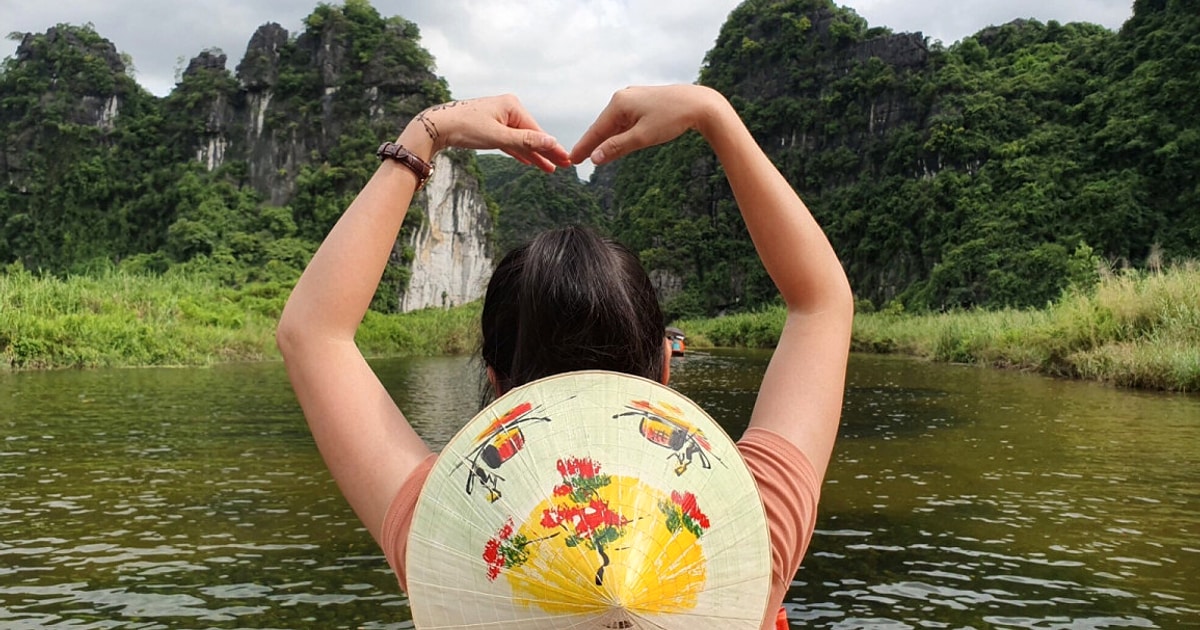
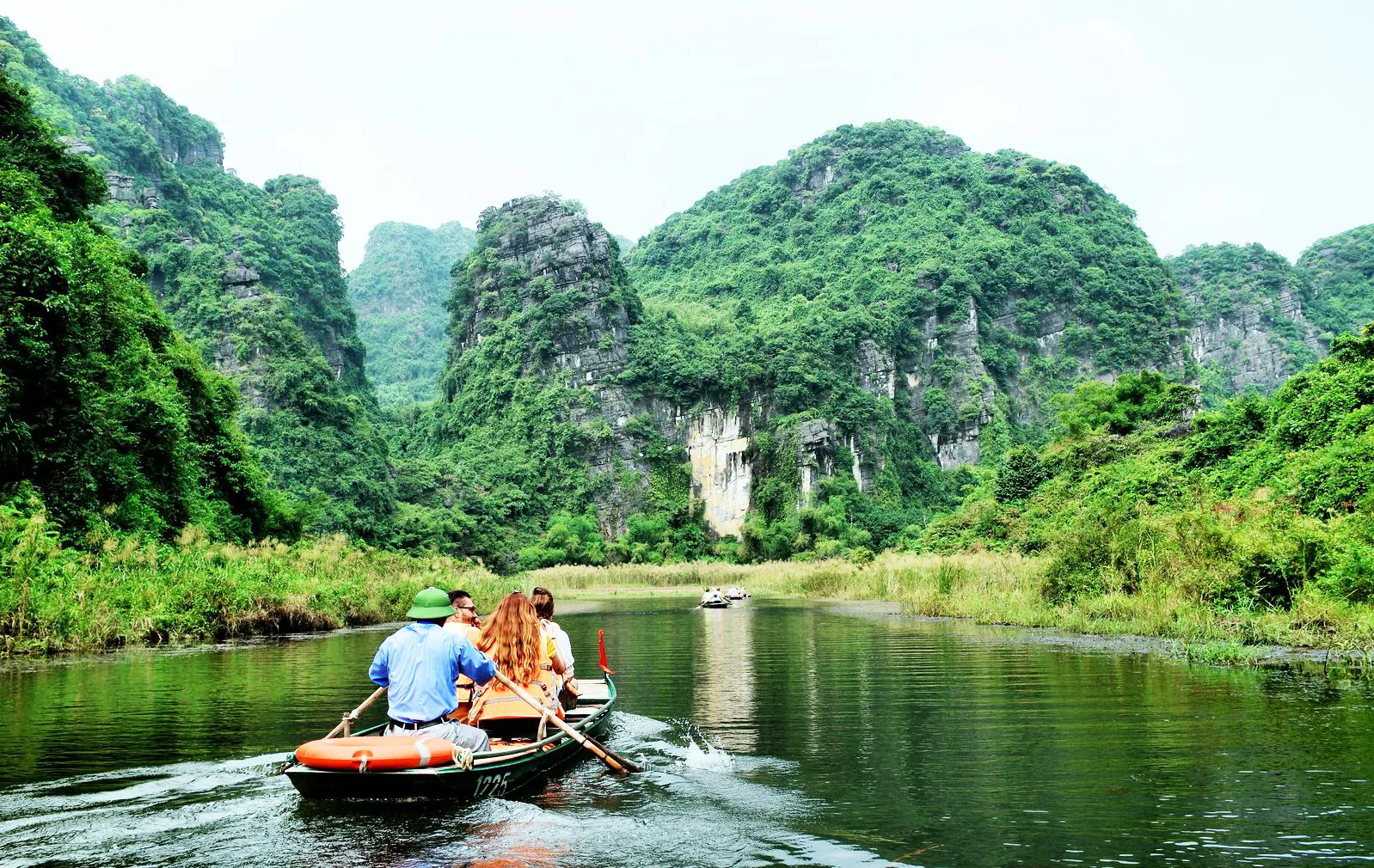
Most visitors to Ninh Bình experience caves from a boat — gliding through the low limestone arches on the Trang An and Tam Coc routes, ducking beneath stalactites as the sampan slips through darkness. Dong Chua and Am Tien caves offer something materially different: walking exploration of dry cave systems that were once used as Buddhist meditation retreats, with historical significance dating to the Đinh and early Lê dynasties (968–1009 AD). These are not show caves with LED lighting and ticket booths. They are quiet, unmanaged spaces where the karst geology and human history intersect without commercial mediation.
This guide covers both Dong Chua (Pagoda Cave) and Am Tien (Fairy Cave) — their history, what to expect inside, practical visiting information, and how to combine them into a half-day excursion from Tam Coc.
At a glance:
- Dong Chua & Am Tien — dry walking caves near Hoa Lư Ancient Capital
- Historical use: Buddhist meditation retreats since 10th century
- Admission: Free (Dong Chua) / 20,000 VND (Am Tien)
- Time needed: 1–2 hours for both caves combined
- Best combined with: Hoa Lư temples (walking distance)
Dong Chua (Pagoda Cave)
Dong Chua — literally “Pagoda Cave” — occupies a karst formation adjacent to the Hoa Lư temple complex. The cave has served as a Buddhist meditation site since the Đinh dynasty, when monks established a retreat in the naturally formed chambers. The current shrine inside dates to the 17th century but occupies a space that has held religious significance for over a millennium.
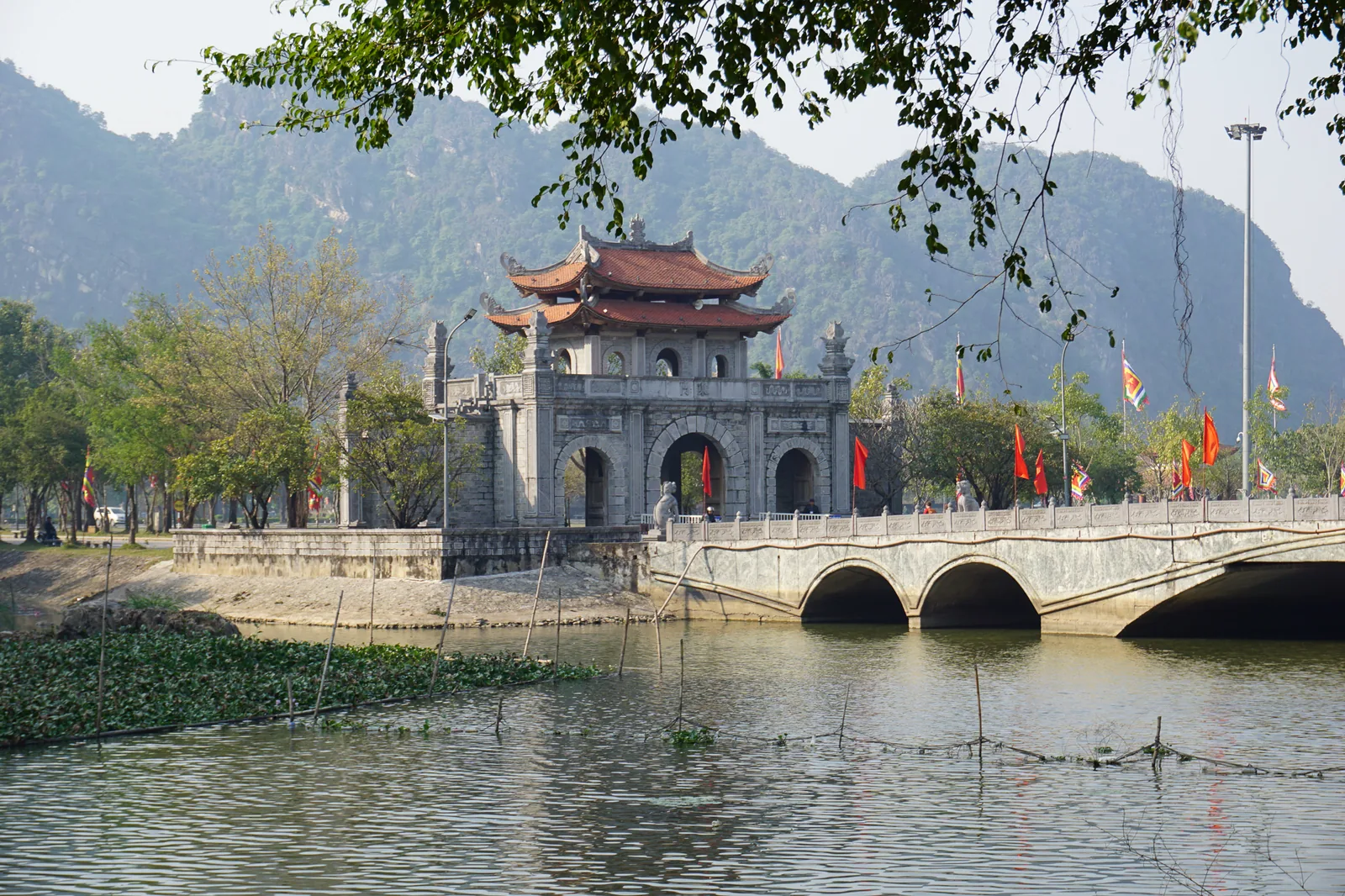
The cave itself is modest in scale — approximately 80 metres deep with ceilings reaching 15 metres at the highest point. Stalactite formations are well-developed, and the natural light that filters through the entrance creates atmospheric conditions that one might describe as rather well-suited to contemplation. The climb to the cave entrance involves approximately 100 stone steps — manageable for most visitors but worth noting for those with mobility limitations.
Am Tien (Fairy Cave)
Am Tien — “Fairy Cave” — sits 2 km east of Dong Chua, accessible by a path through rice paddies that is itself worth the walk. The cave is larger and more complex than Dong Chua, extending approximately 200 metres into the karst with multiple chambers connected by narrow passages. The interior contains a natural spring — water emerging from the limestone that maintains a constant temperature year-round — which contributed to the cave’s reputation as a meditation site where monks would retreat for extended periods of solitary practice.
The 10th-century king Đinh Tiên Hoàng reportedly used Am Tien as a strategic observation point, as the cave’s elevated entrance provides views across the valley toward Hoa Lư. Whether this is historical fact or retroactive legend is debatable, but the sightlines from the cave mouth are genuinely impressive and historically plausible.
| Feature | Dong Chua | Am Tien |
|---|---|---|
| Meaning | “Pagoda Cave” | “Fairy Cave” |
| Depth | ~80 metres | ~200 metres |
| Admission | Free | 20,000 VND |
| Steps to entrance | ~100 steps | ~150 steps |
| Interior features | Buddhist shrine, stalactites | Natural spring, multiple chambers |
| Historical period | Đinh dynasty (968–980) | Đinh–Lê dynasties (968–1009) |
| Crowds | Very few | Almost none |
Visiting Dong Chua & Am Tien: Practical Guide
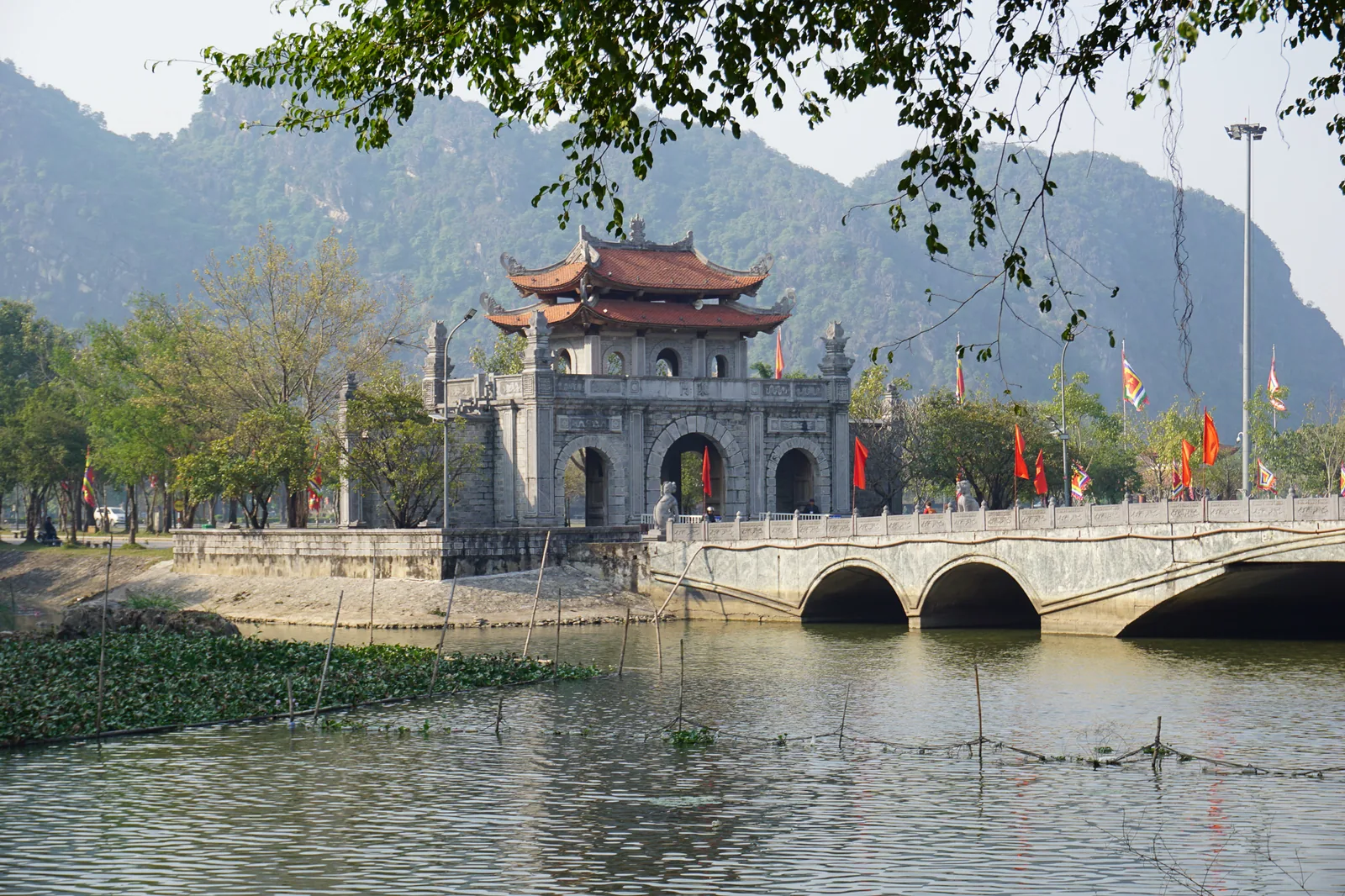
Both caves are within walking or short cycling distance of the Hoa Lư Ancient Capital temple complex. The optimal approach is to visit Hoa Lư’s Đinh and Lê temples first (providing historical context), then walk to Dong Chua (10 minutes), and continue to Am Tien (20 minutes through paddies). The entire circuit takes 2–3 hours including exploration time.
Bring a torch for Am Tien — the interior chambers beyond the first 50 metres receive no natural light, and while your phone torch functions adequately, a proper light reveals the geological formations more effectively. Wear shoes with grip; the cave floors are sometimes damp. For cyclists, both caves are on the Hoa Lư circuit, which can be combined with a broader itinerary.
These caves will not compete with Trang An or Tam Coc for spectacle. What they offer is something different and, to certain visitors, more valuable — the experience of standing in a space where monks meditated a thousand years ago, where the limestone drips into formations that predate human civilisation, and where the only illumination is the torch in your hand. Not every attraction needs to be photogenic to be worthwhile.
This article contains affiliate links. When you book through our partner links, we may earn a small commission at no additional cost to you. This supports our continued research across Ninh Bình province.
📌 Book this experience:
Check Ninh Binh tours on Klook | Browse on Klook
Some links are affiliate links. We earn a small commission at no extra cost to you.
Related: Hoa Lu | Bich Dong Pagoda | Cycling Guide
For further reading: IUCN Red List status of the Delacour langur.
To arrange your visit with reliable transport, I recommend that you explore cave tours in Ninh Binh on 12Go for verified schedules and e-ticket booking.
Frequently Asked Questions
What is Dong Chua Cave and where is it located?
Dong Chua (Pagoda Cave) sits within the Trang An Landscape Complex, accessible via one of the boat tour routes through the UNESCO-inscribed karst waterway system. The cave takes its name from a small Buddhist shrine installed within its chamber, where stalactite formations and votive offerings coexist in a space that exemplifies the interweaving of natural geology and spiritual practice characteristic of Ninh Binh.
How do I access Dong Chua Cave?
Dong Chua Cave is reached exclusively by sampan boat as part of the Trang An boat tour circuit — not all three Trang An routes pass through Dong Chua, so confirm your route preference with the boat rower before departure. The Trang An entry ticket (250,000 VND per adult) covers all caves and temple stops along your chosen route, with no additional fees at Dong Chua itself.
What should I expect inside Dong Chua Cave?
The cave passage extends approximately 200 meters with ceiling heights varying from 2 meters at the entrance to expansive chambers exceeding 10 meters, requiring visitors to duck at certain points as the sampan glides through. Stalactite formations illuminated by low-level lighting create a cathedral-like atmosphere, while water levels fluctuate seasonally with the most comfortable passage occurring from November through April.