Ninh Binh History & Culture 2026: From Ancient Capital to UNESCO Heritage
To understand Ninh Binh history is to understand why Vietnam exists as a sovereign nation. This is not an exaggeration. In 968 CE, Dinh Bo Linh chose a valley surrounded by limestone karsts as the site of Dai Co Viet — the first unified Vietnamese state. The choice was strategic: the mountains created a natural fortress visible from every boat ride tourists take today. Every karst tower at Trang An that visitors photograph for Instagram once served as a watchtower or defensive position. The landscape is not merely scenic. It is military architecture on a geological scale.
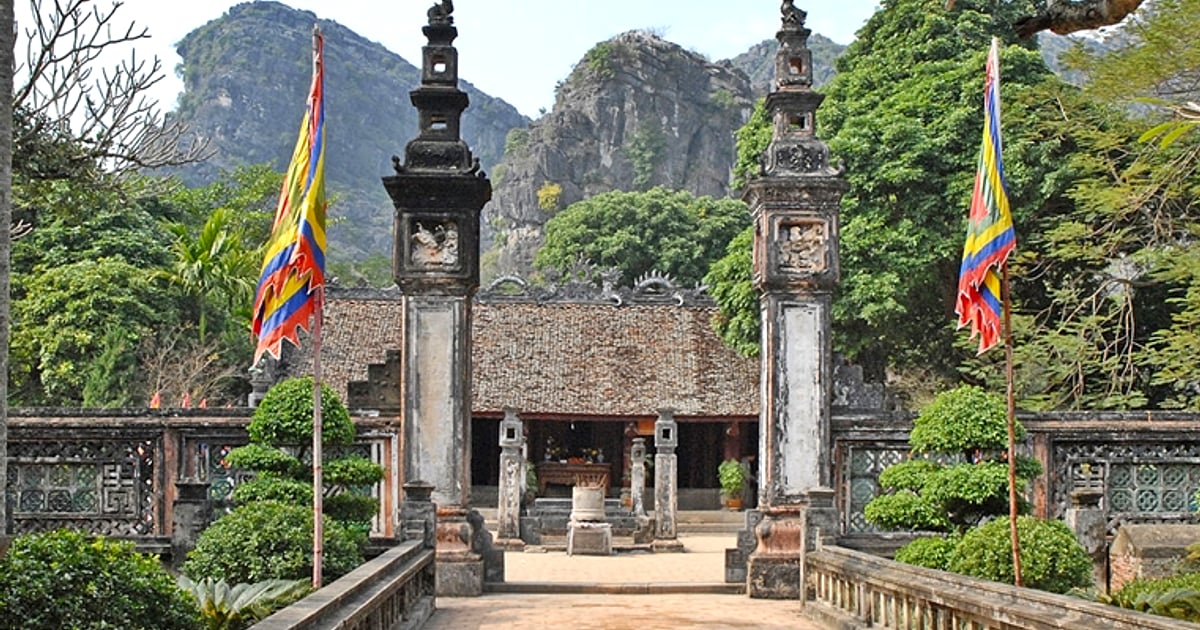
Dinh Bo Linh’s choice of Hoa Lu was not aesthetic — it was calculated. The valley is enclosed on three sides by limestone mountains reaching 200-300 metres, with the Hoang Long River providing the fourth boundary. An attacking army would need to funnel through narrow passes that a small defending force could hold indefinitely. When you stand at Mua Cave’s summit and look down at the valley, you are seeing the same strategic panorama that Dinh Bo Linh saw when he decided to build a nation here.
Ninh Binh History 038 Culture 2026 From Ancient Capital to UNESCO Heritage – destination
The Two Temple Complex at Hoa Lu
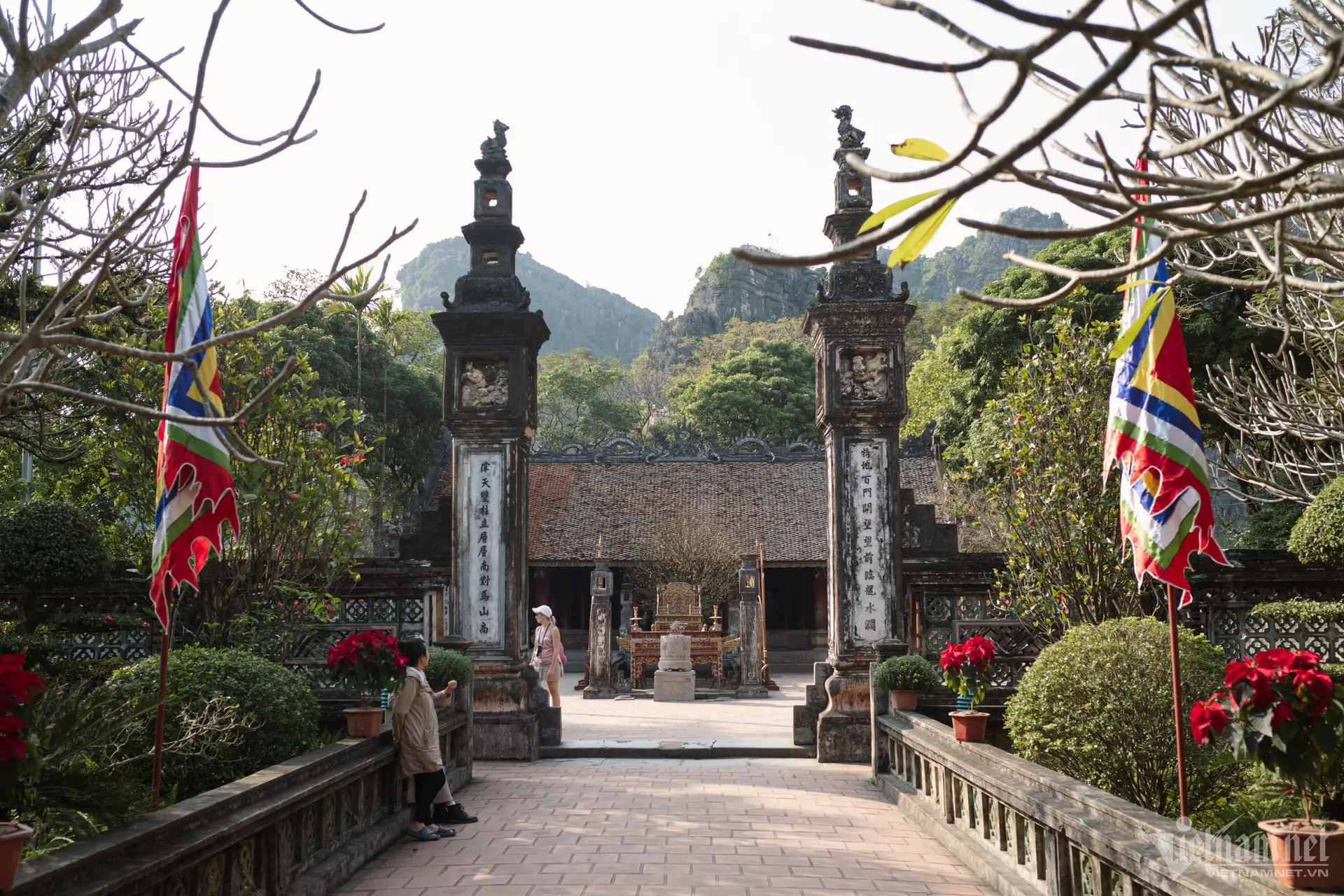
The Hoa Lu temples surviving today are 17th-century reconstructions on the original 10th-century foundations. The Dinh Temple honours Dinh Bo Linh (Dinh Tien Hoang), who unified twelve feudal lords into a single state. The Le Temple honours Le Dai Hanh, who succeeded him and repelled a Song Dynasty invasion in 981 CE. The stone carvings on both temples — dragons, phoenixes, and lotus flowers — follow a symbolic grammar that art historians can read like text.
Ninh Binh History 038 Culture 2026 From Ancient Capital to UNESCO Heritage – destination
Buddhism in the Karst: From Bich Dong to Bai Dinh
Buddhism arrived in Ninh Binh during the Ly Dynasty (1009-1225) and found natural expression in the caves and cliffs. Bich Dong — a three-level pagoda built into a cliff face in 1428 — represents the contemplative tradition. Bai Dinh Pagoda, completed in 2014, represents something entirely different: a monumental complex holding records for the largest bronze Buddha in Vietnam (100 tonnes) and the longest covered corridor in Asia (3.5km). The contrast between these two expressions of Vietnamese Buddhism tells you more about the country’s cultural trajectory than any textbook.
Living Culture: What Visitors Can Experience
Temple ceremonies: Hoa Lu’s Dinh and Le temples hold annual festivals (March lunar calendar) with processions, traditional music, and offerings
Craft villages: Ninh Van village (stone carving) and Van Lam village (embroidery) maintain techniques dating to the Ly Dynasty
Photography: The rice harvest season (late May-June) transforms Tam Coc into the landscape that defines Vietnamese tourism imagery
📚 Dr. Whitford’s Note: The most significant thing about Ninh Binh history is how little visitors are told about it. Tour guides at Trang An describe the caves’ dimensions. They rarely mention that archaeologists have found evidence of continuous human habitation spanning 30,000 years in those same caves — making Trang An one of the longest-occupied landscapes in Southeast Asia. UNESCO’s decision to grant mixed cultural-natural status in 2014 was not a courtesy. It was an acknowledgement that this landscape and human civilisation are, in this particular place, inseparable.
Ninh Binh History 038 Culture 2026 From Ancient Capital to UNESCO Heritage – destination
This article contains affiliate links. When you book through our partner links, we may earn a small commission at no additional cost to you. This supports our continued research across Ninh Bình province.
Understanding ninh binh history enriches every temple visit, every cave passage, and every boat ride through a landscape that has sheltered kingdoms, inspired monks, and defied invaders for over a millennium. The travel guide places these historical contexts into practical itinerary recommendations.
Why is Ninh Binh historically significant to Vietnam?
Ninh Binh served as Vietnam’s first imperial capital under the name Hoa Lu from 968 to 1010 AD, during the foundational Dinh and Early Le dynasties that unified the country after a millennium of Chinese domination. Emperor Dinh Tien Hoang chose this location precisely because the karst mountains formed a natural defensive fortress. When Emperor Ly Thai To relocated the capital to Thang Long (modern Hanoi) in 1010, Hoa Lu’s political significance waned but its temples and royal infrastructure were maintained as sacred sites.
What is the cultural significance of Bai Dinh Pagoda?
Bai Dinh Pagoda complex encompasses both an ancient temple dating to the Ly Dynasty (1009-1225 AD) and a modern extension completed in 2014 that holds multiple Vietnamese Buddhist records, including the largest bronze Buddha statue at 100 tonnes, the longest covered corridor at 3 kilometers, and the most Arhat statues at 500. The complex spans approximately 700 hectares and functions as both an active Buddhist pilgrimage site and a cultural landmark, receiving over one million visitors annually during the Lunar New Year festival season.
How does Ninh Binh’s UNESCO World Heritage status differ from Ha Long Bay’s?
Trang An Landscape Complex received UNESCO inscription in 2014 under both natural and cultural criteria, making it Vietnam’s first and only mixed World Heritage property. Ha Long Bay, inscribed in 1994, holds recognition solely for natural aesthetic and geological values. Trang An’s dual designation acknowledges 30,000 years of continuous human occupation documented through archaeological sites within the karst caves, a cultural dimension that Ha Long Bay’s marine environment does not possess.
Written by
Dr. James Whitford
Cambridge-trained historian specialising in Southeast Asian heritage sites. Based between Hanoi and the UK, James has spent 8+ years documenting Vietnam's cultural landscapes, with Ninh Binh as his primary research focus.