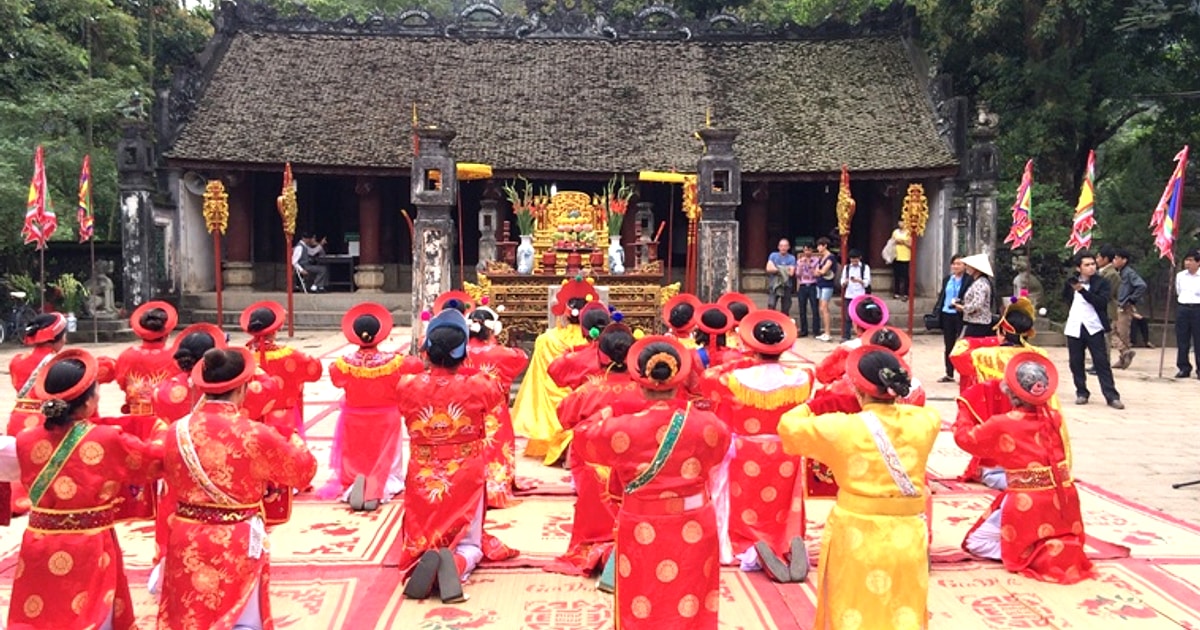
In 2023, the Vietnamese government approved Decision No. 218/QD-TTg, designating Ninh Binh as a “direct-centrally governed city” by 2030 — a bureaucratic phrase that conceals one of Southeast Asia’s most ambitious heritage preservation projects. The ninh binh heritage city vision proposes to elevate an entire province from its current administrative status to a nationally significant heritage centre, with the Trang An UNESCO World Heritage Complex as its anchor. For a historian who has spent two years studying the Dinh-Le dynasties in this valley, the implications are considerable.
This is not merely an administrative reclassification. The ninh binh heritage city programme encompasses infrastructure investment of approximately $3.2 billion (VND 80 trillion) over seven years, new conservation zones across 1,386 square kilometres, and a visitor management framework that explicitly cites Kyoto and Luang Prabang as models. Whether it succeeds will determine whether Ninh Binh becomes Vietnam’s finest heritage destination or merely its most expensive construction project.
At a glance:
- Government decision: No. 218/QD-TTg (2023), target completion 2030
- Investment: ~$3.2 billion (VND 80 trillion)
- Scope: Province-wide heritage designation, 1,386 km² total area
- Models: Kyoto (Japan), Luang Prabang (Laos), Hoi An (Vietnam)
- UNESCO anchor: Trang An Scenic Landscape Complex (inscribed 2014)
What the Heritage City Designation Means
The ninh binh heritage city designation is structured around four pillars, each with specific targets and — unusually for Vietnamese government planning documents — measurable outcomes:

| Pillar | Target | Status (2026) |
|---|---|---|
| Heritage preservation | 200+ registered heritage sites protected, buffer zones enforced | 142 sites registered, 60% buffer compliance |
| Sustainable tourism | Visitor capacity limits at all major sites, eco-tourism priority | Trang An limits enforced; Tam Coc, Mua Cave in progress |
| Infrastructure | Ring road, heritage rail link, improved inter-site connectivity | Ring road 40% complete, rail study phase |
| Community development | Heritage villages preserved, local employment in tourism ≥60% | 3 pilot villages operational, employment at 45% |
Administrative Upgrade
The elevation to “direct-centrally governed city” (thành phố trực thuộc trung ương) places Ninh Binh in the same administrative category as Hanoi, Ho Chi Minh City, Da Nang, Hai Phong, and Can Tho. This is significant for three practical reasons: it unlocks central government funding that provincial-level administrations cannot access, it grants authority to implement planning decisions without provincial government intermediation, and it creates a dedicated heritage management authority with enforcement powers.
📚 Historical Note: The irony of Ninh Binh’s elevation to special city status is not lost on those who study its history. The province served as Vietnam’s capital from 968 to 1010 AD — under the Dinh and early Le dynasties — before Emperor Ly Thai To relocated the court to Thang Long (Hanoi). Over a millennium later, Ninh Binh is effectively being re-designated as nationally important, completing a historical arc that one suspects Dinh Bo Linh would find either vindicating or darkly amusing.
Impact on Current and Future Visitors
Changes Already Visible (2025–2026)
- Visitor capacity limits: Trang An now enforces a daily cap of 4,500 boats (approximately 9,000 visitors). During October peak, boats are sold out by 10:30. Book morning slots in advance.
- Conservation buffer zones: New construction within 500 metres of heritage sites requires heritage impact assessment. This has slowed hotel development around Tam Coc but preserved the valley’s visual character.
- Electric vehicle zones: The Hoa Lu temple complex and surrounding area is now a no-combustion-engine zone during peak hours (08:00–17:00). Electric shuttles replace private vehicles.
- Interpretive signage: Bilingual heritage information panels installed at 45 sites, replacing the previous arrangement of either no information or information of dubious accuracy.
Planned Changes (2027–2030)
- Heritage rail link: A dedicated rail connection from Ninh Binh station to the Trang An–Tam Coc tourism zone is under feasibility study. If approved, this would replace the current road-dependent access with a scenic rail approach through karst corridors.
- Ring road: A 45 km ring road bypassing the current route through heritage areas. This separates commercial traffic from tourism corridors — a solution borrowed from Luang Prabang’s UNESCO management plan.
- Heritage hotel standards: New accommodation within the heritage zone will be required to meet architectural guidelines (maximum 3 storeys, local materials, sympathetic design). This regulation, if enforced, would prevent the concrete-hotel sprawl that has compromised Sapa’s visual appeal.
- Bai Dinh spiritual tourism zone: A 3,000-hectare zone centred on Bai Dinh Pagoda designated for religious and wellness tourism, with restricted commercial development.
Heritage Sites Under the 2030 Plan
The ninh binh heritage city programme identifies 200+ sites for formal protection. The most significant for visitors:

| Site | Heritage Category | Current Status | 2030 Plan |
|---|---|---|---|
| Trang An Complex | UNESCO World Heritage | Well-managed | Extended buffer zone, cave monitoring |
| Hoa Lu Ancient Capital | Special National Monument | Partially restored | Full archaeological survey, citadel wall reconstruction |
| Bich Dong Pagoda | National Heritage | Intact, minimal interpretation | Conservation + new visitor centre |
| Phat Diem Cathedral | National Heritage | Active worship site | Restoration of stone carving, visitor management |
| Tam Coc–Bich Dong Valley | Special Scenic Area | Active tourism | Capacity limits, architectural controls |
| Cuc Phuong National Park | National Park | Well-managed | Primate centre expansion, research partnerships |
Lessons from Other Heritage Cities
The ninh binh heritage city plan explicitly references three models. As a historian with professional familiarity with all three, I offer the following comparative assessment:
Kyoto, Japan
Success: architectural controls preserved traditional streetscapes alongside modern city. Relevance to Ninh Binh: height restrictions, material guidelines for new construction. Risk: Kyoto’s tourism overcrowding (pre-pandemic: 53 million visitors/year) suggests that heritage designation attracts rather than manages volume.
Luang Prabang, Laos
Success: UNESCO-managed heritage zone with strict building codes maintained traditional character despite tourism growth. Relevance: similar scale to Ninh Binh, river-based heritage, Southeast Asian context. Risk: gentrification displaced local residents from the heritage zone — a pattern Ninh Binh must actively resist.
Hoi An, Vietnam
Cautionary lesson: Hoi An’s heritage zone is genuinely well-preserved but surrounded by uncontrolled development that has fundamentally altered the town’s character. The “heritage within chaos” model is precisely what the Ninh Binh plan seeks to avoid by applying controls province-wide rather than to a single zone.
What This Means for Your Visit
For travellers planning a visit in the 2026–2030 window, the ninh binh heritage city programme has three practical implications:

- Book popular experiences early: Trang An boat rides and Mua Cave sunrise slots are increasingly capacity-managed. Morning slots during October sell out.
- Accommodation character improves: New architectural guidelines favour boutique heritage stays over concrete blocks. The accommodation landscape is evolving in favour of quality.
- Visit during the transition: The period between infrastructure improvement and mass tourism arrival (now through approximately 2028) offers the best value proposition. Infrastructure is good; crowds are manageable; prices have not yet adjusted to heritage city status.
📌 Plan your heritage visit:
Heritage tours on Klook | Book on Klook
Some links are affiliate links. We earn a small commission at no extra cost to you.
For those planning ahead, I have found that you can explore Ninh Binh travel options on 12Go with confirmed availability and transparent pricing.
FAQ
What is the Ninh Binh Heritage City plan?
The ninh binh heritage city plan (Decision 218/QD-TTg, 2023) designates Ninh Binh as a direct-centrally governed city by 2030, with $3.2 billion investment in heritage preservation, sustainable tourism infrastructure, and community development. It elevates Ninh Binh to the same administrative level as Hanoi.
Will Ninh Binh become more expensive after heritage city status?
Likely modest increases. Current projections suggest 10–15% price increases for accommodation and activities by 2030, driven by improved quality standards rather than tourism volume. Ninh Binh will remain significantly cheaper than Halong Bay or Sapa for equivalent experiences.
Should I visit Ninh Binh before or after the 2030 heritage upgrades?
Before, ideally 2026–2028. Infrastructure is already good, preservation is improving, but crowds and prices have not yet adjusted to heritage city status. This window offers the optimal balance of quality and value.
Disclosure: Some links in this article are affiliate links. If you book through them, we earn a small commission at no extra cost to you.
Related Ninh Binh Guides
- complete Ninh Binh travel guide
- Tam Coc boat ride guide
- Ninh Binh photography spots guide
- Ninh Binh homestay guide
For further reading: the history of the Dinh Dynasty.
Frequently Asked Questions
What does Ninh Binh’s heritage city status mean for visitors?
Ninh Binh’s significance as a heritage city stems from its role as Vietnam’s first imperial capital at Hoa Lu from 968 to 1010 AD, when Emperors Dinh Tien Hoang and Le Dai Hanh governed the newly unified nation from this strategically defensible karst valley. The 2014 UNESCO inscription of the Trang An Landscape Complex formalized international recognition of both the natural karst landscape and the cultural heritage spanning 30,000 years of documented human occupation. For visitors, this dual heritage status means access to both geological wonders and archaeological significance within a compact, walkable landscape.
What are the most important heritage sites to visit in Ninh Binh?
The Hoa Lu Ancient Capital contains two 17th-century temples honoring Emperor Dinh Tien Hoang and Emperor Le Dai Hanh, built on the foundations of the original 10th-century palatial complex. Bai Dinh Pagoda represents Vietnam’s largest Buddhist complex with architecture spanning from an ancient Ly Dynasty cave temple to the modern extension completed in 2014. The Trang An boat circuit itself passes prehistoric cave dwellings where archaeological excavation has recovered stone tools and human remains dating to 30,000 years before present, making the landscape a living archaeological record.
How does Ninh Binh compare to other Vietnamese heritage destinations like Hue or Hoi An?
Ninh Binh’s heritage predates both Hue (19th-century Nguyen Dynasty) and Hoi An (15th-17th-century trading port) by approximately 500-1,000 years, anchoring the very origin story of Vietnamese statehood. Unlike Hue’s palace-focused heritage or Hoi An’s mercantile architectural preservation, Ninh Binh integrates natural landscape and human history inseparably, as the karst formations served simultaneously as geological features and military fortifications. The trade-off is that Ninh Binh’s above-ground historical structures are more modest, as the original Hoa Lu palaces were largely destroyed during subsequent dynastic warfare.