Ninh Binh to Hoi An: Direct Sleeper Bus or Train via Da Nang? A Head-to-Head for 2026
Ninh Binh to Hoi An is the longest single leg most travellers take in northern and central Vietnam: the direct sleeper buses listed on 1 October 2026 took about 14 hours, at 700,000 to 950,000 VND. The alternative is the train, which does not stop in Hoi An at all but reaches Da Nang, about 30 km to the north, leaving a short final transfer by road.
Which is better depends on how you sleep, how much you value arriving at the door, and how much a broken night costs you on the other end. The comparison below works through those trade-offs using the live 12Go listing and the reviews riders left on it. I have not made this journey myself; every figure and quotation is sourced, and I flag where the data is thin.
At a Glance
| Item | Listed detail (12Go, 1 Oct 2026) |
|---|---|
| Direct sleeper bus duration | about 14 hours (fastest listed option 10 hours) |
| Bus fares seen | 700,000 to 950,000 VND |
| Lowest fare listed | 637,000 VND |
| Earliest / latest departure | 00:03 / 23:30 |
| Route rating | 4.4 out of 5 from 533 reviews |
| Most-reviewed operator | HK Buslines |
| Rail option | Train to Da Nang, then about 30 km by road |
Source: the 12Go bus and train timetable for this route, read 1 October 2026. 12Go gives the distance as 500 km, which appears to be a straight-line figure; road journeys are much longer, as the 14-hour schedules show. Rates may change daily.
The Head-to-Head
| Criterion | Direct sleeper bus | Train to Da Nang + transfer |
|---|---|---|
| Door to door | One vehicle, arrives in Hoi An | Two legs; taxi or shuttle for the last 30 km |
| Time | About 14 hours on the snapshot schedules | Overnight on the train, plus about 45 minutes by road |
| Sleep quality | Cabin beds; road movement and horn noise reported | Berths in 4-bed or 2-bed cabins; steadier ride |
| Toilets | On board on many cabin buses, plus stops | On board |
| Cost | 700,000 to 950,000 VND | Varies by carriage; see the Da Nang guide |
| Main risk | Driver behaviour and late or missed pickups | Arriving in Da Nang and arranging the transfer |
My verdict: if you sleep reasonably well on buses, the direct cabin bus is simpler and usually cheaper. If you are a light sleeper, or travelling with children, the train’s steadier ride is worth the extra step at Da Nang. For the rail leg itself, my Ninh Binh to Da Nang train guide covers schedules and carriage classes.
The Bus Timetable
The morning departures listed on the snapshot date show a narrow price band and long journey times:
| Operator | Class | Depart | Arrive | Fare (VND) | Rating |
|---|---|---|---|---|---|
| Tan Quang Dung | VIP Luxury 22 | 07:00 | 21:00 | 700,000 | 3.9 |
| Vietnam Easy Go Travel | VIP Cabin 24 | 07:30 | 21:30 | 950,000 | none yet |
| Tan Quang Dung | VIP Luxury 22 | 08:00 | 21:00 | 730,000 | 3.9 |
| Vietnam Easy Go Travel | VIP 20 | 08:30 | 22:30 | 950,000 | none yet |
| Binh Hoai Limousine | VIP Limousine 21 | 09:00 | 23:00 | 700,000 | none yet |
| Viet Nam Travel Bus | VIP Luxury 22 | 09:20 | 23:20 | 936,000 | none yet |
| Asian Bus Travel | Royal Cabin 22 | 09:50 | 00:50 | 700,000 | none yet |
Two things follow from the table. First, a morning departure arrives in Hoi An late in the evening, between about 21:00 and 01:00, so book accommodation that accepts late check-in. Second, many of the listed services had no rating yet on the snapshot date; the reviewed operators, above all HK Buslines, are the safer choice for a 14-hour ride. At roughly 25,000 to 26,000 VND to the US dollar, the fares work out at about US$27 to US$37.
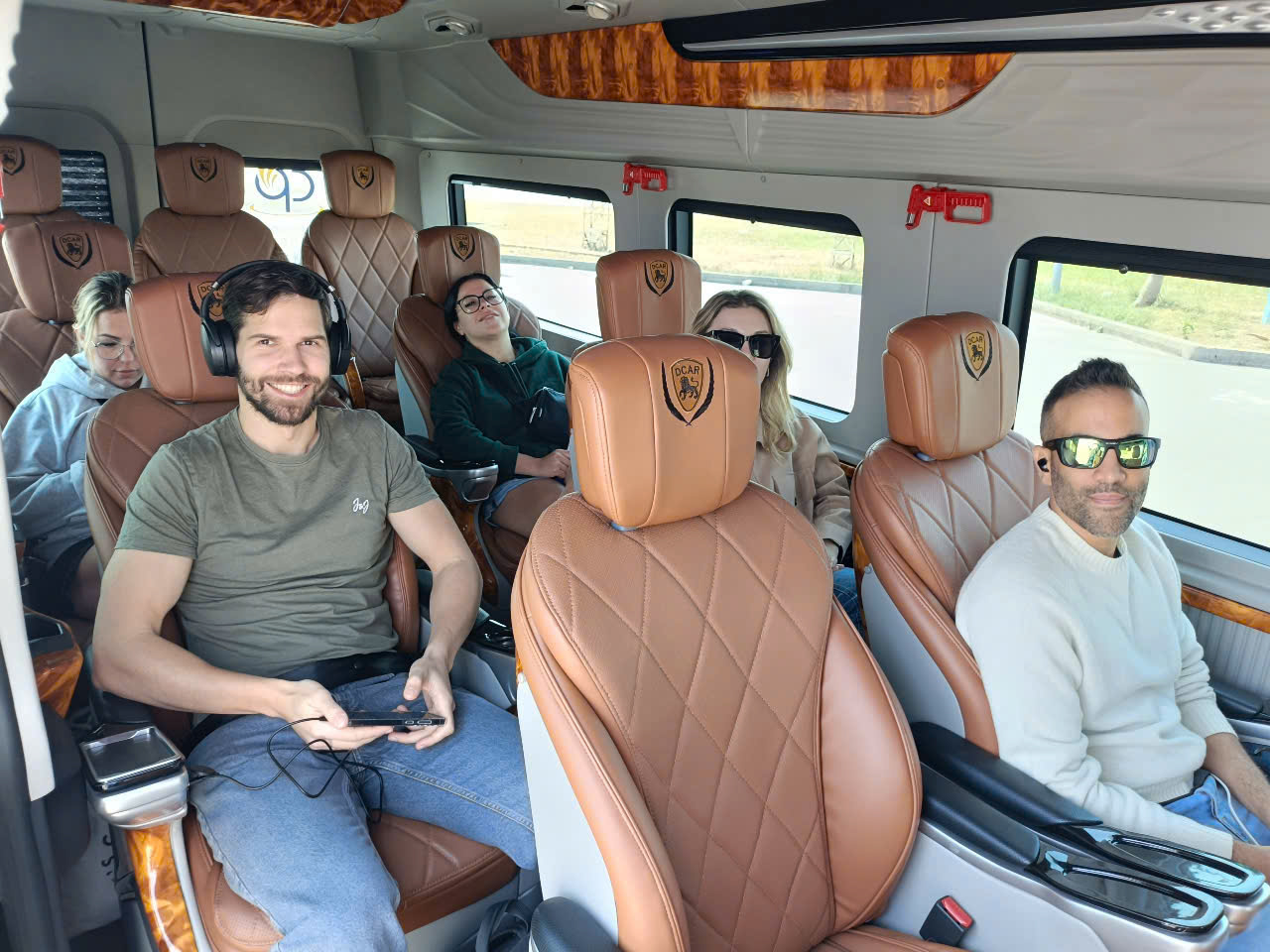
What 533 Riders Report
The route averages 4.4 out of 5 across 533 reviews: 55 percent five-star, 15 percent four-star, 15 percent three-star and 15 percent two-star. Most of the written reviews concern HK Buslines, and they split sharply between praise for the vehicle and complaints about the drivers.
The vehicle, mostly praised. Charlotte S (HK Buslines, August 2026): “Great bus! Has WiFi and a toilet, the beds are big and flat. The owner was lovely and messaged me advice for my destination.” Violeta V (HK Buslines, September 2026) found the bus “comfortable and had all necessary onboard (including a clean toilet)” and the company “very helpful with changing the date of my trip.” Andrea Z (HK Buslines, September 2026) called it the “best sleeper bus we’ve been on in Vietnam.” Eva I (HK Buslines, August 2026) “slept almost whole ride.”
The drivers, mixed. Bart M (HK Buslines, September 2026) summed up the split in four words: “Good vehicle. Bad driver(s).” Sarah F (HK Buslines, September 2026) wrote that “the busdriver was honking every 5-10 minutes during this 12 hours trip”, and that a promised pickup at the destination “never happened”. Aja O (HK Buslines, September 2026) reported a broken recliner, a non-working entertainment system and weak air conditioning, and felt the trip “was really expensive for the experience.”
Other operators. Juan A (G8 Sapa Open Tour, August 2026) called his trip “perfect”, noting that the company “informed us by mail of the stop change” and stopped three times for the toilet. Jacob S (Viet Lao Bus, August 2026) found it “very nice and comfortable”, with great staff. Sebastian B (Queen Cafe Bus, August 2026) reported arriving an hour late.
I have found that the same pattern repeats across Vietnam’s long sleeper routes: the cabins have improved enormously, while driving style and last-mile service remain the weak points. Violeta V’s practical note is worth repeating: “if you have a ground cabin you may feel the road a bit more than in the cabin above.”
📚 Whitford’s Note: Hoi An flourished as an international trading port from the fifteenth to the nineteenth centuries, when Japanese, Chinese and European merchants waited there for the monsoon winds. Its decline came when the Thu Bon River silted and trade moved to Da Nang, which is, rather neatly, why the railway goes to Da Nang today and not to Hoi An. History, as so often, explains the timetable.
How to Decide
When I checked the 12Go timetable on 1 October 2026, I counted seven morning bus departures between 07:00 and 09:50, at 700,000 to 950,000 VND, each scheduled for roughly 14 hours. With that in mind:
- Choose the direct bus if you want one vehicle to your hotel area, can sleep on the road, and prefer the lowest fare.
- Choose the train to Da Nang if you are a light sleeper, travelling with children, or want a toilet and space to move throughout.
- Break the journey at Hue or Phong Nha if you have time; both sit on the way south and turn one 14-hour leg into two manageable ones. My Ninh Binh to Hue train guide covers the first option.
🏛️ Heritage Tip: Hoi An Ancient Town is a UNESCO World Heritage Site, and its old quarter is protected by a ticket system that funds conservation of the timber merchant houses and assembly halls. Buy the ticket even if no one checks; the houses you are photographing depend on it.
Breaking the Journey on the Way South
Fourteen hours is a long time in one seat, and the route south passes two places that reward a stop. Hue, the former imperial capital, lies roughly two thirds of the way, and Phong Nha, with its cave systems, sits a little further north. Splitting the trip into 2 legs of about 7 hours each turns an endurance test into two ordinary travel days, and the extra night costs little compared with the sightseeing it buys.
The practical catch is that each break adds a separate ticket and a second pickup to arrange. The 12Go timetable lists services from Ninh Binh to both Hue and Phong Nha, and onward services from each to Hoi An, so the pieces exist; you simply book them one at a time. If you only have a day or two to spare, Hue is the more convenient break, because its station and bus offices sit close to the city centre.
A sensible split for a relaxed traveller is 3 nights: 1 in Phong Nha for a cave tour, 1 in Hue to see the citadel and royal tombs, and the third already in Hoi An, travelling south in that order. That plan adds 2 days to the itinerary but removes the overnight bus entirely, which many riders would happily trade for.
Arriving in Hoi An Late
Because morning departures arrive between about 21:00 and 01:00, the last hour of the trip is the part most worth planning. Drop-off points vary by operator, and Sarah F’s review is a reminder that a promised onward transfer does not always appear. Three habits help:
- Message your accommodation with the operator’s name and expected arrival time, and ask whether they can arrange a taxi or Grab pickup from the drop-off point.
- Save the drop-off location offline, together with your hotel’s address in Vietnamese, so you can show a driver if your phone has no signal.
- Keep small notes of dong for a late taxi; card payment is not always possible at that hour.

Booking Checklist
- Pick a reviewed operator; on the snapshot date, many services had no rating at all.
- Request an upper cabin if road movement bothers you, following Violeta V’s advice.
- Confirm the drop-off point in Hoi An by WhatsApp, and do not rely on a promised hotel transfer unless it is in writing.
- Book accommodation that accepts arrivals after 21:00.
- Compare live fares on the 12Go sleeper bus listings a few days ahead; morning seats on the better operators go first.
Before you leave, the Ninh Binh bus station guide explains local departures, and if you are staying in Tam Coc, my guide to where to stay in Tam Coc notes which areas sit closest to pickup points.
Frequently Asked Questions
How long is the bus from Ninh Binh to Hoi An?
Direct sleeper buses were scheduled at about 14 hours on 1 October 2026; morning departures arrived between about 21:00 and 01:00.
How much does the bus cost?
Fares on the snapshot date ranged from 700,000 to 950,000 VND, with the lowest listed fare at 637,000 VND.
Is there a train from Ninh Binh to Hoi An?
Not directly. Trains run to Da Nang, about 30 km from Hoi An, and you finish the journey by taxi or shuttle.
Which bus company is best?
HK Buslines has the most reviews on the route, with praise for its cabins and toilets and complaints about some drivers. Choose an operator with recent reviews rather than an unrated one.
Final Assessment
For most travellers, the direct sleeper bus is the simpler way south: one vehicle, about 14 hours, and fares around 700,000 VND, with HK Buslines the most-reviewed choice despite its mixed driver reports. Light sleepers should take the train to Da Nang instead and accept the short transfer. Either way, plan for a late arrival, confirm the drop-off in writing, and if the calendar allows, break the journey at Hue; a quite unremarkable night on the road becomes a much better trip.
© 2026 bestofninhbinh.com. All rights reserved.
Original research by Dr. James Whitford.
This article was first published on bestofninhbinh.com.
Unauthorized reproduction is prohibited.